
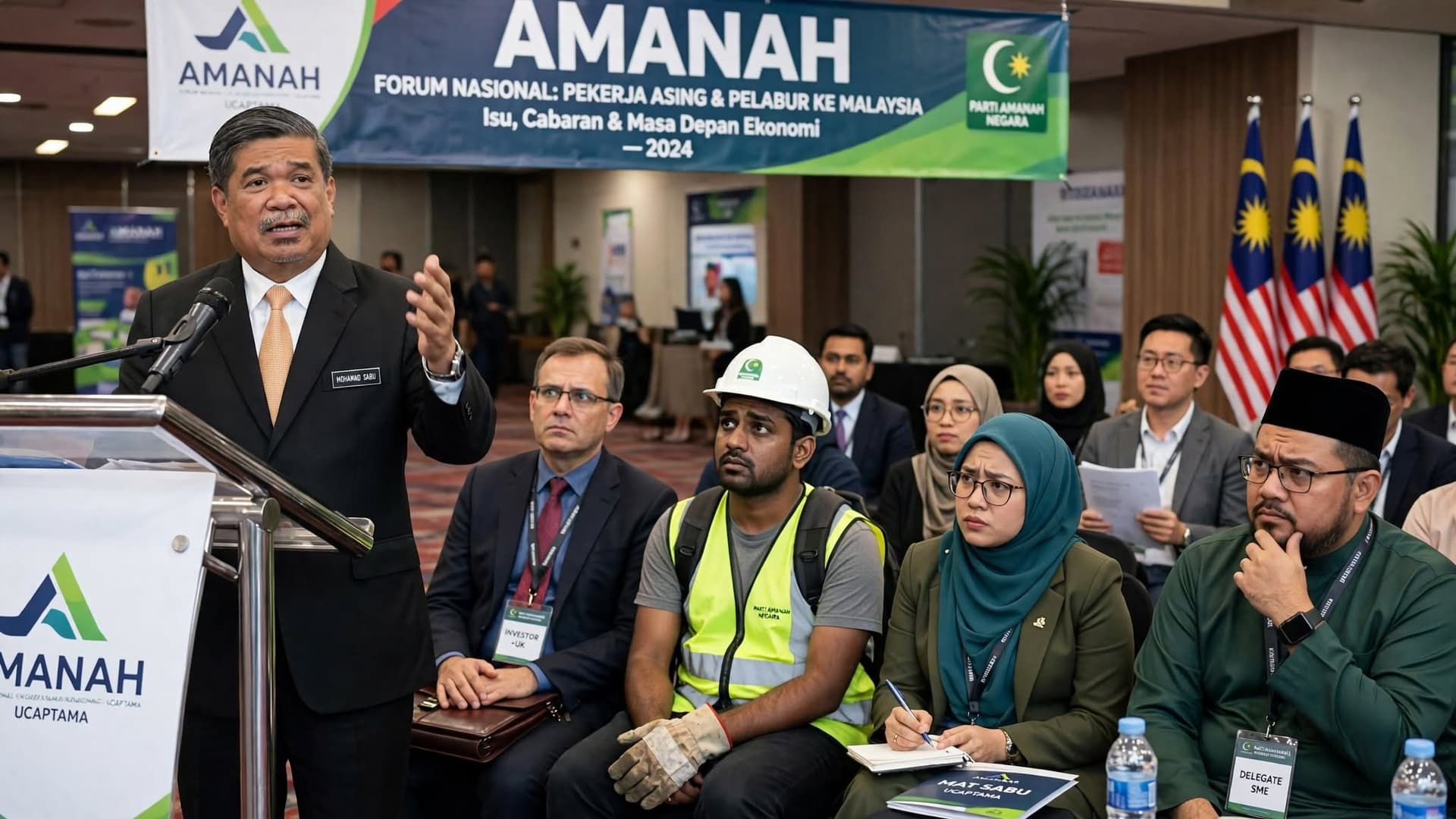
Every time Malaysia approaches an electoral crossroads, the same seductive political script is dusted off and rehearsed. It is a script built on the illusion that complex economic and moral challenges can be solved by drawing sharper lines between "us" and “them” whether by scapegoating migrant workers for economic anxieties, invoking ethnic solidarity to excuse corruption, or weaponising religion for ballot-box survival.
Recent policy addresses from Amanah’s national convention in Shah Alam touching on the economic danger of xenophobia, the misuse of ethnic unity to shield tainted leaders, and the decision to sit out the upcoming Sarawak state election point to a deeper truth about Malaysian politics. Beneath the tactical manoeuvring of a party fighting to stay relevant after bruising state-level setbacks lies a fundamental question for the entire nation: are we building a society anchored in universal dignity and accountability, or one addicted to political convenience?
Consider the quiet hypocrisy at the heart of our economy. We rely on migrant workers to harvest our crops, pour concrete under the midday sun, clear our drains, and cook our daily lunches. Yet in our public discourse, these very same hands are routinely treated as an unwelcome burden or an easy target for populist anger.
Warning that xenophobia is a "ticking time bomb" for the economy is merely stating an obvious structural reality, though the problem runs much deeper than prejudice alone. For decades, Malaysia has operated on a model dependent on inexpensive, transient labour an arrangement that allows businesses to keep costs low while discouraging investments in automation, better wages, and decent working conditions that might actually attract local talent. When recruitment becomes a lucrative middleman industry and workers are stripped of basic protections, the system pits struggling locals against vulnerable foreigners while shielding the real structural flaws from scrutiny. You cannot demand a thriving, high-productivity economy while treating the dignity of labour as optional.
A similar distortion occurs when race and religion are drafted into service as political bodyguards. True pride in one’s heritage or faith demands higher moral standards, not lower ones. Yet too often in Malaysian politics, calls for ethnic solidarity are deployed not to uplift communities through education, fair wages, or institutional reform, but to demand blind loyalty a convenient blanket thrown over financial scandals and abuses of power. When group identity becomes an excuse to forgive corruption, it does not protect the community; it robs the community of its future, draining public coffers that should be funding schools, hospitals, and genuine social mobility.
Nor does faith gain strength when it is reduced to a partisan weapon. The principle that religion should serve universal justice rather than narrow political ends is easy to applaud on a convention stage, yet notoriously difficult to practice when electoral survival is on the line. Stepping back from battles that cannot be won such as Amanah’s calculated retreat from the Sarawak polls to preserve its strength may be prudent political arithmetic, especially for a party still struggling to prove it can stand tall as a compelling, moderate voice rather than a hesitant junior partner. But retreating from unwinnable turf is only half the equation; earning trust requires consistent moral courage on the ground, even when it risks offending coalition allies or upsetting comfortable political arrangements.
Ultimately, Malaysia’s greatest vulnerability is not the presence of foreign workers, nor the diversity of its citizens. It is a political culture that prefers loud distractions over hard reforms a culture where moral principles are championed loudly in opposition or at party conventions, only to be quietly negotiated away when power is within reach. Until both leaders and voters value integrity over tribal loyalty, and human dignity over cheap expediency, the country will remain trapped in the same exhausting cycle.
A nation cannot preach moral pride while excusing the theft of its own future, nor can it build lasting prosperity on the backs of people it refuses to treat with basic dignity. - Annan Vaithegi
Annan Vaithegi (annanvaithegi@icloud.com) is a content creator under the Newswav Creator programme, where you get to express yourself, be a citizen journalist, and at the same time monetize your content & reach millions of users on Newswav. Log in to creator.newswav.com and become a Newswav Creator now!
The User Content (as defined on Newswav Terms of Use) above including the views expressed and media (pictures, videos, citations etc) were submitted & posted by the author. Newswav is solely an aggregation platform that hosts the User Content. If you have any questions about the content, copyright or other issues of the work, please contact creator@newswav.com.