
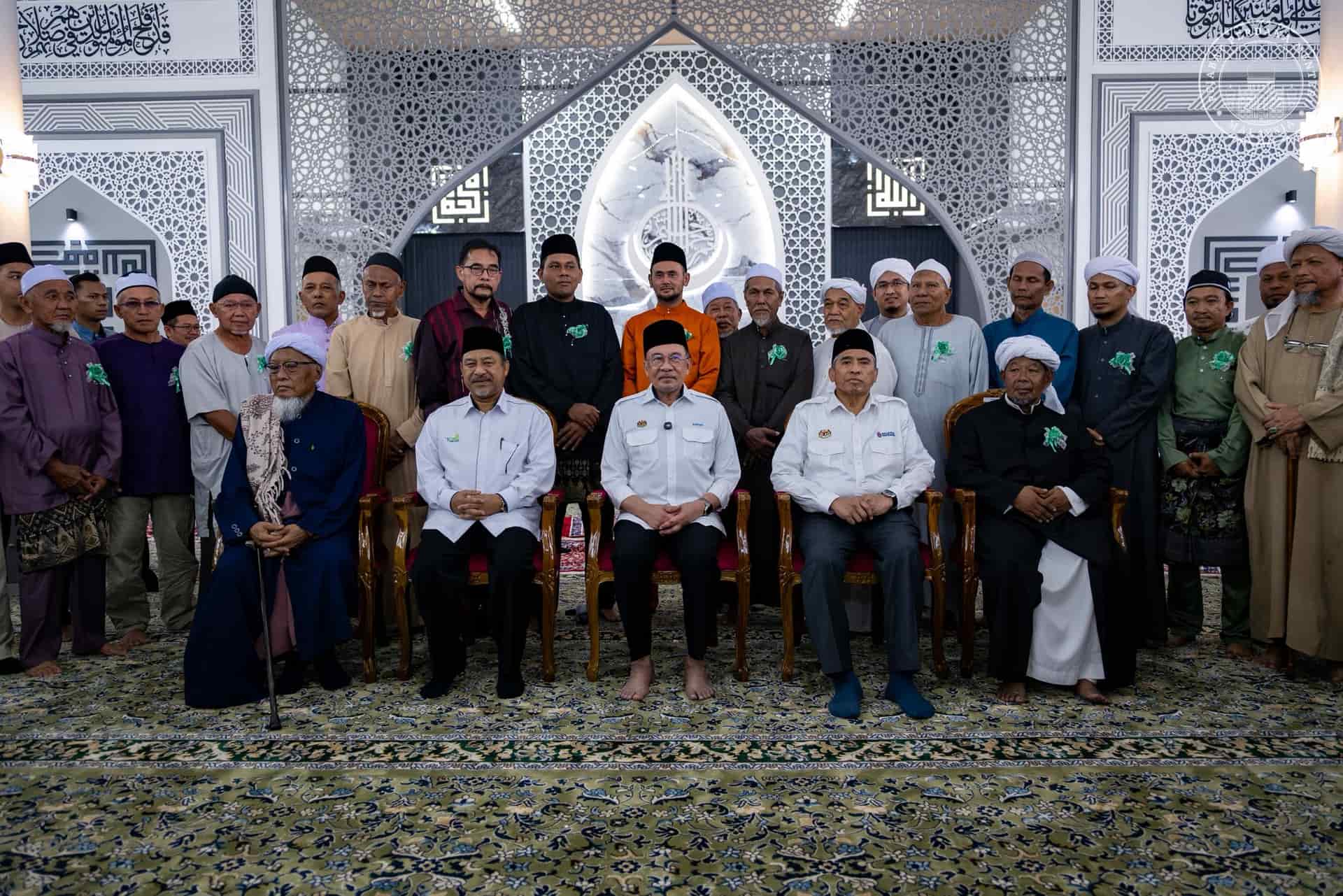
In the humid, bustling atmosphere of Pasir Puteh, Kelantan, amidst the backdrop of a modernized mosque funded by federal coffers, Prime Minister Datuk Seri Anwar Ibrahim made another significant financial commitment to the state. The federal government announced an additional allocation of RM20 million specifically targeted at poverty eradication.
To the casual observer, this is a clear-cut case of the central government extending a lifeline to an underdeveloped region. To the seasoned political analyst and the weary rural resident, however, the headline prompts an age-old question: In a state where poverty has been a perennial campaign issue for decades, is another injection of RM20 million a genuine panacea, or is it merely a well-intentioned band-aid on a systemic wound that requires surgery, not just subsidies?
The Arithmetic of Inequality
The announcement of the RM 20 million, while welcomed by local stakeholders, must be viewed through the lens of cold, hard data. According to the Department of Statistics Malaysia (DOSM), Kelantan continues to lag behind national averages in household income and poverty incidence. As of the latest reporting cycles, Kelantan recorded a poverty incidence rate of 11.5%, a figure that stands in stark contrast to the national average.
While the federal government has ramped up the total development allocation for Kelantan to RM 8 billion, critics argue that the sheer scale of the challenge ranging from inadequate drainage and infrastructure to a lack of high-value employment opportunities dwarfs the impact of small-scale cash disbursements.
When you break down the numbers, RM 20 million is a drop in the ocean compared to the structural capital investment required to fundamentally shift the economic base of a state that relies heavily on agriculture and small-scale commerce.
Beyond the Handout: The Structural Bottleneck
The government’s strategy, coordinated through the Implementation Coordination Unit (ICU), focuses on "listening to the ground." The Prime Minister cited issues like drainage and local agricultural challenges as the catalyst for this funding. While these are critical quality-of-life improvements, they address symptoms rather than the root cause.
True poverty eradication in Kelantan requires tackling the 'brain drain' phenomenon. The state’s brightest youth consistently migrate to the Klang Valley or abroad in search of competitive wages, leaving behind an aging demographic ill-equipped to spearhead a digital or industrial transformation.
The Missing Piece: Industrialization vs. Subsistence
For decades, the political friction between the Federal Government (currently led by the Madani coalition) and the State Government (PAS-led) has stymied long-term, cross-jurisdictional cooperation. Projects that could transform Kelantan such as large-scale agro-industrial hubs or digital free trade zones often become hostage to political maneuvering.
Experts argue that poverty in Kelantan is not a lack of resources, but a lack of market integration. Without robust infrastructure connecting the interior to the international trade nodes in the West Coast, local farmers remain trapped in a cycle of subsistence farming. A few million Ringgit in aid might fix a village drainage system, but it does not create the manufacturing base necessary to pull a household out of the bottom 40% (B40) income bracket permanently.
The Political Economy of Aid
There is an undeniable political subtext to these announcements. In a landscape where the federal government seeks to make inroads into PAS strongholds, financial aid acts as a bridge. By proving that the federal government can deliver tangible results modernized mosques, upgraded airports like the Sultan Ismail Petra Airport, and poverty relief funds the Madani administration creates a compelling narrative of inclusion.
However, the risk of this strategy is the cultivation of a "subsidy mentality." When residents become accustomed to episodic cash injections or small-scale grants, the pressure on the state government to pursue rigorous, sometimes unpopular, structural reforms diminishes. Why reform land laws to attract foreign direct investment (FDI) when the federal government will provide the necessary buffer to keep the populace satisfied?
A Path Forward: From Subsistence to Sustainability
To move beyond the cycle of poverty, policy must pivot from redistribution to productivity enhancement. This involves:
- Human Capital Development: Investing heavily in technical and vocational education (TVET) tailored to the local strengths of the East Coast, rather than generic education programs.
- Logistics & Connectivity: Accelerating the East Coast Rail Link (ECRL) and ancillary infrastructure to ensure that if a product is made in Kelantan, it can reach the port of Klang or regional markets efficiently.
- Digital Economy Incentives: Creating specific tax havens or digital zones that encourage tech firms to set up remote operations hubs in Kota Bharu, allowing youth to earn city-level wages while living in their home state.
What Do You Think? I’d Love to Hear Your Opinion in the Comments Section.
The RM 20 million allocation is a necessary intervention for the immediate welfare of Kelantan's most vulnerable citizens. In the short term, it will repair drains, support small farmers, and provide relief to households struggling with the rising cost of living. But journalists and citizens alike must be careful not to mistake welfare for development.
True poverty eradication will not be found in the announcement of supplemental funds, but in the sustained growth of the state’s Gini coefficient and the retention of its youth. Until the conversation shifts from "how much aid" to "how much investment and structural reform," the poverty map of Malaysia will remain stubbornly uneven.
AM World (tameer.work88@gmail.com) is a content creator under the Newswav Creator programme, where you get to express yourself, be a citizen journalist, and at the same time monetize your content & reach millions of users on Newswav. Log in to creator.newswav.com and become a Newswav Creator now!
The User Content (as defined on Newswav Terms of Use) above including the views expressed and media (pictures, videos, citations etc) were submitted & posted by the author. Newswav is solely an aggregation platform that hosts the User Content. If you have any questions about the content, copyright or other issues of the work, please contact creator@newswav.com.