
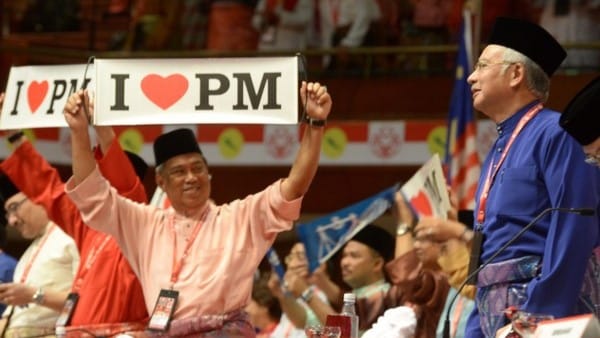
Malaysia has heard this song before.
Different decade. Different leader. Different number of zeros.
Yet somehow, the chorus never changes.
Once, the nation was asked to absorb the explanation of a RM2.6 billion political donation with a straight face. Today, the courtroom is hearing testimony involving repeated transfers allegedly totalling RM19.5 million into Bersatu-linked accounts, again described as donations.
The amount has shrunk. The imagination required from the public has not.
The figures may be smaller. The political fatigue is not.
This is where many Malaysians pause, stare at the ceiling, and ask a deeply national question: why does the word donation always appear whenever politics and large sums of money become awkwardly acquainted?
In many countries, donations are associated with charity drives, schools, hospitals, disaster relief, or helping a struggling neighbour.
In Malaysia, donations occasionally arrive wearing a suit, carrying corporate cheques, and displaying an almost supernatural sense of political direction.
That is where public trust begins to wobble.
The Business Logic Reality Check
One witness reportedly remarked that ordinary companies do not usually make repeated payments to political parties outside the normal nature of their business.
That observation lands harder than any slogan.
Because Malaysians understand business logic.
A restaurant sells food. A hardware shop sells tools. A developer builds projects. A construction company constructs things.
Since when did political funding become a core corporate social responsibility programme for private firms? Was there a memo nobody else received?
When did donating millions to political entities become standard operating procedure rather than an extraordinary event requiring extraordinary explanation?
Ask any small trader, hawker, or entrepreneur trying to secure a modest business loan. Many will tell you about forms, guarantors, statements, collateral, delays, and endless compliance checks.
Yet in the political imagination, millions can allegedly travel through the system under the friendly label of “donation”.
That gap between everyday experience and elite explanation is where cynicism is born.
The 29-Cheque Red Flag
Then comes the pattern itself.
Not one payment. Not two. But testimony referring to repeated transfers through multiple cheques, reportedly triggering suspicious transaction reports.
The obvious question writes itself.
If behaviour is unusual enough to repeatedly raise internal concern, how many warning bells must ring before someone accepts there may be a fire?
Why does it take dozens of questionable movements before an account is eventually shut?
Ordinary Malaysians know what happens when they accidentally breach a banking threshold or submit incomplete paperwork. Accounts are frozen. Calls are made. Explanations are demanded.
But when politics enters the frame, the system often appears slower, gentler, and blessed with levels of patience unavailable to ordinary customers.
That perception may be unfair in some cases. But perception is still political reality.
The Abah Brand Meets the Paper Trail
Muhyiddin Yassin built a recognisable image during the pandemic years.
To supporters, he was “Abah” stern, paternal, disciplined, and calm during national uncertainty. To critics, he was a leader without an electoral mandate who relied on emergency conditions and parliamentary fragility.
Either way, the brand was clear: order, responsibility, moral steadiness.
Courtroom narratives involving unusual transfers, repeated donations, and corporate generosity now place that image under pressure.
Because leadership is not judged only by speeches. It is judged by the company power keeps, the systems it tolerates, and the paper trails that emerge later.
Can any leader claim the moral high ground while their party appears sustained by generosity that ordinary Malaysians struggle to understand?
That is not merely a legal question. It is a credibility question.
And credibility, once cracked, rarely returns in its original form.
The Deja Vu Problem
Perhaps the biggest issue is not the amount.
RM19.5 million is not RM2.6 billion. No serious observer would pretend otherwise.
But politically, Malaysians are no longer reacting only to numbers. They are reacting to memory.
We have moved from foreign princes to local firms, from one era to another, from one explanation to the next. Yet the central script feels painfully familiar: large sums, political proximity, donation language, public disbelief.
This is why many citizens sound less angry than tired.
The scandal cycle no longer shocks. It exhausts. Malaysians are not always surprised anymore merely asked to update the number.
The Leadership Vacuum Ahead of GE16
Muhyiddin has stepped down as Perikatan Nasional chairman while remaining Bersatu president.
That arrangement may preserve influence, but it also raises a harder electoral question.
Can a coalition walk into the 16th General Election carrying donation baggage tied to one of its founding figures?
If he remains central, rivals will weaponise every courtroom detail.
If he steps back further, a succession struggle begins.
If he stays in between, uncertainty deepens.
That is the problem with unresolved leadership transitions: everyone waits, but nobody advances.
The RM19.5 Million Question
So the real issue is larger than one account, one witness, or one set of cheques.
It is whether Malaysia remains trapped in a political loop where “donation” is merely the polite word used when influence needs better branding.
Until political financing becomes radically transparent, every future leader will inherit the suspicion created by previous ones.
And until that cycle is broken, voters may continue to wonder whether governments are built by ballots, or merely financed until they appear inevitable.
Malaysia deserves a politics where donations make sense.
At the moment, many still do not.
Annan Vaithegi writes on power, public trust, and the strange moments when official explanations sound less believable than ordinary common sense.
Annan Vaithegi (annanvaithegi@icloud.com) is a content creator under the Newswav Creator programme, where you get to express yourself, be a citizen journalist, and at the same time monetize your content & reach millions of users on Newswav. Log in to creator.newswav.com and become a Newswav Creator now!
The User Content (as defined on Newswav Terms of Use) above including the views expressed and media (pictures, videos, citations etc) were submitted & posted by the author. Newswav is solely an aggregation platform that hosts the User Content. If you have any questions about the content, copyright or other issues of the work, please contact creator@newswav.com.