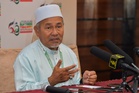
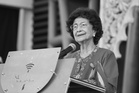
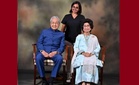
.png)
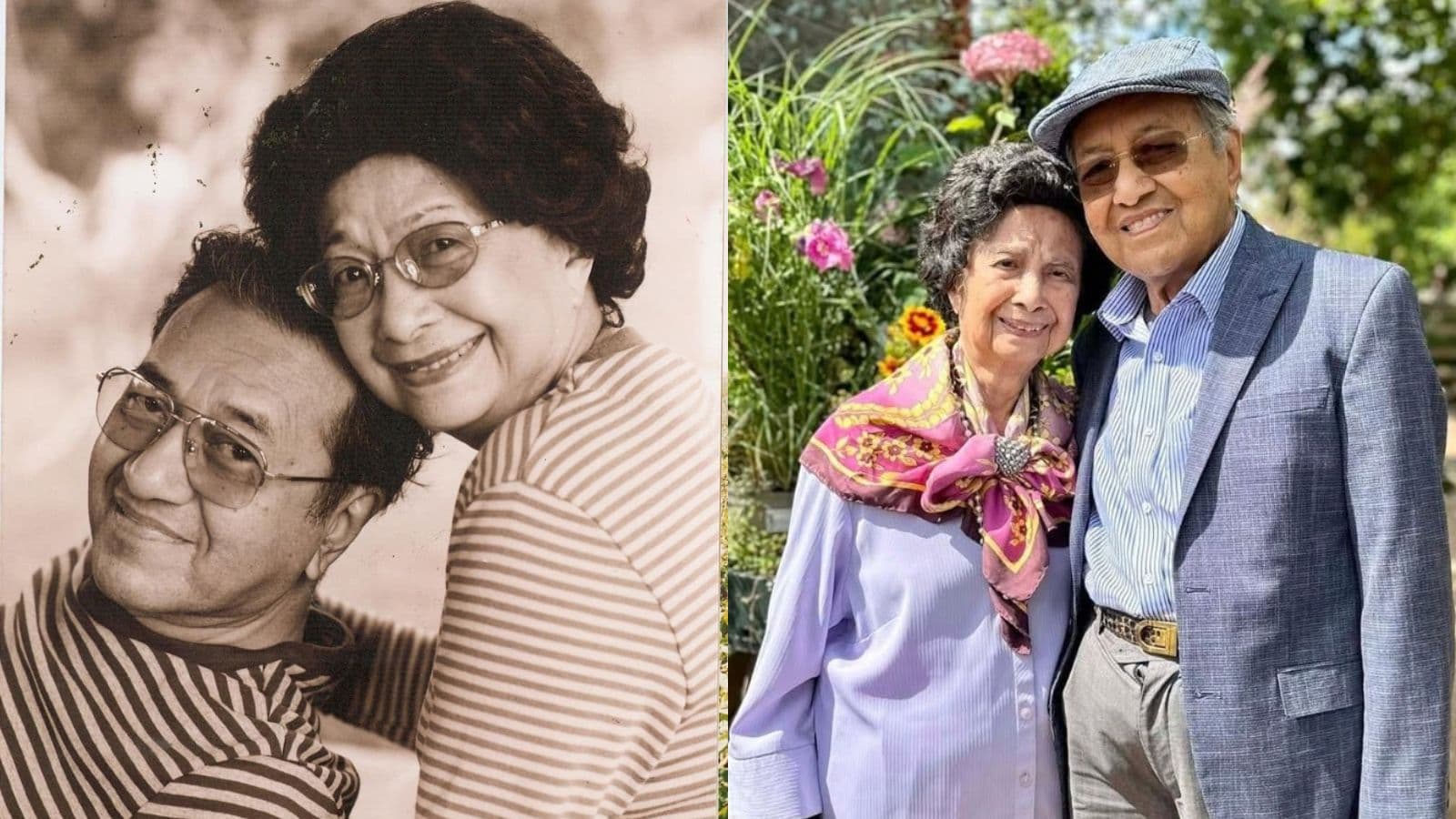
I followed the news of Tun Dr Siti Hasmah Mohd Ali's passing.
I read about her death, her life, the tributes, the final ceremony and the memories of the woman who had been a familiar presence in Malaysian public life for decades.
She had lived a remarkable life, and there was something quite moving about seeing the photographs and stories that documented the different chapters of it.
And then the coverage began to change.
Suddenly, there were close-ups of Tun Dr Mahathir Mohamad crying.
Photographs of him looking devastated.
Videos capturing his grief.
Reports about how he was coping after losing his wife.
And even days after her passing, the coverage continued to follow his grief as the family dealt with the loss.
Tun M and Siti Hasmah had been life partners for seven decades. If there is one thing nobody needs to explain to us, it is why he would be devastated by her death.
Of course he is grieving. He has just lost his wife.
So why do we need to watch him grieve?
I am not questioning whether the media should report on Siti Hasmah's death. Of course they should. She was a significant public figure. Her life, her work, her contributions and the circumstances surrounding her death are legitimate news.
The funeral is news.
The tributes are news.
The stories of her life are news.
But is Tun M's grief news?
At what point does reporting end and voyeurism begin?
Because there is something uncomfortable about watching a man mourn his wife of 70 years through a camera lens.
We don't need to see the tears to know that he is heartbroken.
We don't need a close-up of his face to understand what losing his lifelong companion must mean.
And we certainly don't need a daily update on how he is coping with the loss.
Perhaps the uncomfortable truth is that grief makes compelling content.
People are naturally drawn to it. We feel something. We imagine their pain. We remember our own losses. We want to know how someone is coping with something we ourselves fear experiencing.
And so we click.
We watch.
We share.
The media follows the attention.
And the cycle continues.
But just because something attracts an audience doesn't necessarily mean we should be consuming it.
There must still be a line between what is interesting to us and what is respectful to the person experiencing it.
Tun M may have been a prime minister for decades, but when he loses his wife, he is also simply a husband who has lost his partner.
Of course, the news of her passing still makes a good content. But the media needs to exercise some restraint.
There is a difference between remembering the dead and watching the living suffer their loss.
The first can be a meaningful public record.
The second can very quickly become an intrusion.
And this isn't something that only happens to famous people.
I know this because I wrote about exactly the same thing eight years ago.
Grief vultures
In 2018, I wrote an article called Stop Being Grief Vultures after watching television coverage of the six divers who died while attempting to rescue a teenager.
I watched the funeral coverage. I watched the families say goodbye. And then I watched reporters interview parents, spouses and relatives while they were visibly devastated.
I remember asking then, “Why can't we give the families of the victims some privacy when covering a story?”
I was particularly bothered by the questions being thrown at people who had barely had time to process their loss.
“How are you feeling?”
"What was your last conversation with him?"
"What do you remember?"
Questions that may make for an emotional television segment, but what do they actually add to news?
Eight years later, I find myself asking the same question.
Only this time, the grieving person is someone almost every Malaysian knows.
Perhaps that makes it easier to see the problem.
When we watch Tun M grieving, we may tell ourselves that we are witnessing history - but are we, though?
The truth is, we are simply watching a man miss his wife.
So please. We can mourn Siti Hasmah. We can read the beautiful stories about her. We can send our condolences to her family. And then we can step back.
Grief does not need an audience. It needs space.
And if the media really wants to tell the human story, perhaps it should remember that sometimes the most human thing it can do is leave people alone.
As for me, my fondest memory of Siti Hasmah is from a book-signing ceremony some 20-years ago, when I introduced my family to her. She held my hands and said, “Take care of your children. They are the most important thing in the world.”
That was Siti Hasmah to me. A mother.
And perhaps that is how I would rather remember her - not through photographs of her husband grieving, but through the words she left me with that day.
Al-Fatihah to Tun Dr Siti Hasmah Mohd Ali.
Fa Abdul (fa.abdul.penang@gmail.com) is a content creator under the Newswav Creator programme, where you get to express yourself, be a citizen journalist, and at the same time monetize your content & reach millions of users on Newswav. Log in to creator.newswav.com and become a Newswav Creator now!
The User Content (as defined on Newswav Terms of Use) above including the views expressed and media (pictures, videos, citations etc) were submitted & posted by the author. Newswav is solely an aggregation platform that hosts the User Content. If you have any questions about the content, copyright or other issues of the work, please contact creator@newswav.com.