
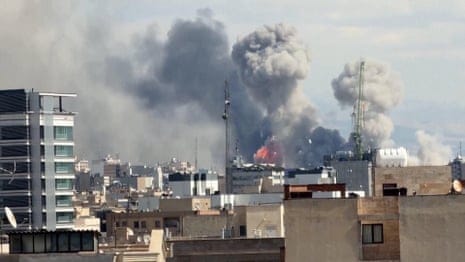
The unfolding crisis around the Strait of Hormuz in 2026 may seem like a distant geopolitical storm, rumbling far beyond Malaysia’s shores, yet its thunder is heard most clearly at the family dining table. What happens thousands of kilometers away now travels like an invisible tide, washing up quietly in the form of higher food prices. For many Malaysian households, the crisis is no longer a headline—it is the shrinking portion on a plate, the extra ringgit counted twice before spending.
At the heart of this pressure lies food price inflation, creeping in like a slow-burning fire beneath a pot. While the government has placed a lid on certain essential prices, the heat continues to build underneath. Malaysia depends heavily on imported items such as onions, garlic, and specialty grains. With ships now forced to reroute away from the Persian Gulf, global trade resembles a convoy taking the long road through a storm. Insurance costs have surged like waves crashing against a hull, and import expenses have risen by 15 to 20 percent since February. Though these increases are not always immediately visible, they accumulate quietly—like droplets filling a bucket—until households suddenly feel the overflow.
Equally significant is the disruption to fertilizer supply, a hidden root of the problem. Much of the world’s urea and sulfur passes through the Strait of Hormuz, and the current blockade has choked this vital artery of global agriculture. Without sufficient fertilizer, farmers are like painters without paint, unable to produce at the same scale or cost. Prices for fertilizers have surged, planting the seeds for future food inflation. In the coming harvest cycles, vegetables and rice may carry the imprint of this crisis, like crops growing under a clouded sky.
Transportation and logistics add another layer to this complex web. As fuel prices climb like a relentless staircase, delivery companies have introduced emergency surcharges ranging from RM0.50 to RM1.50 per trip. These added costs may seem small, like grains by slipping through fingers, but together they form a heavy burden. Every delivery—from e-commerce parcels to fresh produce at wet markets—now carries this extra weight. It is as if every step in the supply chain is wearing heavier boots, slowing movement and increasing cost.
To shield citizens from the harshest winds of this economic storm, the government has been helping the citizenry with heavy subsidy to petroleum especially RON 95
Yet, even with these measures, the strain is beginning to show in the marketplace. According to the Department of Statistics Malaysia, certain food categories are already under pressure. Poultry prices, for instance, are rising as the cost of imported grain and corn—essential for chicken feed—climbs. The effect is like a chain of dominoes: when feed prices fall, the first tile tips, and the rest follow inevitably.
Cooking oil presents a particularly striking paradox. Malaysia, a major producer of palm oil, finds itself caught in the currents of global pricing. As crude oil prices surge, crude palm oil follows suit, like a kite pulled higher by a strong wind. Subsidized cooking oil packets, once easy to find, have become scarce in some urban areas, as high demand empties shelves faster than they can be replenished. The absence of these everyday items feels like missing threads in the fabric of daily life.
In essence, the Hormuz crisis reveals how interconnected the modern world truly is. A disruption in one narrow strait can echo across oceans and continents, eventually settling in the kitchens of ordinary Malaysians. It is a reminder that the global economy is not a distant machine, but a living network—more like a web than a chain—where a tremor in one corner sends vibrations throughout. For Malaysians, the challenge is not only to weather this storm, but to adapt, endure, and find balance as the tides of global change continue to rise and fall.
moykokming@gmail.com
Moy Kok Ming (moykokming@gmail.com) is a content creator under the Newswav Creator programme, where you get to express yourself, be a citizen journalist, and at the same time monetize your content & reach millions of users on Newswav. Log in to creator.newswav.com and become a Newswav Creator now!
The User Content (as defined on Newswav Terms of Use) above including the views expressed and media (pictures, videos, citations etc) were submitted & posted by the author. Newswav is solely an aggregation platform that hosts the User Content. If you have any questions about the content, copyright or other issues of the work, please contact creator@newswav.com.


