
The former supreme leader of Iran, Ali Khamenei, could have hidden in an underground bunker to save himself from the American and Israeli air attacks. Instead, he remained above ground, even if doing so meant he might be killed.
His is death , in other words, was not merely an accident of war. It was a decision.
Khamenei likely chose martyrdom — not out of recklessness, but as a calculated political act. In a nation where the symbolism of sacrifice runs deep, the death of a supreme leader could serve as a powerful rallying cry, urging Iranians to resist what they perceive as an assault by the West.
If that is the position Iran’s highest authority has taken at the very outbreak of war, then it is difficult to see how the conflict in Iran will end within a few weeks, as some observers optimistically predict.
Iran is not a small or fragile state. It is a civilisation-state of nearly 100 million people, and it has anticipated the possibility of war with the West for decades.
The willingness of its supreme leader to embrace martyrdom at the very start of hostilities suggests that the Iranian leadership has long contemplated the costs of such a confrontation.
And yet it remains unclear what exactly does the West hope to achieve in Iran.
Do they intend to conquer Iran?
Do they intend to destroy the Iranian state?
Or do they believe that removing the top leadership of the Iranian government and military will trigger a popular uprising against the Islamic Republic?
The latter assumption appears to be the working theory in many Western capitals — that the Iranian people are tired of the theocratic system that governs them, and that the fall of the leadership will cause the population to rise up and welcome foreign intervention as liberation.
Personally, I think such an assumption requires a considerable amount of pride, and perhaps even vanity.
Iran is an ancient and proud nation. Civilisations that have survived thousands of years rarely respond kindly to being attacked by outsiders, regardless of their internal political disagreements.
Even if some Iranians oppose their government, it does not automatically follow that they will welcome foreign bombs.
Meanwhile, the economic consequences of this war are already beginning to ripple across the world.
The International Energy Agency has warned that the conflict in Iran is creating unprecedented turmoil in global energy markets.
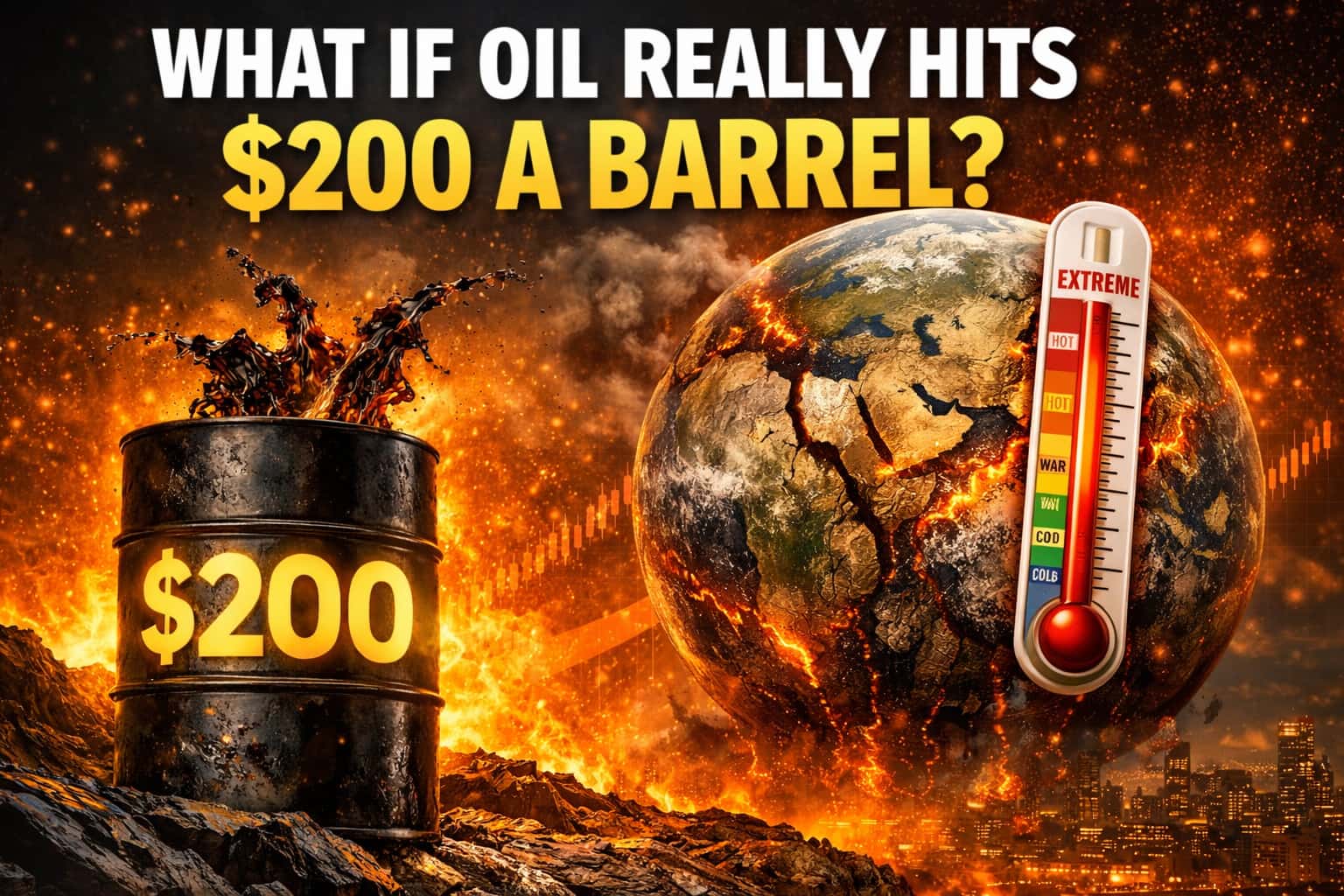
Iran has also vowed to escalate the situation until oil prices reach as high as $200 a barrel.
No one knows exactly what the world will look like if oil reaches that level. But one thing is already clear: millions of people around the world are struggling just to reach the end of the month.
Oil at $200 a barrel could be enough to push many of them over the edge.
Over the edge how, exactly?
The answer may lie in a passage from the United States Declaration of Independence:
all experience hath shewn, that mankind are more disposed to suffer, while evils are sufferable, than to right themselves by abolishing the forms to which they are accustomed. But when a long train of abuses and usurpations, pursuing invariably the same Object evinces a design to reduce them under absolute Despotism, it is their right, it is their duty, to throw off such Government, and to provide new Guards for their future security.
In other words, people tend to endure hardship for as long as they can bear it. Human beings are remarkably tolerant of suffering — up to a point.
But when suffering crosses a certain threshold, something changes.
At that point, people no longer merely endure their circumstances.
They demand drastic change.
We may already be seeing early signs of this threshold being approached.
Just two weeks into the Iran war, countries are already adjusting their societies in response to the emerging energy crisis.
Bangladesh has reportedly shut down universities.
Thailand had ordered its bureaucrats to use stairs and work from home in energy saving drive.
Civil servants in the Philippines have begun working four days a week as the government of the net fuel-importing nation seeks to reduce its energy use now that the war in the Middle East is driving oil prices to their highest level in years.
And even in our own country, voices are beginning to warn Malaysians to brace themselves for economic turbulence.
But I am not convinced that people — not only in Malaysia, but across the world — will have much reason to patiently endure economic hardship if the economy itself collapses.
After all, the economy is often the very reason people tolerate everything else.
A nation, in many ways, is like a field that people enter in search of success and happiness.
Yet in many parts of the world today — not excluding our own — people are losing faith that such things are truly attainable.
Happiness increasingly feels distant, as many are confronted daily by circumstances that leave them angry, frustrated and bitter.
As for success, many have come to suspect that the field in which success is pursued is rigged.
When people believe the competition is unfair, they stop believing that merit alone can bring them victory.
And when people no longer believe that their society offers genuine opportunities for success or happiness, the only thing they continue to hope for is the market.
In other words, they hope that as long as the marketplace remains open, they will eventually be able to make a deal — perhaps even one big enough to fill the void left by the absence of happiness or success.
But if oil prices continue to climb, large parts of the global economy may begin to shut down.
Markets may shrink.
Opportunities may vanish.
And if enough of the marketplace disappears, many people may begin to question the very point of enduring their circumstances at all.
When that moment arrives, it becomes very difficult to predict what people will do next.
History suggests, however, that when enough people decide they have nothing left to lose, the world can change very quickly.
Although I do not believe it, I do hope that the war in Iran will end within the next few weeks or months.
If the war does end quickly, the world may yet step back from the brink.
But if it does not end — or worse, if it escalates, to the point that oil does reach reach $200 a barrel as the Iranian's have promised— then I reckon we had better find something to hold on to.
We should, because in the next few months, we might find the very foundations of the world as we know it beginning to tremble.
TheRealNehruism (nehru.sathiamoorthy@gmail.com) is a content creator under the Newswav Creator programme, where you get to express yourself, be a citizen journalist, and at the same time monetize your content & reach millions of users on Newswav. Log in to creator.newswav.com and become a Newswav Creator now!
The User Content (as defined on Newswav Terms of Use) above including the views expressed and media (pictures, videos, citations etc) were submitted & posted by the author. Newswav is solely an aggregation platform that hosts the User Content. If you have any questions about the content, copyright or other issues of the work, please contact creator@newswav.com.
