There's something about this news that caught my attention. Not so much the alleged misconduct itself, but the courage of the person who decided to report it.
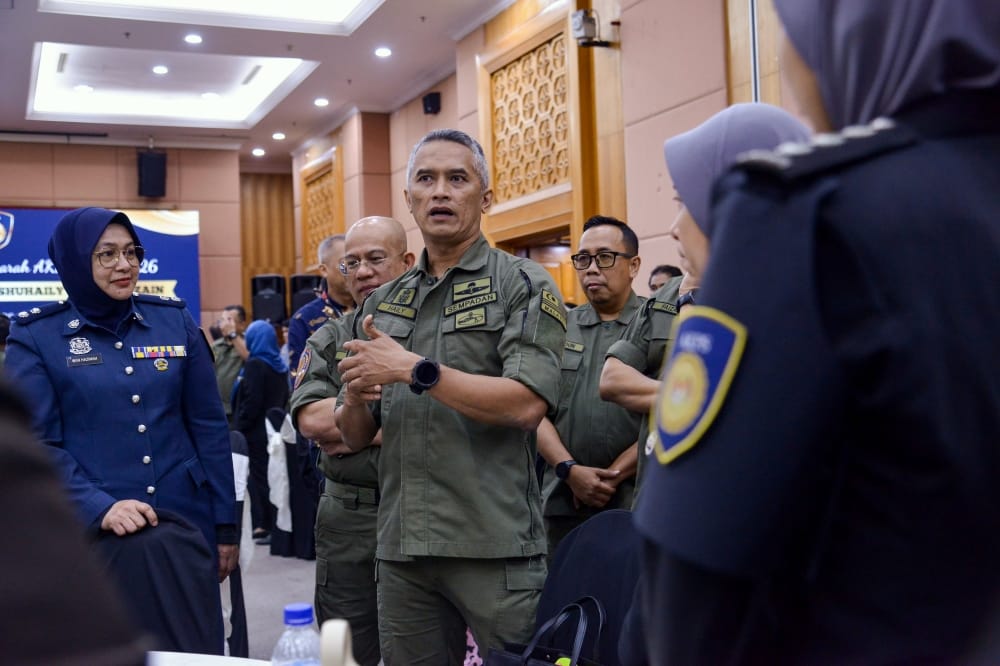
According to a news report, a female officer from the Malaysian Border Control and Protection Agency (AKPS) reported her own superior after noticing that he was allegedly doing something he was not supposed to do at the immigration counter at KLIA Terminal 2. Her report eventually led to the arrest of the senior officer, who is suspected of facilitating the entry of a foreign woman into Malaysia without valid travel documents.
What I found particularly encouraging was the response from the agency's director-general, Datuk Seri Mohd Shuhaily Mohd Zain. He didn't just commend her courage - he publicly pledged his support, saying that he would stand behind her.
Now, that is something worth talking about.
You see, it's never easy to complain about someone who is above you in the workplace. Whether it's your immediate superior, manager, director or even the company owner, there is always that invisible power imbalance.
You know they have authority over you. They may influence your career progression, your salary, your working environment and, in some cases, whether you get to keep your job. And when the person you are complaining about is considered an asset to the organisation, things can get even more complicated.
I know this because I have my own stories.
I once had a boss who behaved inappropriately towards me while we were in a car, on our way to meet clients. I was uncomfortable with what happened, and eventually, I made the decision to resign.
My daughter once lodged a complaint against a senior colleague who had used a derogatory word towards her. Instead of addressing the matter, she was asked to compromise because the person involved was a partner at the firm.
My son also once reported a manager who had a habit of screaming during meetings and belittling members of the team. He was subsequently asked to withdraw his complaint because the manager was considered an asset to the company.
See the pattern here?
In all three situations, the people who raised concerns were the ones expected to make adjustments. The organisation's interests, the senior person's position or the company's convenience somehow became more important than addressing the problem.
This is probably why many people eventually give up. They resign. They transfer to another department. They find another job. Or they simply learn to shut up and put up with things because they need the salary. Not everyone has the financial freedom, emotional capacity or courage to take on someone who holds power over them.
Sometimes, walking away is the only option they feel they have - but what happens when everyone who speaks up eventually walks away?
We end up with workplaces where people are afraid to raise concerns, where bad behaviour is tolerated because the person responsible brings in money or holds an important position, and where those in junior positions slowly lose trust in the very people who are supposed to look after them.
And I think this is a bigger problem than we care to admit.
We talk a lot about leadership. We celebrate people who climb the corporate ladder, hold senior positions and bring value to an organisation. But how many of them actually understand what it means to be a leader?
Being a leader isn't just about having people reporting to you. It is about creating an environment where people feel safe enough to disagree with you, question you and even report you when you do something wrong.
If your employees are afraid of you, that isn't respect. If they have to choose between protecting their dignity and protecting their jobs, something is seriously wrong with your workplace culture.
Which brings me back to this female AKPS officer.
I don't know her circumstances. I don't know what went through her mind when she decided to report her superior. Perhaps she was simply determined to do what was right.
Or perhaps she knew there was someone in the organisation she could count on. If I had to make a wild guess, I'd bet all my money that it was her faith in the director-general that gave her the confidence to make that ballsy call.
And who is this director-general? Shuhaily isn't just another civil servant who landed himself a top job. He came from Bukit Aman, where he served as the Director of the Criminal Investigation Department, with 26 years of policing experience behind him. He was brought into AKPS to lead an agency that has its fair share of challenges, particularly when it comes to cleaning up our borders.
Yes, he has had his own share of controversies recently, including the incident involving two undercover police officers at KLIA. But that matter is before the courts, and I am not going to speculate on it.
What I do know is that I like what I am seeing in his response to this particular incident. He didn't distance himself from the whistleblower. He didn't ask her to compromise. Instead, he publicly recognised her courage and promised to stand by her.
And frankly, I'm team Shuhaily on this one. I hope he means what he says, and I hope he continues to show us what leadership should look like.
Fa Abdul (fa.abdul.penang@gmail.com) is a content creator under the Newswav Creator programme, where you get to express yourself, be a citizen journalist, and at the same time monetize your content & reach millions of users on Newswav. Log in to creator.newswav.com and become a Newswav Creator now!
The User Content (as defined on Newswav Terms of Use) above including the views expressed and media (pictures, videos, citations etc) were submitted & posted by the author. Newswav is solely an aggregation platform that hosts the User Content. If you have any questions about the content, copyright or other issues of the work, please contact creator@newswav.com.