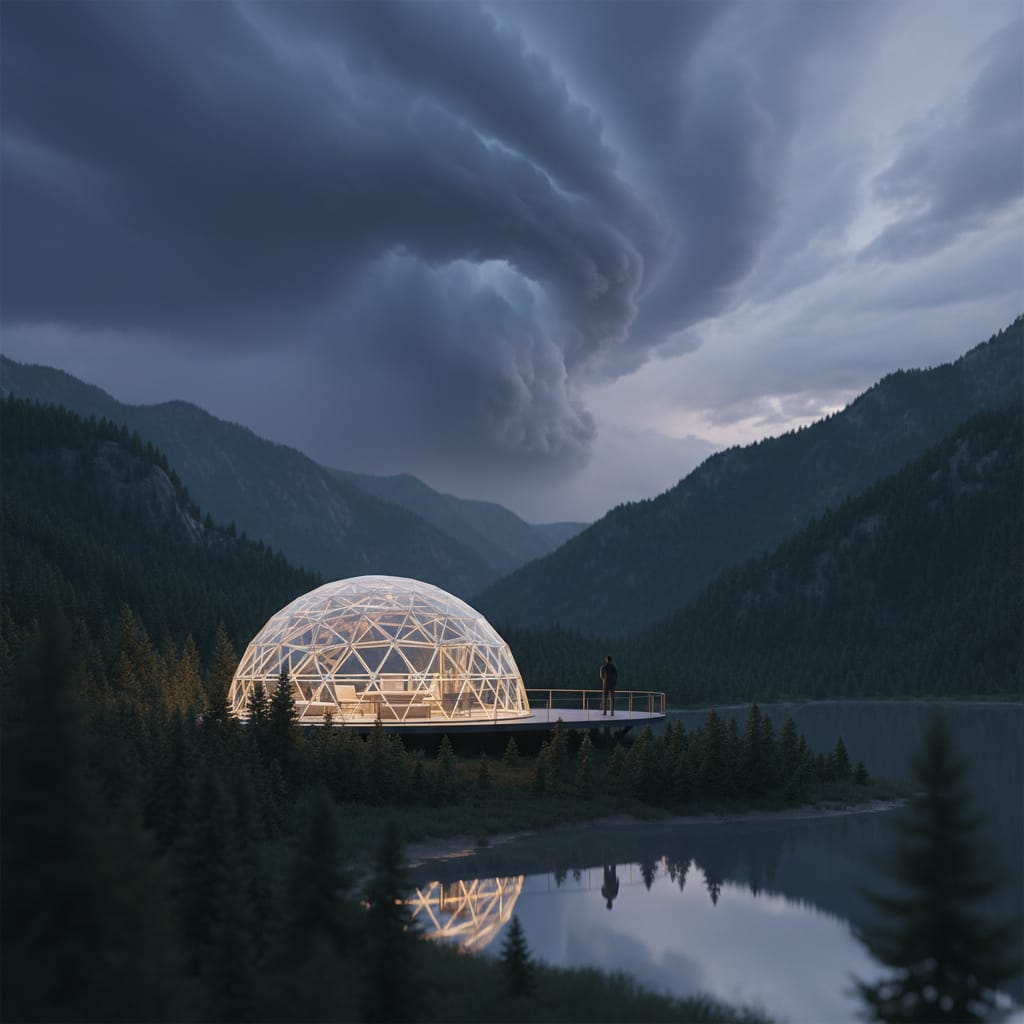
A quiet thought can become a worry. People in Malaysia today are asking: If World War III ever happens, where is the safest place on Earth? This question matters to you, your family, and your community in Selangor, Kuala Lumpur, Penang, Johor, Sabah and Sarawak. Not because war is guaranteed. But because recent global tensionsfrom the Middle East clashes to US-China rivalry make many wonder about safety and security. (AP News)
This article explains:
• what experts say about safety in a global war,
• which places might be safer than others,
• the impact on Malaysia socially and economically,
• and how this fits in real data.
The goal is simple. Provide facts you can read easily, trust, and think about with your family.
A sudden fear from distant battles
Imagine hearing news of a big escalation in Europe. Or reports of nuclear threats. Fear rises fast. That fear is why many people around the world are asking about the safest places on Earth if a global war breaks out.
Experts warn that if a nuclear war happened, it could have catastrophic effects on people everywhere. Some models suggest a large nuclear exchange could disrupt climate and agriculture globally within months. (Kompas)
It is not just about bombs falling. It is also about climate, crops, economy, and health.
Safety rankings from global peace data
One of the most widely respected measures of peace is the Global Peace Index (GPI), published by the Institute for Economics and Peace. It ranks countries based on conflict, security, and militarisation. (Vision of Humanity)
The index shows that peace and safety vary greatly around the world. Some countries are consistently ranked as peaceful and stable even in tense times.
Here are some key points from recent data:
• Iceland, Ireland, New Zealand, Austria, Switzerland, Singapore and Denmark often rank among the world’s most peaceful.
• Malaysia also appears in peace rankings, showing it is not among the most violent nations. (Facebook)
• Peaceful places tend to have low internal conflict, strong institutions, and limited involvement in external wars. (Vision of Humanity)
These rankings do not guarantee safety in a global war. But they help show which countries have stable societies and lower risk of direct military engagement.
Which places might be “safer”?
No place on Earth is completely safe in a full‑scale global war, especially if it involves nuclear weapons. But analysts and peace indexes point to characteristics that could make some places relatively safer:
Geographically isolated countries like Iceland and New Zealand
• These are far from major military tensions and have strong self‑sufficiency in food and water. (Kompas)
• They rank high in peace indexes and have a history of non‑intervention. (MoneyWeek)
Neutral and mountainous countries like Switzerland
• Switzerland has a long tradition of neutrality and extensive civil defence infrastructure. (Euro Weekly News)
• Its geographical terrain offers natural protection. (Euro Weekly News)
Countries with strong agricultural base and minimal foreign entanglements like Argentina or Bhutan
• Argentina has abundant farmland and crops that could support self‑sustained food production if global supply chains break. (IDN Times)
• Bhutan’s isolation and neutral diplomacy reduce risks from great‑power conflict. (Kosmo Digital)
Remote island nations like Fiji
• Isolated in the Pacific and with low military involvement, Fiji may avoid direct involvement in conflicts far from its shores. (Business Upturn)
These are examples based on peace rankings, geography, and expert commentary. None guarantee survival. They highlight relative risk differences.
Could Southeast Asia or Malaysia be safe?
Malaysia is not on most lists of top safest places in case of global war. But there are elements that give hope:
• Malaysia ranks moderately well on peace indexes, showing stability compared to many other countries. (Facebook)
• Malaysia pursues balanced foreign policy. Leaders often stress not choosing sides between major powers like the United States and China. (AP News)
• ASEAN as a region prioritises diplomatic solutions and regional cooperation.
Yet there are also challenges:
• Malaysia sits near important geopolitical flashpoints such as the South China Sea. Disputes there could draw in great powers. (The Geopolitics)
• Any global conflict could disrupt Malaysian trade, tourism, and supply chains. Malaysia is deeply connected to Asian and global economies. Loss of trade routes would hurt incomes and jobs fast.
So, while Malaysia may not be a first target in a global war, strategic importance and economic links mean it could still feel effects deeply.
What experts say
We spoke to Malaysian and international analysts to get clear views:
Ayman Rashdan Wong, Malaysian geopolitical analyst, says:
“Malaysia’s geography and diplomacy give it relative stability. But no country is truly safe if key powers clash directly.”
Institute for Economics and Peace (IEP) researchers explain:
“Global peacefulness has deteriorated and conflict indicators are higher than since World War II. Increased militarisation and internationalised conflicts raise risk levels.” (Vision of Humanity)
These views align with data: rising global tensions make stability harder to forecast. Peaceful countries remain peaceful, but spillover effects can still reach them.
Economic and social effects on Malaysia
What if a global war started? Here’s what Malaysian families might face:
1. Higher cost of living
Trade disruptions would hit imports and exports. Food, fuel, electronics could become more expensive. This affects household budgets immediately.
2. Job uncertainty
Many Malaysian industries depend on global markets. Export declines could lead to layoffs and slower growth.
3. Supply chain delays
Vital goods from overseas could slow or stop. Health, education and manufacturing sectors all rely on global flows.
4. Social anxiety and migration choices
A real threat of war may prompt families to consider moving abroad. But moving is costly and uncertain. It can strain communities left behind.
In past conflicts like the Gulf Wars, oil prices spiked, and markets fell. The same pressures on global politics today show the economic link between peace and prosperity.
Hard choices ahead
Experts emphasise that peace is not random. It results from stable governance, diplomacy, and cooperation. Countries that avoid direct confrontation maintain open communication and negotiate conflicts before they turn violent.
For Malaysia, this means:
• continue balanced foreign relations
• strengthen ASEAN frameworks
• improve domestic resilience in agriculture and industry
• educate families on emergency preparedness
These steps do not guarantee safety. But they reduce vulnerability if the world becomes more unstable.
What do you think? I’d love to hear your opinion in the comments section.
Where is the safest place in the world if World War III happened? No single answer exists. Some places may be relatively safer due to peace, isolation, or self‑sufficiency. For Malaysians, safety depends on diplomacy, regional stability, and global cooperation that prevents war in the first place.
The real safety may lie not in distance, but in how the world works together to avoid war at all.
AM World (tameer.work88@gmail.com) is a content creator under the Newswav Creator programme, where you get to express yourself, be a citizen journalist, and at the same time monetize your content & reach millions of users on Newswav. Log in to creator.newswav.com and become a Newswav Creator now!
The User Content (as defined on Newswav Terms of Use) above including the views expressed and media (pictures, videos, citations etc) were submitted & posted by the author. Newswav is solely an aggregation platform that hosts the User Content. If you have any questions about the content, copyright or other issues of the work, please contact creator@newswav.com.