

Last Wednesday (24/1/2024), Deputy Prime Minister Ahmad Zahid Hamidi announced that the government plans to introduce a new salary scheme - newly hired civil servants would no longer get pensions but would instead contribute to SOCSO and EPF. This announcement sparked some heated discussions among the public with some expressing their support while others opposed it. One such organization that opposes it is Cuepacs, the umbrella body for civil service unions. Cuepacs' president, Dr Adnan Mat said that most civil servants prefer the pension scheme as “due to the current low salaries in the civil service, the EPF contribution scheme is seen as inadequate in helping civil servants build a substantial retirement fund”. However, in this article, I would like to present my take on abolishing pensions for new civil service hires and why I think it is a good idea.
1. Pensions are financially-taxing
Malaysia’s bureaucracy is one of the largest in the world: 1.7 million civil servants to a population of 32 million, this means that we have 1 civil servant for every 20 citizens. That is a ratio of 4.5% compared with Singapore’s 1.5%, Hong Kong’s 2.3% and Taiwan’s ratio of 2.3%. More than RM41 billion is spent annually just for the upkeep of civil servants. Add pensions to that and we would burn another RM32.4 billion.
It is worth mentioning that when looking at the 2000-2019 period, the sum of the Malaysian government’s annual retirement charges (including pensions and related costs) has grown rapidly from over RM4 billion to around RM26 billion - six times higher in under 20 years. According to Deputy Prime Minister, Ahmad Zahid Hamidi, this is expected to reach RM120 billion if we continue with our existing policy for hiring permanent staff in the civil service. There is no doubt in my mind that pensions are a “ticking time bomb” and by abolishing pensions, we can relieve such a heavy financial burden.

2. Pensions DO NOT help with attracting or retaining talent
Youth activist, Beh Zeng Kang has said that abolishing pensions may deter young talent from joining the public sector. That statement doesn't hold water as multiple studies have shown that pensions DO NOT help with attracting or retaining talent. One 2021 study by Shawn Ni, Michael Podgursky, and Xiqian Wang examined the impact enhanced pension benefits had on the staffing of teachers in a big school district. The report found that the pension benefit enhancements DID NOT improve teacher recruitment or retention.
Another study by the same authors took a broader view of pensions in the public sector and found that pension incentives had LITTLE IMPACT on the decisions of workers or the quality of the workforce. In this study, the authors try to gain a better understanding of the impact of pension benefit changes on teacher quality in Tennessee. The authors noted that other factors, such as work-life balance and job security, were more likely to influence a public employee’s decision to remain with their employer. This study suggests that pensions are not a significant driver of recruitment and retention in the public sector.

3. Pensions are ineffective in dealing with ‘wage compression’
In developing countries such as India, public-sector employees (civil servants) with the same human capital and experience generally earn more than their private-sector counterparts. This suggests that any further advantage provided to civil servants through pension or other benefits is not needed in order to compete with the private sector. In fact, the additional compensation would only exacerbate unjustified compensation differentials and increase the cost of government unnecessarily. The main exception to this finding is reserved for those civil servants with the most human capital - several studies have found that highly educated civil servants tend to earn less than their private-sector equivalents. However, bear in mind that only 5-10% of the civil service falls into this category.
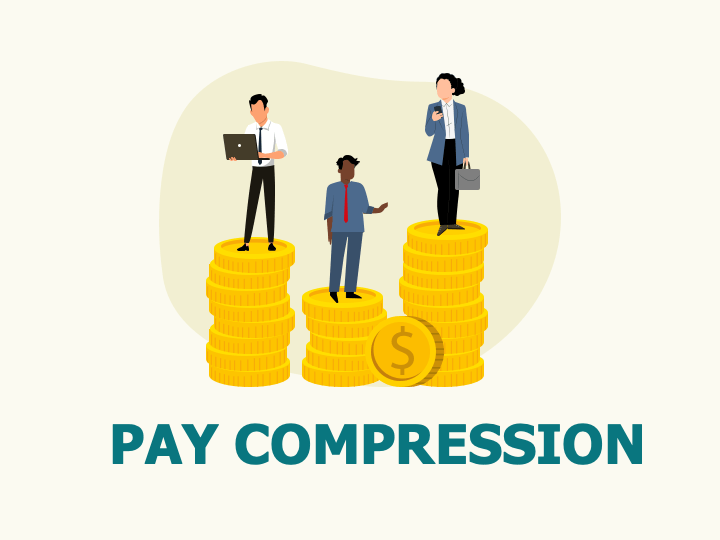
This finding is undoubtedly linked to ‘wage compression’ in the civil service. What is wage compression? Simply put, it is when differences in compensation among employees don’t reflect their skills, experience or responsibilities. According to the World Bank, pensions are a very ineffective way of dealing with this problem. While pensions do increase the remuneration of the workers with the highest human capital, they also increase the compensation of the vast majority. Since pensions are directly related to wages through the benefit formula, they simply reinforce the compression of wages.
4. Pensions are outdated
Our attitudes today toward work and retirement are different from our parents. I would argue that the traditional notion of retirement where individuals stop working entirely when they reach a certain age and rely solely on pensions for income is becoming outdated as the days go by. The line between work and retirement is becoming increasingly blurred - the concept of ‘retirement’ as we know it today may soon be outdated. That isn't necessarily bad - past generations may have plenty of certainty and not much control but today's generation has a bigger say in how and when we want to retire.
In today's world, there is a growing emphasis on flexible work arrangements, phased retirement, and personal savings strategies to supplement retirement income. It is high time that newly hired civil servants notice this and adapt to an ever-changing world.

These are my thoughts on the government's plan to introduce a new salary scheme in which pensions for new civil service hires would be abolished. According to PMX, it would also apply to politicians as well once the study of the proposal and approval were obtained at Cabinet level. This is fair to everyone involved in the public sector.
Aaron Colt is a content creator under the Newswav Creator programme, where you get to express yourself, be a citizen journalist, and at the same time monetize your content & reach millions of users on Newswav. Log in to creator.newswav.com and become a Newswav Creator now!
The User Content (as defined on Newswav Terms of Use) above including the views expressed and media (pictures, videos, citations etc) were submitted & posted by the author. Newswav is solely an aggregation platform that hosts the User Content. If you have any questions about the content, copyright or other issues of the work, please contact Newswav.
