.jpeg)
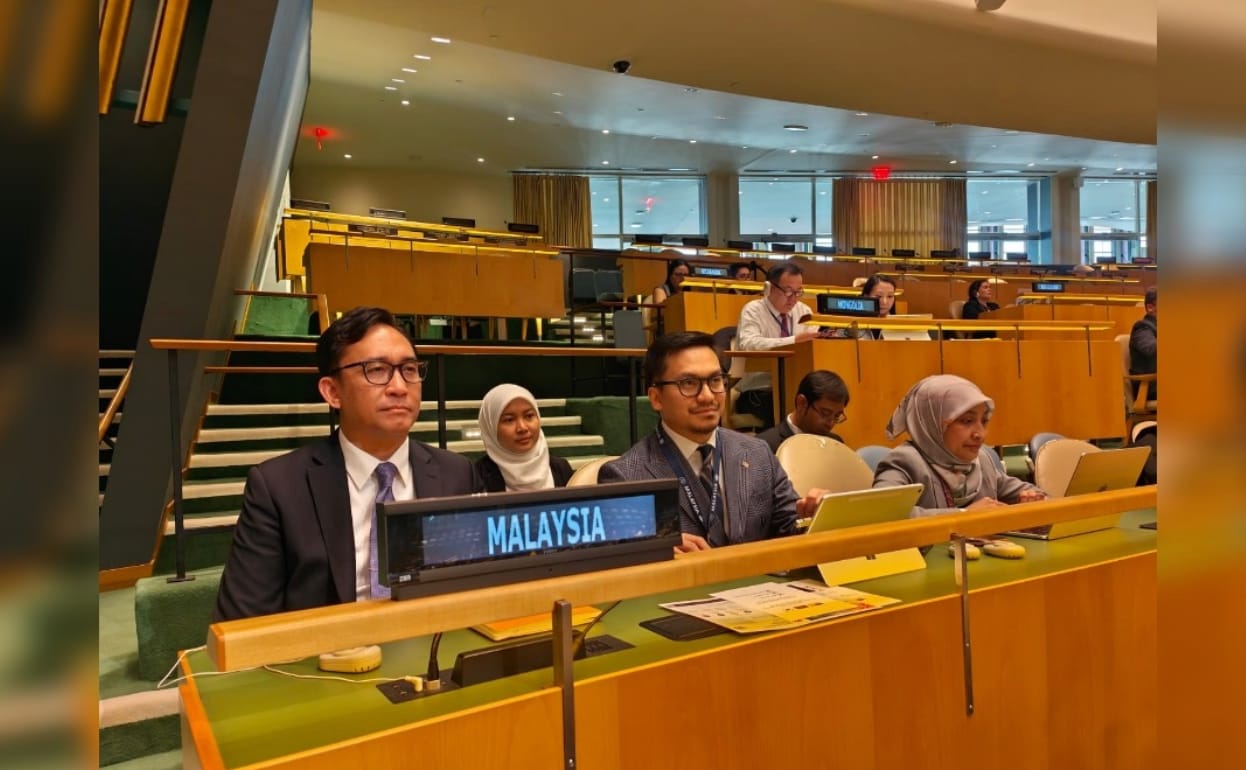
UN member states elected Malaysia to the United Nations Economic and Social Council with a notably strong vote, giving Kuala Lumpur a new three-year term on one of the UN’s main development bodies. The result was not simply a diplomatic formality. It reflected confidence in Malaysia’s ability to speak for development, multilateral cooperation and the concerns of developing nations at a time when the global system is under growing economic, social and political strain.
Malaysia was elected to ECOSOC for the 2027-2029 term during elections held on June 4, 2026, at the 80th session of the UN General Assembly. According to Malaysia’s Foreign Ministry, the country secured 184 votes out of 186 member states present and voting, the highest number recorded in the election. ECOSOC is one of the six principal organs of the United Nations and plays a central role in coordinating economic, social and development work across the UN system and its specialised agencies. For countries seeking greater attention to poverty, development financing, food security, education, healthcare and climate challenges, the council remains an important platform.
The scale of Malaysia’s vote suggests that many countries still see Kuala Lumpur as a credible and useful voice inside the UN development system. Malaysia is not a major power in the traditional sense. It does not shape international affairs through military pressure or financial dominance. Its diplomatic value lies elsewhere: in its ability to operate as a middle-sized country that can speak to different blocs, defend the interests of developing nations and avoid reducing every global issue to a confrontation between rival powers.
That middle position matters more today than it once did. The international system is increasingly divided, not only by wars and geopolitical rivalry, but also by economic inequality, debt pressures, humanitarian emergencies and climate-related disruption. Many developing countries want a stronger voice in global decision-making, yet they also need channels that can keep dialogue open with larger powers. Malaysia’s appeal lies partly in this balance. It can speak the language of the Global South without presenting itself as an isolated or purely oppositional actor.
The vote also reflects Malaysia’s long institutional history with ECOSOC. The country has served on the council seven times before, in separate terms dating back to the 1970s. Its return, therefore, is not a sudden diplomatic breakthrough, but part of a longer record of engagement with the UN development agenda. In bodies such as ECOSOC, influence is rarely built through dramatic declarations. It is built through committees, negotiations, coalitions, technical language and the patient work of shaping priorities over time.
For Malaysia, the new term comes at a moment when the development agenda is becoming harder to separate from global politics. Questions of poverty, food security, healthcare and education are no longer purely social issues. They are linked to supply chains, climate adaptation, international financing, migration, conflict and public trust in global institutions. When Malaysia says it will focus on sustainable and inclusive development, it is entering a debate that is both economic and political, both technical and moral.
The opportunity is clear, but so is the test. A seat on ECOSOC does not automatically create influence. It gives Malaysia a platform. That platform can remain ceremonial, or it can be used to advance practical proposals on development financing, climate resilience, youth empowerment, affordable healthcare and support for vulnerable communities. The difference will depend on whether Kuala Lumpur can move beyond broad diplomatic language and contribute to specific initiatives that other countries can support.
For Prime Minister Anwar Ibrahim’s government, the election provides a useful diplomatic gain. It strengthens Malaysia’s image as a country committed to multilateralism at a time when confidence in international institutions is under pressure. Domestically, it also gives the government a positive foreign-policy message: Malaysia is being trusted again in a major UN body. But that message will carry more weight if it is matched by visible work during the 2027-2029 term.
That is why the question of why UN member states chose Malaysia again has more than one answer. They chose it because it is experienced, credible and acceptable to a wide range of countries. They chose it because it has a record inside ECOSOC. They chose it because its development language fits the concerns of many states facing economic and social pressure. But most importantly, they chose it because middle powers still have a role in a world too often dominated by the loudest voices.
Malaysia’s 184 votes are impressive, but the number itself is not the full story. The real significance of its return to ECOSOC will be measured by what Kuala Lumpur does with the trust it has received. If Malaysia can turn that trust into practical advocacy for development, its victory will not remain a diplomatic statistic. It will become part of a larger argument: that smaller and middle-sized countries can still help shape the international agenda when they combine credibility, patience and a clear sense of purpose.
Abdullah Bugis (kualalumpur.abdullah@gmail.com) is a content creator under the Newswav Creator programme, where you get to express yourself, be a citizen journalist, and at the same time monetize your content & reach millions of users on Newswav. Log in to creator.newswav.com and become a Newswav Creator now!
The User Content (as defined on Newswav Terms of Use) above including the views expressed and media (pictures, videos, citations etc) were submitted & posted by the author. Newswav is solely an aggregation platform that hosts the User Content. If you have any questions about the content, copyright or other issues of the work, please contact creator@newswav.com.