
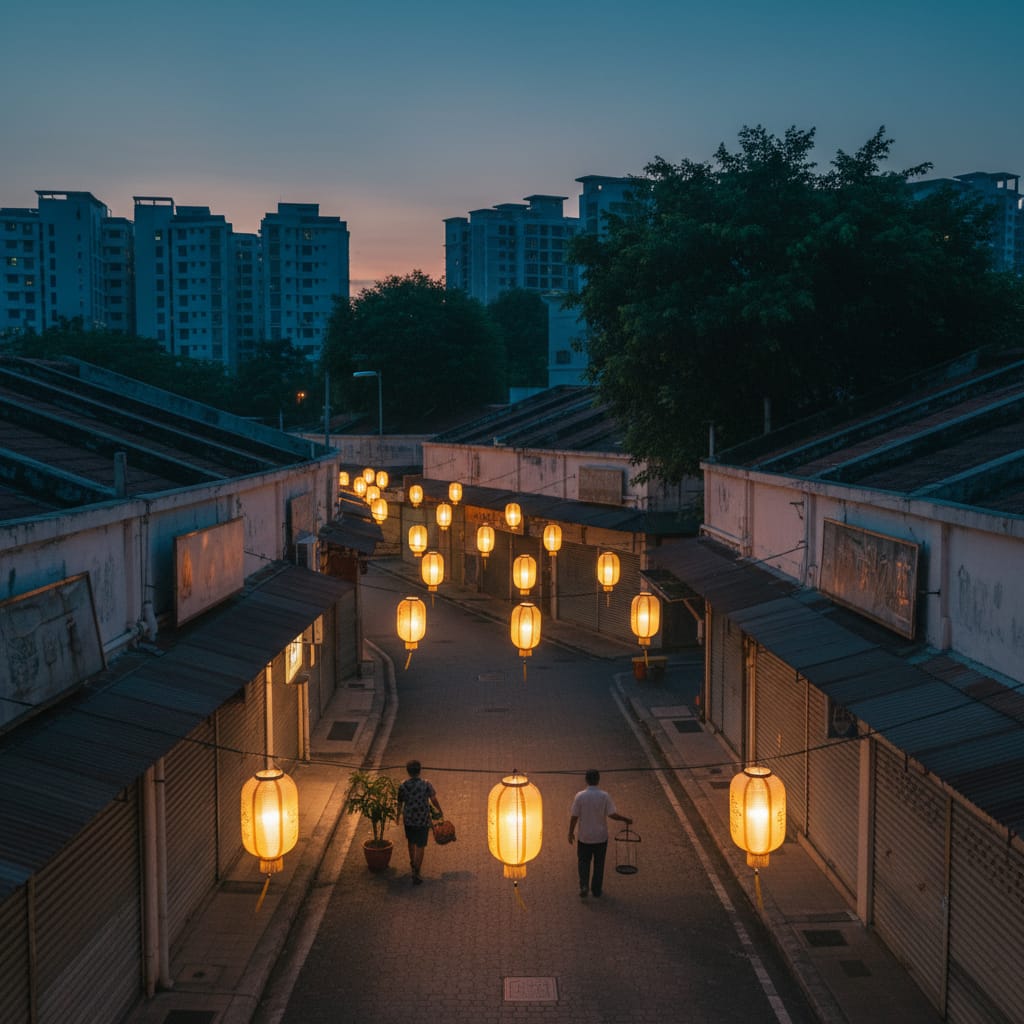
The Shifting Streets of Bandar Sri Petaling
In the lantern‑lit corridors of Bandar Sri Petaling, shutters fall like tired eyelids, weary from the weight of unfulfilled dreams. Familiar signboards, once proud banners of heritage, now fade like old ink on parchment left too long in the sun. These shops were more than businesses; they were elders of the street, guardians of memory, storytellers of daily life. Yet today, their voices are silenced, replaced by the paper cries of “For Rent” posters fluttering like autumn leaves, brittle reminders of endings.
Some shops closed before their stories could ripen, their fruits plucked too early by the harsh hand of circumstance. Some lasted mere seasons, others vanished within a year, leaving behind only echoes of laughter and the faint aroma of meals once shared. The streets — Jalan Radin Bagus 3 and 6 — resemble teeth missing from a once bright smile, gaps that speak of loss yet are swiftly filled by new arrivals, eager to carve their names into the city’s restless canvas.
A cycle emerges, relentless as the tide: one flame extinguished, another lit. Local merchants retreat under the crushing weight of rent and dwindling trade, while stronger hands — often from across the South China Sea — plant banners anew. Mainland Chinese eateries sprout like bamboo after rain, their shoots rising overnight, reshaping the skyline of taste and trade. In some lanes, their presence forms an unbroken corridor of crimson lanterns, a river of red light flowing through the night, earning the nickname “China Street” among residents who watch the transformation with both awe and unease.
Yet the issue is not the merchants themselves, but the soil in which they grow — the rental market tilting like a scale weighted by gold. Landlords, chasing brighter coins, lean toward Mainland Chinese tenants who pay more, sometimes in advance, their offers ringing like temple bells of assurance. Local traders, bargaining cautiously, seem less appealing, their voices drowned by the thunder of higher bids. The marketplace, once a chorus of diverse voices, now risks becoming a single song, sung in one key.
Beyond food, the tide spreads its fingers into entertainment halls, supermarkets, and renovation workshops. Teams from Foshan whisper of expansion, their chisels ready to carve new futures into Malaysian stone. Their ambition is not conquest but cultivation: a vision of enlarging the market, sowing together rather than seizing apart. To them, Malaysia is fertile soil, a garden where their seeds may grow alongside local roots. Yet to some locals, the pace of change feels like a storm, sweeping away familiar landmarks before they can be mourned.
The law, meanwhile, stands distant, arms folded like a silent sentinel. Government policies are thin nets cast into a wide river, unable to catch the swift currents of free competition. Regulation is but a shadow, powerless to slow the flood. Rents that soar too high may one day collapse under their own weight, leaving landlords with hollow halls and echoes of vanished tenants. The glitter of gold may blind, but it cannot guarantee permanence.
For the residents who walk these streets, the transformation is more than economic; it is cultural, emotional, visceral. The kopitiams where they once lingered over teh tarik, the stalls where char kway teow sizzled in smoky woks, the humble shops where wantan mee was served with a smile — these are not merely businesses but threads in the tapestry of community. Each closure is a stitch undone, each shuttered door a memory erased. The fear is not only of losing flavors but of losing identity, of watching the familiar rhythm of daily life replaced by a new cadence that feels foreign, even if it is vibrant.
The story of Bandar Sri Petaling is not one of villains and victims, but of forces colliding: tradition and modernity, local resilience and global ambition, nostalgia and progress. It is a tale written in neon lights and fading paint, in the aroma of new dishes and the silence of closed kitchens. It is a reminder that cities are living poems, constantly rewritten by those who walk their streets, rent their spaces, and dream their dreams.
If the shutters are eyelids, then perhaps the city itself is dreaming — dreaming of a future where crimson lanterns and old signboards can coexist, where bamboo shoots and ancient trees share the same soil, where the smile of the street is whole again, not fractured by empty gaps. The challenge lies not in stopping the tide, but in guiding it, ensuring that the river of commerce nourishes rather than erodes, that it carries with it both memory and renewal.
Bandar Sri Petaling stands at a crossroads, its streets whispering of change. Whether it becomes a garden of harmony or a battlefield of rents will depend on choices made today — by landlords, by tenants, by policymakers, and by the community itself. For in the end, a city is not built of bricks alone, but of the stories its people choose to preserve.
moykokming@gmail.com
Moy Kok Ming (moykokming@gmail.com) is a content creator under the Newswav Creator programme, where you get to express yourself, be a citizen journalist, and at the same time monetize your content & reach millions of users on Newswav. Log in to creator.newswav.com and become a Newswav Creator now!
The User Content (as defined on Newswav Terms of Use) above including the views expressed and media (pictures, videos, citations etc) were submitted & posted by the author. Newswav is solely an aggregation platform that hosts the User Content. If you have any questions about the content, copyright or other issues of the work, please contact creator@newswav.com.