

The “Orangutan Diplomacy” programme suggested in May has been revised with an in-situ approach. Plantation and commodities minister Johari Abdul Ghani said that the decision to shift from the initial plan was made after consulting various parties, such as NGOs and environmental activists. He said that while many parties accepted the idea of the ‘Orangutan Diplomacy’ proposal, a few were against it.
“After discussions with stakeholders in the palm oil industry, an in-situ approach will be adopted, where all conservation activities will be carried out in their natural habitats, whether in forests or forest patches within palm oil plantations, known as High Conservation Value (HCV) areas.
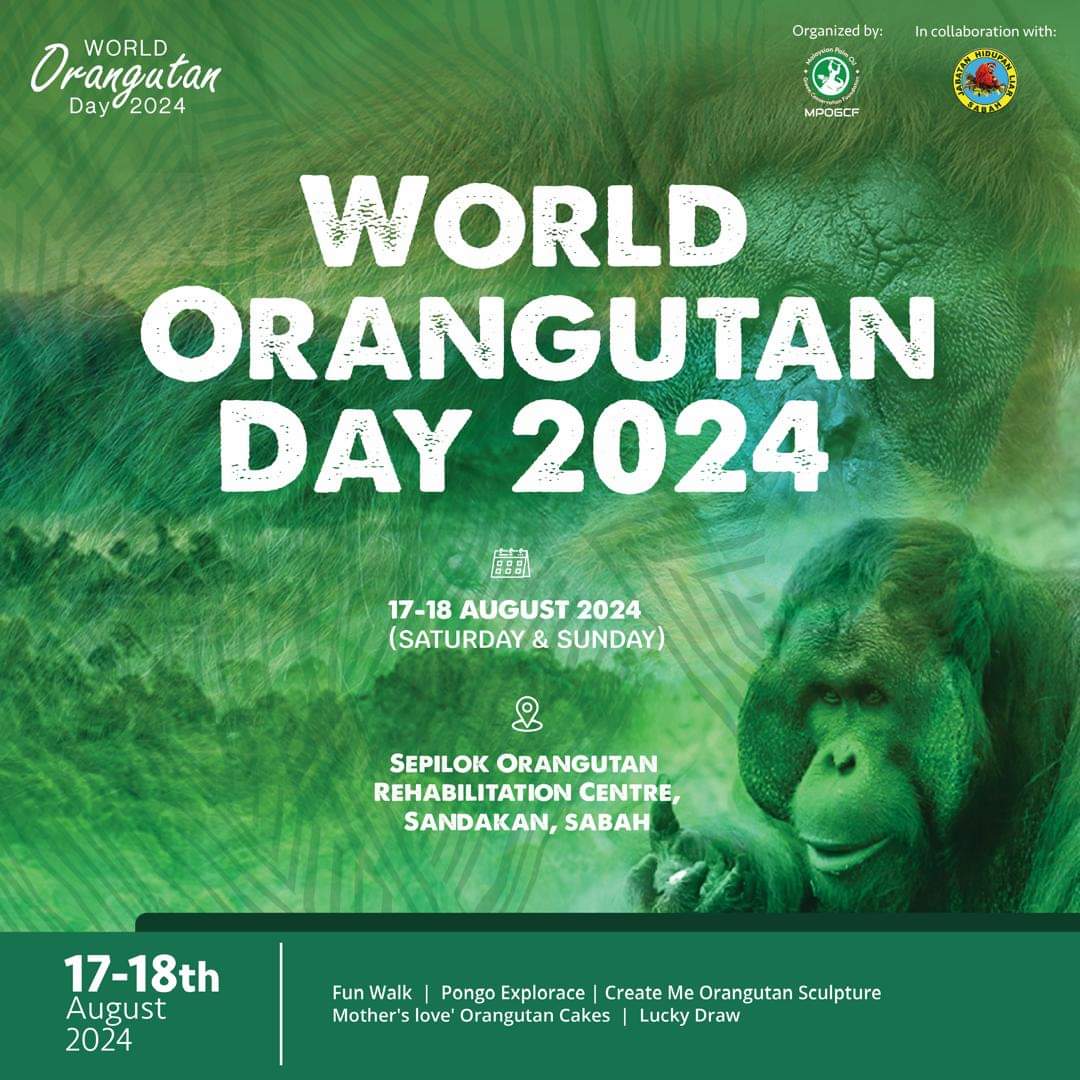
“It’s true, we should keep the orangutans in their natural habitat. We need to protect the orangutans,” he said during the launching of the World Orangutan Day in Sandakan today. He said that the orangutans will be free to move about to forage and breed without any interference from humans, or plantation and tourism activities.
Johari added that this conservation effort will be implemented through the Malaysian Palm Oil Green Conservation Foundation (MPOGCF), an agency under the ministry of plantation and commodities.
He also said that importers of Malaysian palm oil worldwide can adopt one or more orangutans under this programme. “The funds collected will be used to implement various related programmes such as collaborating with a team of rangers consisting of experts to monitor the presence, safety, and condition of these wild animals,” he said.
Last May, Johari had suggested to start giving orangutans as gifts to major trading partners who purchase palm oil from Malaysia to stem the negative perceptions of Malaysia’s palm oil industry. He said he hoped to generate the same goodwill as China does with its "panda diplomacy".
On a separate matter, Johari said that the government will ensure that the palm oil industry as a whole complies with international sustainability standards. “The government has made Malaysian Sustainable Palm Oil (MSPO) certification mandatory for all planters, including estates and smallholders,” he said.
“Without the MPSO certification, the government will not allow you to export.”
Johari said that the MSPO certification scheme serves as an effective instrument to reassure buyers about the sustainability and quality of the products they purchase, given that more than 80% of the country's palm oil production is for export markets.
He also shared that he had met with the EU ambassador last week to reiterate Malaysia’s commitment towards eliminating deforestation and enhancing traceability, where every palm oil can be traced back to its source—whether the estate, mill, or refinery.
He also stressed that he had spoken to the industry players confirming that there would be no more deforestation. Everyone has to comply with the MSPO certification,” he said, among which, the planters cannot harvest palm oil from forested areas to maintain its current forest cover of 54%.
Carolyn Khor is a content creator under the Newswav Creator programme, where you get to express yourself, be a citizen journalist, and at the same time monetize your content & reach millions of users on Newswav. Log in to creator.newswav.com and become a Newswav Creator now!
The User Content (as defined on Newswav Terms of Use) above including the views expressed and media (pictures, videos, citations etc) were submitted & posted by the author. Newswav is solely an aggregation platform that hosts the User Content. If you have any questions about the content, copyright or other issues of the work, please contact Newswav.

