

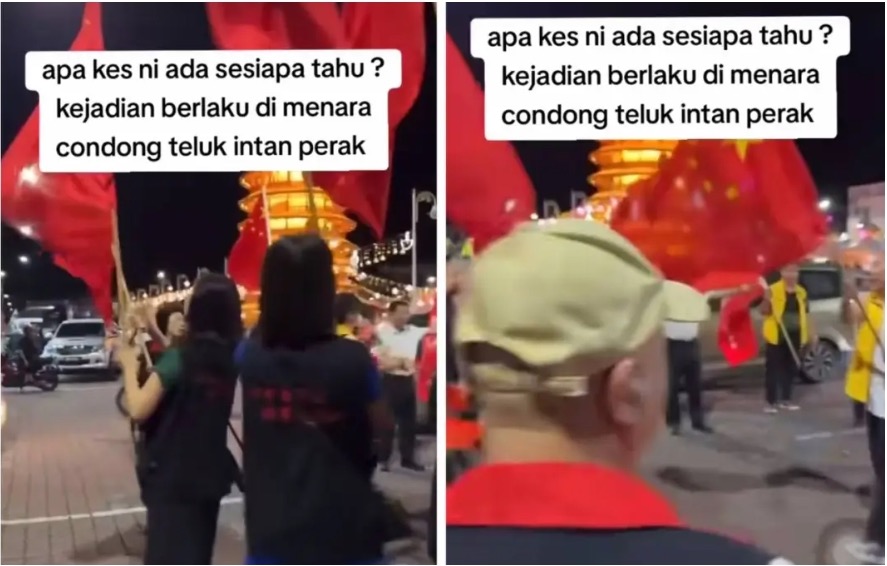
A viral video recorded near the famous Menara Condong or Leaning Tower in Teluk Intan, Perak, left many Malaysians reeling in anger recently, depicting a group of individuals waving the People's Republic of China flags.
Following the controversial video going viral, the event organiser, Persatuan Kebudayaan Guan Gong, issued a statement to apologise for the incident and clarified that the individuals seen waving the China flags were Chinese nationals and not Malaysians.
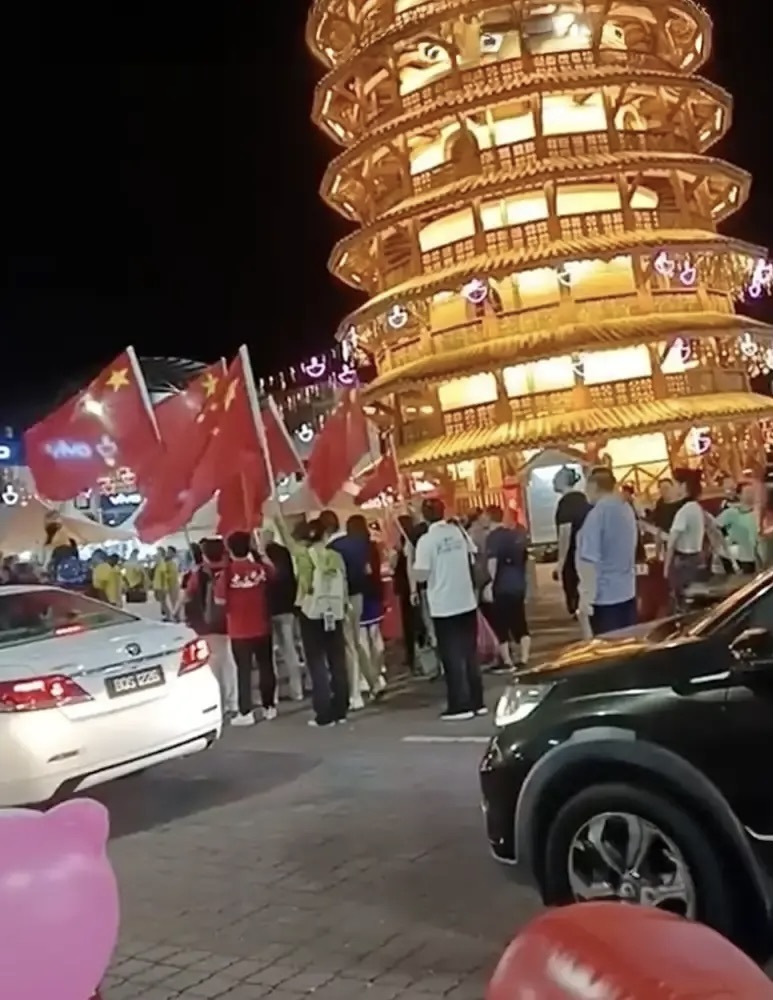
As reported by The Star, the event was revealed to be its World Guan Gong Celebration, which is a celebration of the deity Guan Gong, who is worshipped as the god of war and the martial god of wealth by those practising in the Taoist faith. The association further stressed that the act of displaying the China flags was not part of the event.
The Royal Malaysia Police (PDRM) has also issued a statement on the incident, saying that they had received a complaint from a local man at 12.39am on 25 October regarding the event.
Berita Harian quoted Perak Police Chief Datuk Azizi Mat Aris as saying that the event didn't have a permit and that PDRM is investigating the incident for that offence, as well as for the waving of a foreign national emblem without permission.
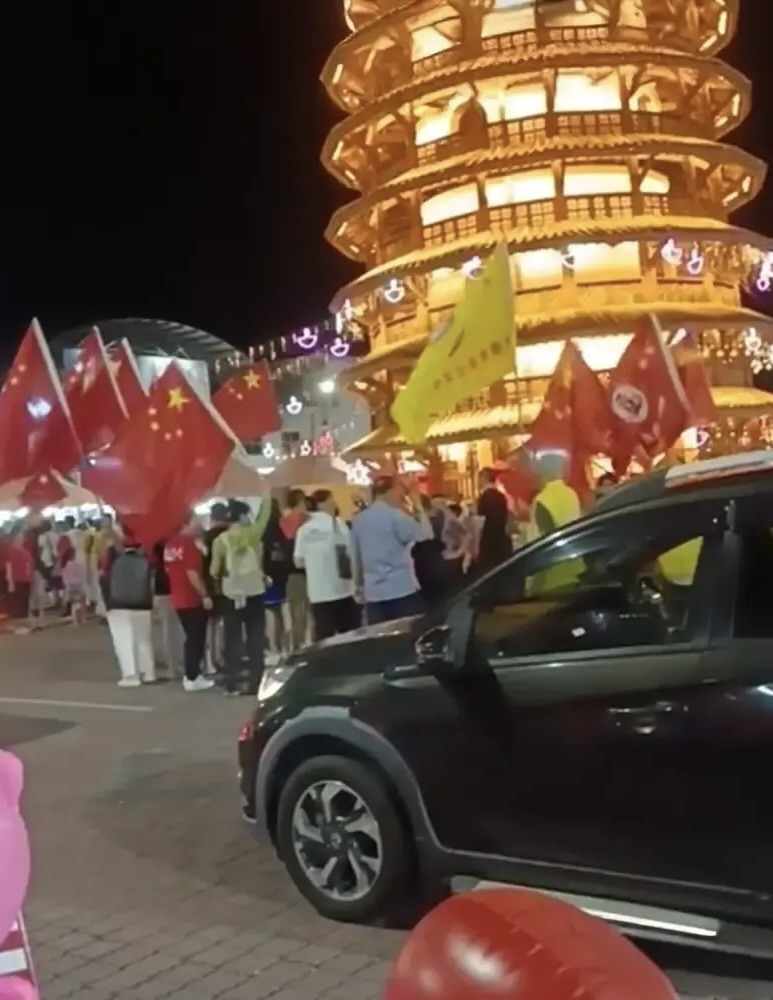
With all of that established, let's see the incident from a legal perspective to determine what legal actions the organiser may face for what had transpired.
Peaceful Assembly Act 2012
Based on PDRM's statement, one of the alleged offences that the event is being investigated is for not possessing any permit. This is governed under the Peaceful Assembly Act 2012, of which Section 9 prescribed the below:
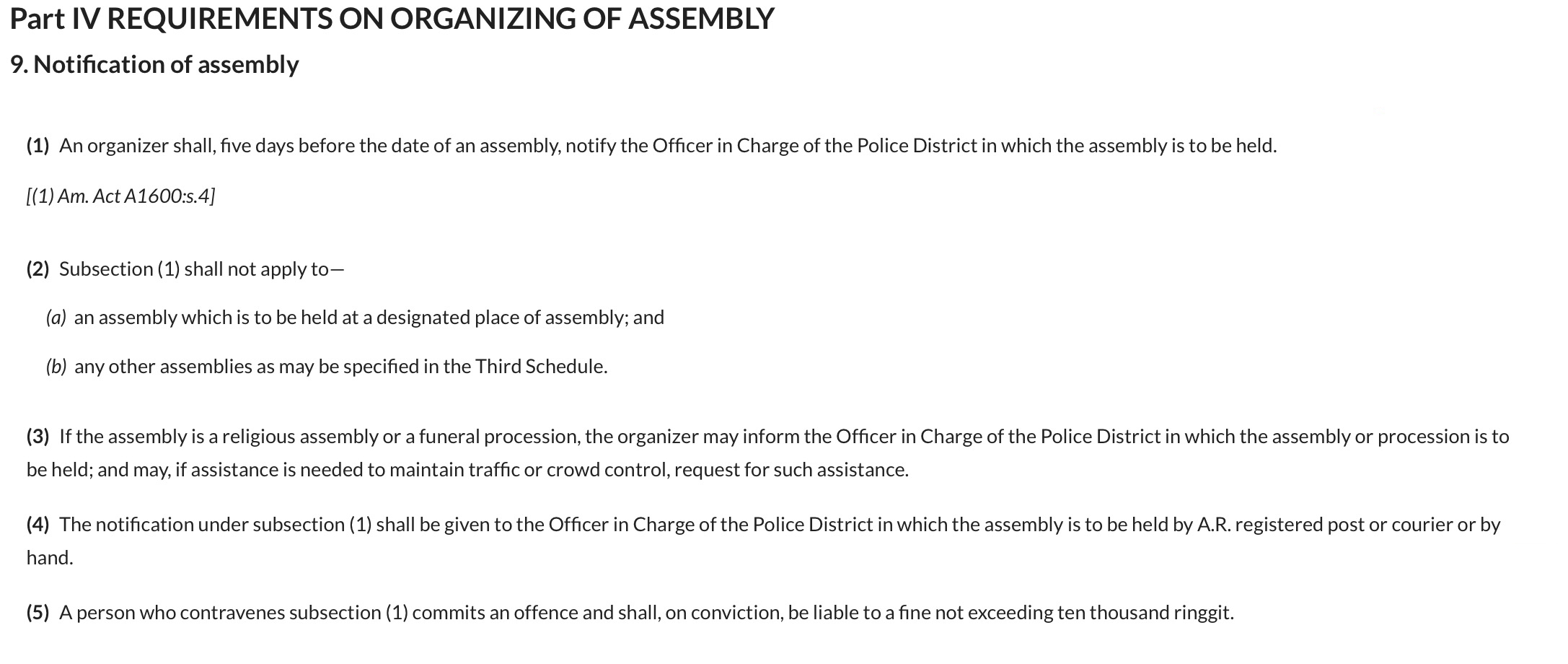
Section 9(1) of the Act requires an organiser to notify the Officer in Charge of the Police District in which the assembly is to be held 5 days before the date of the assembly.
According to PDRM, this was not done by the organiser, which would be an offence under Section 9(5) of the Act. If convicted, the organiser faces a fine of up to RM10,000.
However, like many other laws, there are exceptions to the general rule, and for the notification of assembly requirement, Section 9(2) prescribed that no notification is required for an assembly which is to be held at a designated place of assembly and any other assemblies as may be specified in the Peaceful Assembly act 2012's Third Schedule.
For the event, Section 9(2)(b) may apply, as the assembly can be considered a religious assembly, which notification is not required under the aforementioned Third Schedule below:
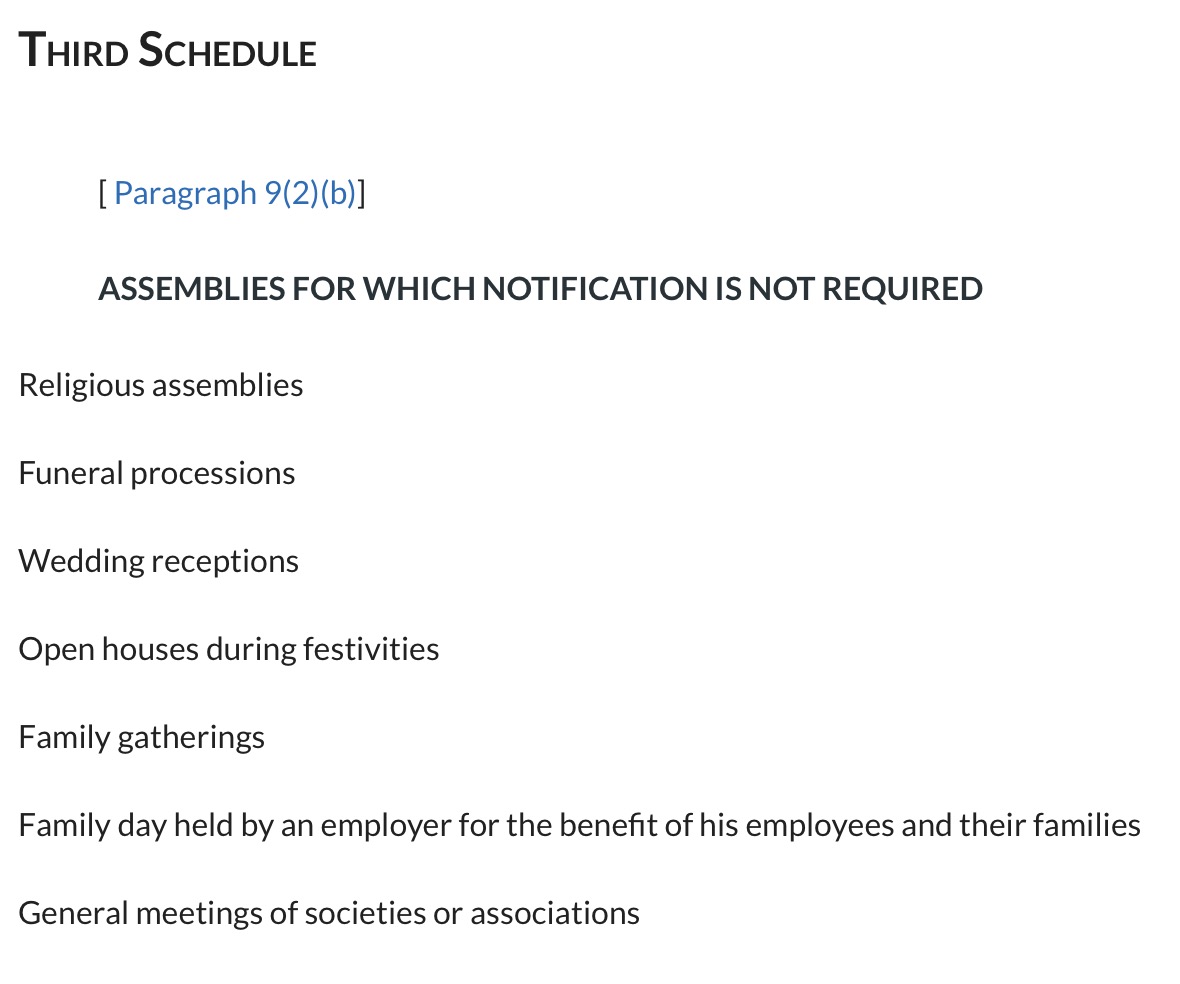
If this is the case, then no action can be taken against the organiser under Section 9(5) of the Act as they didn't commit any offence under the Section.
Nevertheless, the organiser arguably didn't adhere to Section 6 of the Act, which established the responsibilities of an assembly's organiser below:
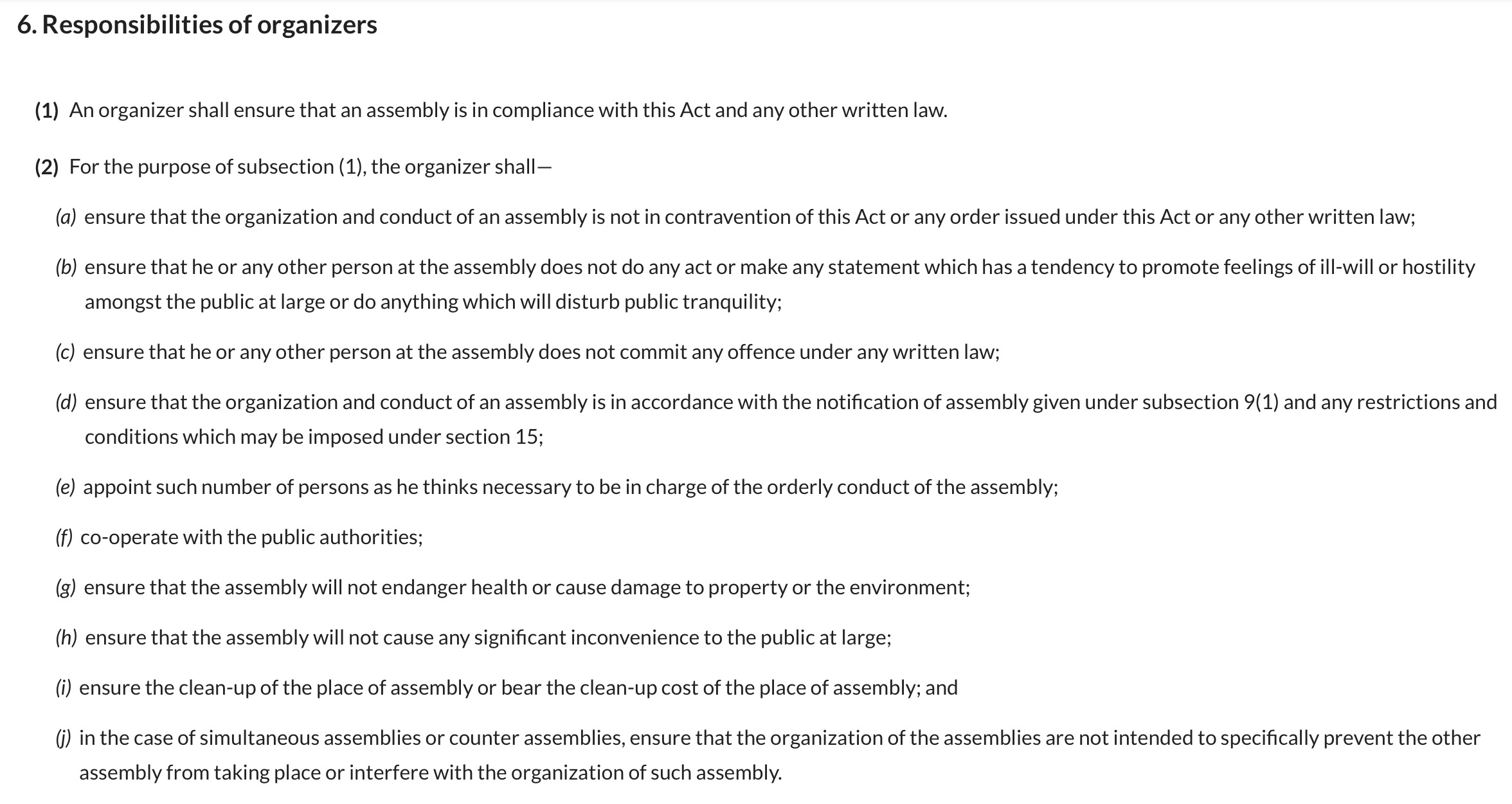
Specifically, the organiser can be argued to not be in compliance with Sections 6(2)(a), 6(2)(b) and 6(2)( c). However, do note that the Peaceful Assembly Act 2012 has no provisions prescribing punishments for non-compliance with Section 6 of the Act.
National Emblems (Control of Display) Act 1949
Besides that, PDRM also confirmed that it's investigating the case for the public display of the China flags. This is governed under the National Emblems (Control of Display) Act 1949.
Specifically, Section 3 of the Act below prescribed that it is an offence for any person to display in public any national emblem.
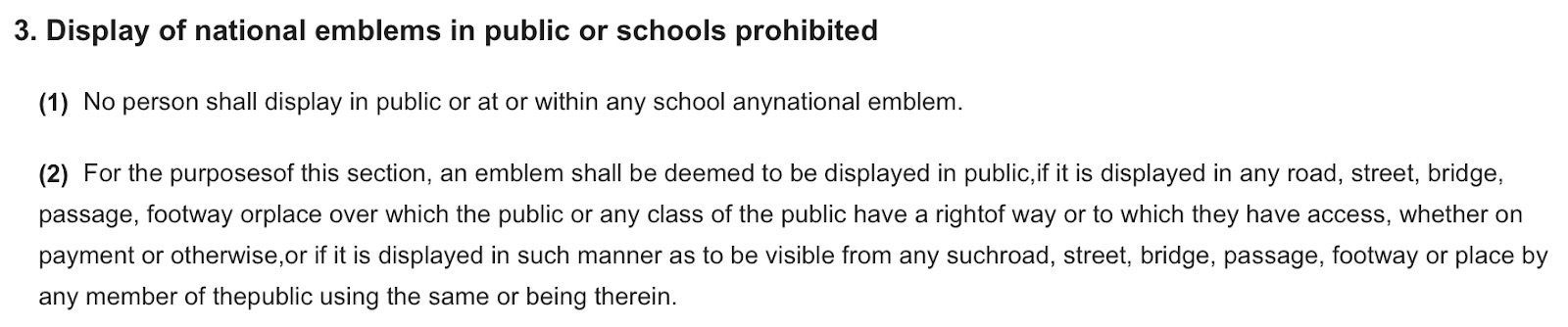
As for what is considered a ‘national emblem’, Section 2 of the Act defined it as any flag, banner or other emblem being or purporting to be the flag, banner or other emblem of any country other than Malaysia and any states included in Malaysia. Furthermore, a flag, banner or other emblem of any political organisation claiming to be a national movement in any State is also considered a ‘national emblem'. Hence, the China flags are deemed as a national emblem under this Act.
Again, there are exceptions to this general rule and Section 4 of the Act below established when a national emblem can be displayed in public.
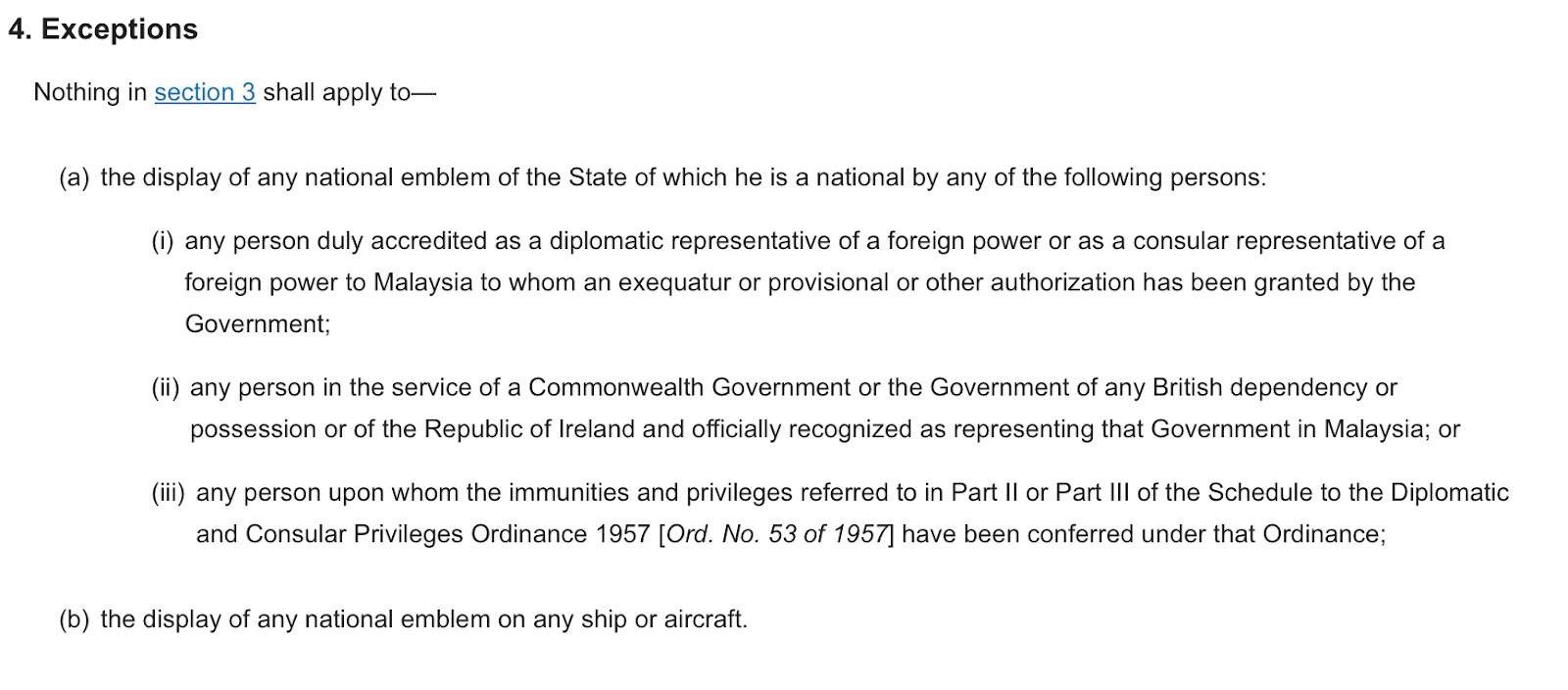
Moreover, Section 5 of the Act below established that the Home Minister may, by order published in the Gazette or by a permit in writing, allow for an individual to display a national emblem in public.

Hence, if the event participants who waved the China flags are not part of the exceptions and exemptions in Sections 5 and 6, the organiser can be considered to have committed an offence under the National Emblems (Control of Display) Act 1949.
Under Section 8 of the Act below, any individual who committed an offence of knowingly permitting the display of any national emblem can be punished with imprisonment of up to 6 months or a fine of up to RM500, or both.
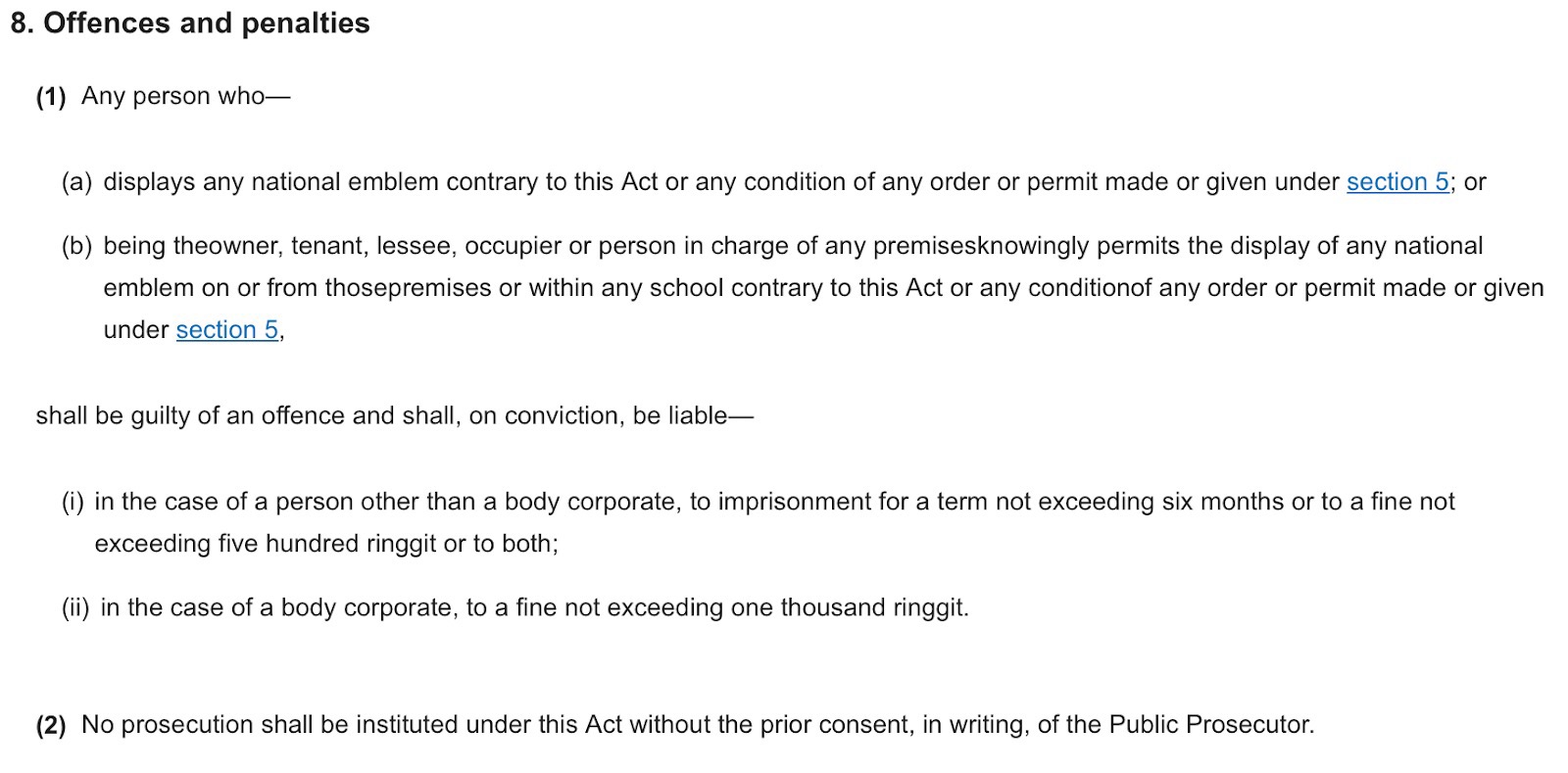
If the offender is a body corporate, they may face a fine of up to RM5,000.
Of course, these are all theoretical, as PDRM is still in the midst of investigating the case and may yet find other key details that haven't surfaced yet.
Regardless, let's hope that investigations can be done thoroughly and transparently, as given the publicity the incident has attracted, it is definitely a matter of public interest. In the meantime, Malaysians should remain calm, not jump to conclusions and avoid provocations.
So, what do you guys think of the whole situation? Share your thoughts in the comments section!
Jamie is a content creator under the Newswav Creator programme, where you get to express yourself, be a citizen journalist, and at the same time monetize your content & reach millions of users on Newswav. Log in to creator.newswav.com and become a Newswav Creator now!
The User Content (as defined on Newswav Terms of Use) above including the views expressed and media (pictures, videos, citations etc) were submitted & posted by the author. Newswav is solely an aggregation platform that hosts the User Content. If you have any questions about the content, copyright or other issues of the work, please contact Newswav.
