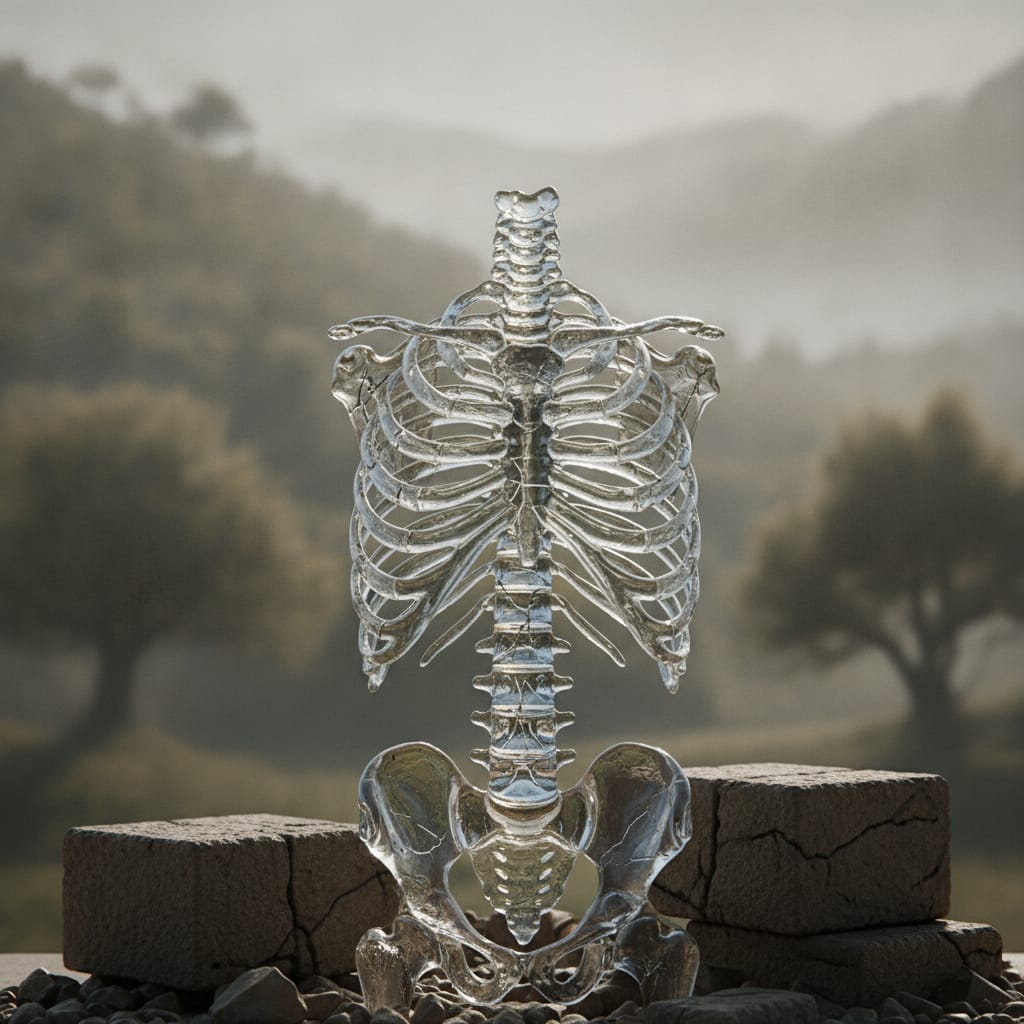
When we think about staying healthy, we usually focus on the organs we can’t live without. We worry about our heart, our lungs, our blood pressure and our cholesterol.
But what about our skeleton?
It quietly supports us every single day. It allows us to stand, walk, lift, bend and protect our vital organs. We rarely give our bones a second thought until one of them breaks.
The surprising thing is that bones are far from lifeless. They are constantly changing. Throughout our lives, old bone is broken down and replaced with new bone in a remarkable process that keeps the skeleton strong.
As we get older, however, that balance gradually changes.
For some people, bones begin to lose strength faster than they can rebuild it. They become thinner, more fragile and much easier to break.
This condition is called osteoporosis, and it is often described as the “silent disease” because it develops without pain or obvious warning signs.
For many people, the first indication that anything is wrong is a fracture after what seemed like a minor fall.
Bones are living tissue
Many people imagine bones as solid, lifeless structures.
In reality, healthy bone looks more like a honeycomb under a microscope. It contains tiny spaces that make it both strong and surprisingly light.
With osteoporosis, those spaces become larger and the supporting structure becomes thinner.
Imagine removing bricks from a wall one by one.
From a distance, the wall may still appear perfectly normal, but eventually it becomes much weaker.
The same thing happens inside our bones.
Nothing looks different from the outside, but the risk of breaking a bone steadily increases.
Who is at risk?
Osteoporosis becomes more common with age.
Women are particularly affected after the menopause because falling oestrogen levels accelerate bone loss.
However, it is a mistake to think osteoporosis is a women’s disease.
Men develop it too, especially later in life.
Other risk factors include a family history of osteoporosis, smoking, drinking excessive alcohol, being underweight, long periods of inactivity and long-term use of steroid tablets such as prednisolone.
Certain medical conditions can also weaken bones.
The more risk factors someone has, the more important it becomes to assess bone health.
Why is it such an important condition?
The main concern is fractures.
A healthy bone can usually withstand an everyday stumble.
A weakened bone may not.
The wrist, spine and hip are among the most common sites.
Hip fractures are particularly serious, especially in older adults.
Recovery can take many months, and some people never regain the same level of independence they enjoyed before the injury.
Fractures of the spine may occur so gradually that people don’t even realise they have happened.
Instead, they may notice they have become shorter over the years or develop a stooped posture.
Persistent back pain may also occur.
Can osteoporosis be prevented?
While we cannot stop ageing, we can certainly influence how healthy our bones remain.
Regular weight-bearing exercise is one of the best ways to keep bones strong.
Walking, climbing stairs, dancing and resistance exercises all encourage bones to maintain their strength.
Our skeleton responds to being used.
Calcium is also important because it provides one of the building blocks for healthy bones.
Good dietary sources include milk, yoghurt, cheese, fortified plant-based alternatives, sardines with edible bones and certain green vegetables.
Vitamin D deserves a mention too.
It helps the body absorb calcium effectively.
Most of our vitamin D comes from sunlight acting on the skin, although some foods also provide small amounts.
In countries like the UK, where sunshine can be limited during the winter months, some people may benefit from vitamin D supplements, particularly those at higher risk of deficiency.
How is osteoporosis diagnosed?
Unlike high blood pressure, you can’t measure bone strength with a machine at home.
Doctors often arrange a special scan called a DEXA scan.
This is a simple, painless X-ray that measures bone density and helps estimate the risk of future fractures.
The scan takes only a short time and involves very little radiation.
It allows treatment to begin before a fracture occurs.
What treatments are available?
If osteoporosis is diagnosed, several effective treatments are available.
Some medicines slow the breakdown of bone, allowing the body to maintain or even improve bone strength over time.
Others stimulate the formation of new bone in selected patients.
Calcium and vitamin D supplements may also be recommended where appropriate.
Treatment is usually combined with advice about exercise, diet and reducing the risk of falls around the home.
Simple changes, such as improving lighting, removing loose rugs or having regular eyesight checks, can sometimes prevent a life-changing injury.
Looking after your bones starts earlier than you think
One of the biggest misconceptions is that osteoporosis only matters once you reach old age.
In reality, the foundations are laid much earlier.
Building strong bones during childhood and early adulthood provides a valuable reserve for later life.
But even if you’re already older, it’s never too late to improve bone health.
Our bodies continue to respond positively to healthy choices at every stage of life.
A final thought
There’s an old saying that you don’t appreciate something until it’s gone.
That certainly applies to our bones.
We expect them to carry us wherever we want to go without complaint, year after year.
Most of the time they do exactly that.
Looking after your bones isn’t about trying to avoid getting older.
It’s about giving yourself the best chance of remaining active, independent and able to enjoy the life you’ve worked so hard to build.
Take care of your bones today, and they’ll continue supporting you tomorrow—quite literally.
The Daily Durian (zaynp100@yahoo.com) is a content creator under the Newswav Creator programme, where you get to express yourself, be a citizen journalist, and at the same time monetize your content & reach millions of users on Newswav. Log in to creator.newswav.com and become a Newswav Creator now!
The User Content (as defined on Newswav Terms of Use) above including the views expressed and media (pictures, videos, citations etc) were submitted & posted by the author. Newswav is solely an aggregation platform that hosts the User Content. If you have any questions about the content, copyright or other issues of the work, please contact creator@newswav.com.