MANILA, Philippines — A total of 28,415 barangay (villages) in 60 provinces have been declared under Stable Internal Peace and Security (SIPS), reflecting the government’s efforts to curb communist insurgency and expand development in conflict-affected communities, the National Task Force to End Local Communist Armed Conflict (NTF-Elcac) said.
NTF-ELCAC Deputy Director for Operations Rodrigo “Rhod” Lutao presented the figures during the Major Island Group Action Planning Workshop for Mindanao, where he reported on the implementation of the National Action Plan for Unity, Peace and Development (NAP-UPD).
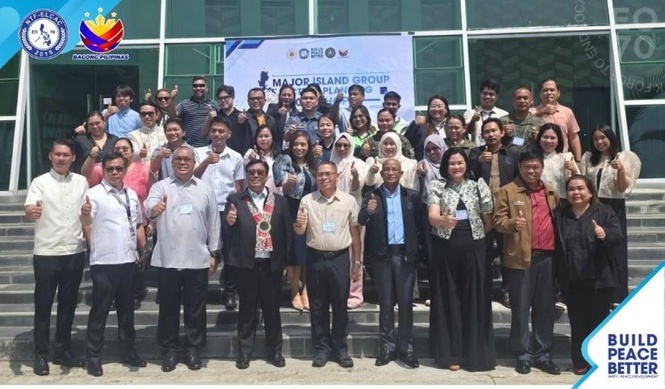
The workshop brought together government communicators and partners from Regions 9, 10, 11 and 12, the Caraga region and the Bangsamoro Autonomous Region in Muslim Mindanao (BARMM).
The task force said 21,614 barangay in 45 provinces are covered by SIPS declarations that have attained the status while 6,801 villages in 15 provinces are covered by provincial SIPS declarations in regions still working toward full regional coverage.
The NTF-Elcac said the figures reflect a shrinking area of communist armed influence and a transition toward civilian governance, peaceful political participation and development.
The task force previously described the spread of SIPS as a “historic rejection” of the Communist Party of the Philippines–New People’s Army–National Democratic Front of the Philippines violence, pointing to communities emerging from decades of insurgency and choosing to secure peace.
The transformation accelerated in 2026, with SIPS milestones in Central Luzon, Cagayan Valley, Calabarzon, Western Visayas, Caraga and the Cordillera Administrative Region.
These declarations add to earlier gains and demonstrate that the reduction of communist armed influence is no longer confined to individual barangay or provinces but, in many areas, encompasses entire regions.
Lutao said that the expanding SIPS map cannot be separated from the government's development offensive in communities previously affected by armed conflict.
As of Sept. 29, the Barangay Development Program (BDP) has reached 5,638 formerly conflict-affected villages, backed by P44.90 billion in development investments benefiting an estimated 16.03 million Filipinos.
These investments, he said, have translated into concrete interventions on the ground: 955 classrooms, 1,587.02 kilometers of farm-to-market roads, 23,681 streetlights, 1,169 water and sanitation systems, 9,264 electrification projects, and 547 health and medical stations.
The government has sustained that approach in 2026, with P8.08 billion appropriated for projects in 808 cleared barangay, including roads, schools, water systems, health stations and electrification.
The government is seeking to consolidate peace by bringing roads, electricity, potable water, education, health services, livelihoods and economic opportunities into communities previously vulnerable to conflict.
The decline of the armed movement is also reflected in the number of individuals leaving it.
Lutao said that 50,907 individuals surrendered to authorities from 2019 to 2025, while P984 million in assistance was extended under the Enhanced Comprehensive Local Integration Program (E-CLIP), covering 33,627 immediate, livelihood and firearms-remuneration grants to former rebels.
He also reported 13,647 amnesty applications, alongside the formation of 4,008 people's organizations and the establishment of the Buklod Kapayapaan Federation.
These initiatives, Lutao said, form part of the broader transition from armed conflict toward reintegration, community participation and peaceful development.
Assistant Director General Cornelio H. Valencia Jr., co-chairman of the NTF-Elcac Strategic Communications Cluster, said these gains must now be translated into messages and programs that communities themselves understand and advance.
“Anchored on ‘One message, many voices,’ we will craft plans responsive to local realities — while advancing our shared goals of unity, peace, and development,” Valencia said. “Mindanao is diverse — no single approach fits every area. Our communications must be locally relevant yet anchored on a shared national direction.”
The Strategic Communications Cluster has developed a comprehensive communication plan aligned with NAP-UPD to ensure that national policy is translated into locally meaningful action.
Lutao identified three priorities moving forward: intensifying efforts against the remaining armed threat and expanding SIPS coverage; sustaining BDP gains in roads, classrooms, water systems, electrification and livelihoods while addressing the requirements of communities still affected by conflict; and strengthening accountability through the Monitoring, Evaluation, Accountability and Learning or MEAL Framework.
The Task Force is carrying these gains into its revitalized “Build Peace Better” identity under NAP-UPD, centered on Unity, Peace and Development.
The objective, officials said, is no longer merely to clear communities of armed insurgency, but to make the resulting peace durable by ensuring government presence, responsive institutions and visible development.