
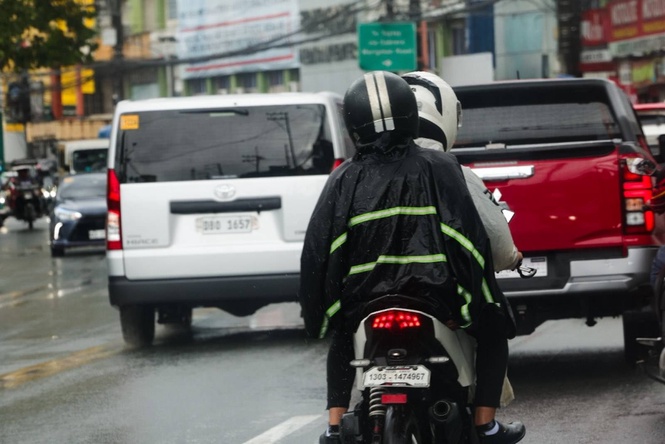
A BROAD coalition of consumer, transport, legal and motorcycle rider groups has commended the Land Transportation Franchising and Regulatory Board (LTFRB) for slapping Move It with a P555.75-million fine over “ghost riders” that exceeded its authorized allocation.
The group vowed on Wednesday to keep a close watch on how the penalty is enforced while pressing for stronger safeguards for commuter safety and rider livelihoods.
The groups backing the statement are the National Confederation of Tricycle Operators and Drivers Associations of the Philippines (Nactodap); National Public Transport Coalition (NPTC); Digital Pinoys; Lawyers for Commuters’ Safety and Protection; Kapatiran ng Dalawang Gulong (Kagulong); Motorcycle Taxi Rider Organization (Metro) and Pilipino Society and Development Advocates for Commuters and Consumers.
The LTFRB in its Oct. 9 decision found that Move It had 73,321 active riders on its platform against an authorized allocation of only 17,746 — an excess of 55,575 riders.
“We previously filed a case against the excessive number of motorcycle taxis affecting the livelihood of tricycle drivers. Now, it has been proven that what we were fighting for was right,” said Ariel Lim of NPTC and Nactodap in a press briefing.
The coalition raised concerns over how mandatory rider accreditation, training and safety standards were verified given the scale of the excess onboarding cited by the LTFRB.
“For commuters, the question is not simply motorcycle availability during rush hour. It is whether every rider is properly documented, trained and safe to provide the service,” said Ronald Gustilo, Digital Pinoys national campaigner.
“Safety and commuter protection cannot be set aside just to meet demand,” Gustilo added.
The coalition also recalled the earlier controversy over government fuel assistance when discrepancies in rider and driver records forced the Department of Social Welfare and Development to conduct additional verification.
“We have long questioned the overboarding and its impact on commuter safety. Public funds are also at stake when the records used in distributing aid are inaccurate. We must ensure that assistance goes to legitimate beneficiaries,” Gustilo said.
Metro said ordinary riders should not be held responsible for onboarding decisions made by platform management.
“For our fellow MC Taxi riders, we all ride to earn a decent living and bring something home to our families. It was not the riders who made the decisions on how many the company should onboard,” said Jayson Luna, Metro’s lead convenor.
Don Pangan, Kagulong secretary-general, emphasized the need to shield rider livelihoods.
“If a platform exceeds its authorized rider allocation, the company should explain and be held accountable. Riders should not be used as a shield for the company’s decisions and violations,” Pangan said.
The groups said they would closely track the LTFRB’s and the Department of Transportation’s next moves in enforcing the fine, urging transparent and consistent action that holds operators accountable, protects commuters and avoids unfairly penalizing ordinary riders.
The LTFRB said that Move It filed a motion for reconsideration before the bureau.
“What the agency is focused on is addressing the plight of the thousands of overboarded riders who invested their own resources to earn a decent living — and whose only fault was that they acted in good faith and trusted that they were allowed to operate under the existing rules and regulations,” acting LTFRB Chairman Greg Pua Jr. said.
He said the LTFRB is currently crafting measures in dealing with the issue in relation to the affected riders while ensuring that the online boarding system of ride-hailing services is strictly complying with the government’s regulations.