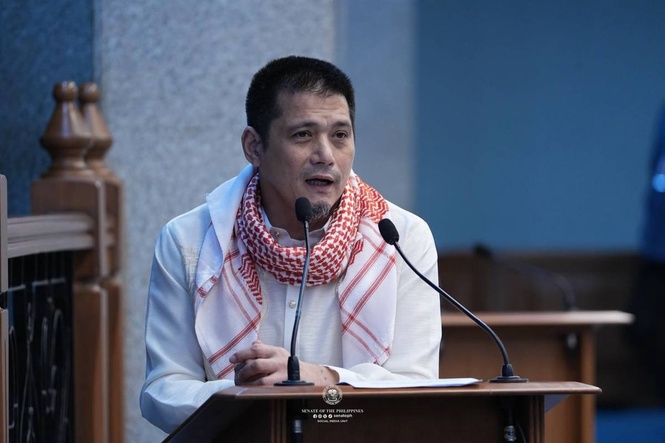
MANILA, Philippines — Sen. Robin Padilla on Monday questioned the issuance of a warrant of arrest against Vice President Sara Duterte in connection with a grave threats case, arguing that that the vice president is immune from suit while in office.
In his manifestation during the Senate plenary session, Padilla said the vice president, like the president, is an impeachable officer under Article XI, Section 2 of the 1987 Constitution.
He argued that impeachment is the constitutional mechanism for holding an impeachable official politically accountable and removing the official from office for impeachable offenses.
The senator cited the Supreme Court's 2005 ruling in Office of the Ombudsman v. Court of Appeals, which he said, recognized a restriction on the criminal prosecution of an impeachable officer for offenses that also constitute grounds for impeachment while the official remains in office.
"The rule that an impeachable officer cannot be criminally prosecuted for the same offenses which constitute grounds for impeachment presupposes his continuance in office,” Padilla said, quoting the Supreme Court's ruling.
Padilla also cited Duterte v. House of Representatives, where he said the court ruled that "impeachable officers enjoy a certain degree of immunity while in office by limiting the grounds for impeachment under Article 11 of the Constitution."
The senator further argued that the 1987 Constitution does not explicitly state that the vice president is immune from suit, but jurisprudence recognizes that immunity.
He said the purpose of such protection is to shield impeachable officials from harassment, distractions and legal actions that could interfere with the performance of their constitutional duties.
"My point is simple: no one should be above the law—whether the president, vice president, senator, or ordinary citizen," Padilla said.
"If someone is at fault, they should be held accountable. If a crime has been committed, it should be investigated and, at the proper time, prosecuted. But accountability must follow due process," he added.