Pakistan’s president has suspended an elected provincial government led by imprisoned former prime minister Imran Khan’s party after declaring a state of emergency.
Asif Ali Zardari approved the imposition of emergency rule in Khyber Pakhtunkhwa, the northwestern province bordering Afghanistan, on Sunday following a recommendation from prime minister Shehbaz Sharif’s cabinet.
The decision dissolves the administration of the Pakistan Tehreek-e-Insaf party and puts the province under the authority of the governor, who represents the federal government. While the governor will exercise the powers of provincial institutions and officials, according to a presidential announcement, the parliament will assume the powers of the provincial assembly.
The chief minister, ministers, advisors, and other senior officeholders will cease to hold their positions.
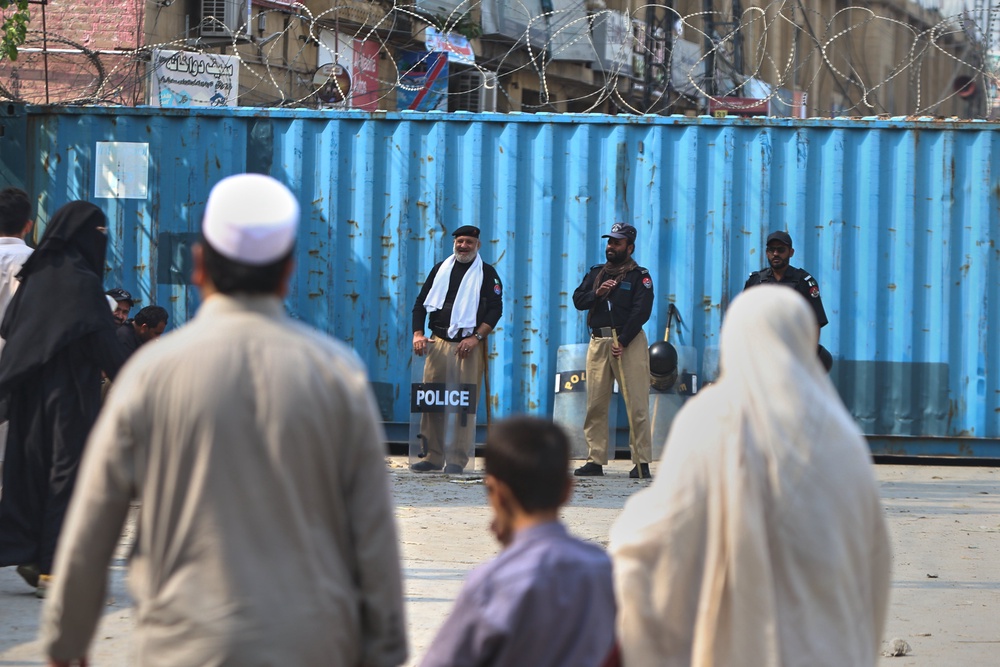
The decision followed an emergency meeting of Mr Sharif’s cabinet, which reviewed the security situation in Khyber Pakhtunkhwa. A statement from the prime minister’s office accused the local government of “deliberate disengagement from the fight against terrorism”.
The Sharif government has repeatedly criticised the PTI administration over its counterterrorism policy, while the party has argued that security decisions affecting the province should involve its government and other political stakeholders.
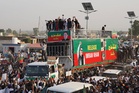
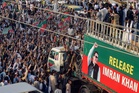
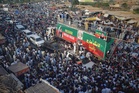
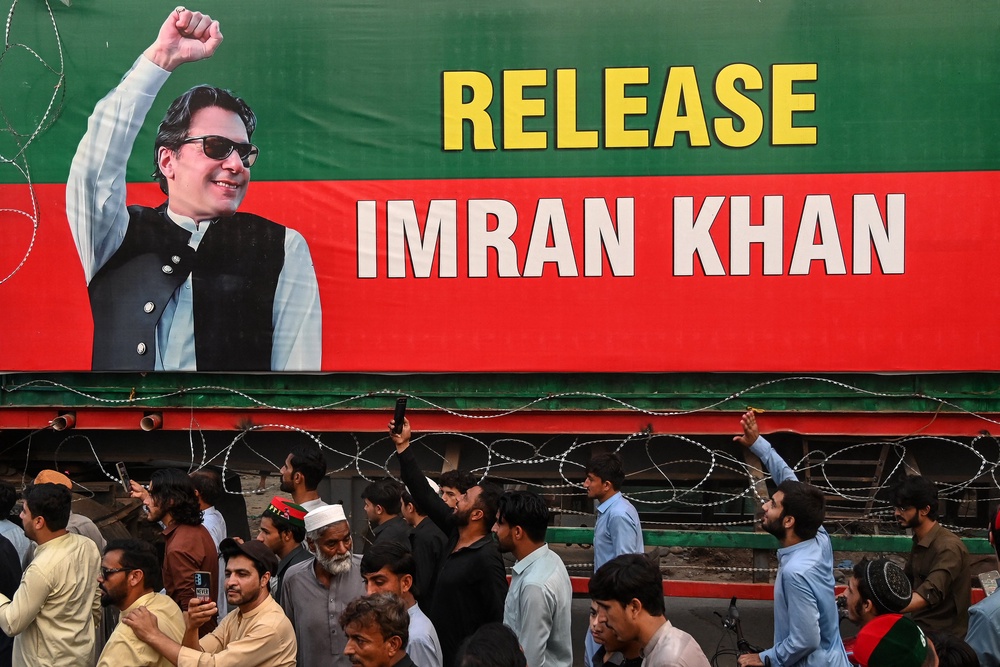
The emergency decree comes as supporters of Mr Khan march towards Islamabad to demand his release and the “restoration of constitutional supremacy” in the country.
The march, which began in Khyber Pakhtunkhwa on 4 October, has escalated tensions between the PTI and the Sharif government.
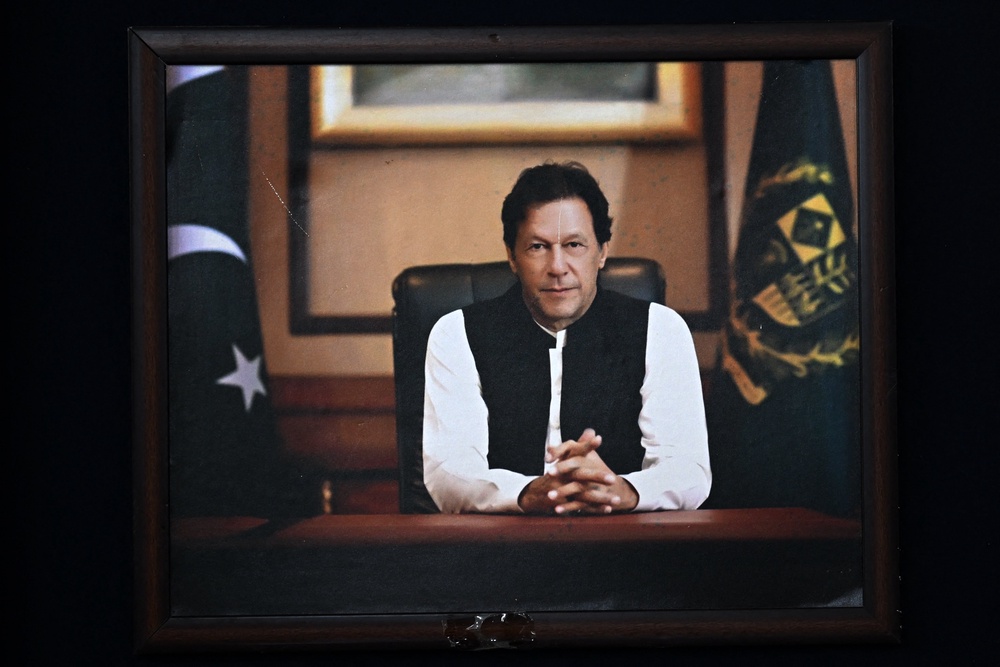
Mr Khan has been jailed since 2023 and faces multiple cases, including corruption and terrorism charges. He was ousted in April 2022 through a parliamentary no-confidence motion he accused Pakistan’s powerful military of orchestrating at the behest of the US.
He was succeeded as prime minister by Mr Sharif following a 2024 election that was widely seen as rigged against the PTI.
PTI spokesperson Zulfikar Bukhari described the emergency decree as a “disguised coup”. “Now that little bit of democracy is also gone.”
He said Khyber Pakhtunkhwa had Pakistan’s “only legitimately elected government”, a claim rooted in the party’s rejection of the results of the 2024 parliamentary election.
“This will only lead to further bloodshed, instability and collateral damage,” he said, adding that there had been room for negotiations but the decree showed talks had never been the Sharif government’s intention.
PTI chairman Gohar Ali Khan condemned the move as an “undemocratic measure”, warning that “peace cannot be established, nor stability brought, by ignoring this mandate, weakening provincial autonomy, and creating conflict between the federation and the province”, according to Dawn.
He said the fight against terrorism should not be used “as a justification to suppress the people’s voice” or limit the province’s constitutional authority, adding the party would challenge the decision through constitutional and legal channels.
The PTI rejected the Sharif government’s allegations that its provincial administration failed to tackle militancy, arguing that it had increased spending on policing and counterterrorism. It also accused the federal government of failing to meet its financial obligations to the province.
The Sharif government, however, accused the provincial administration of failing to strengthen its counterterrorism capabilities despite receiving substantial federal funding.
Information minister Attaullah Tarar claimed that Khyber Pakhtunkhwa had received £1.9bn from the National Finance Commission but failed to upgrade its counterterrorism department, Dawn reported.
“You didn’t establish forensic labs, did not install safe city cameras,” the minister said, accusing the PTI of spending money on organising protests rather than improving security infrastructure.
Before the march to Islamabad began on 4 October, the PTI and the Sharif government held talks in an attempt to postpone it, but failed to reach an agreement.
In addition to Mr Khan’s release, the PTI is demanding his transfer to a hospital and permission for his family to visit him.
The federal government claims Khan is in good health and receives regular family visits.
Interior minister Mohsin Naqvi said there was “no room left to avoid the imposition of an emergency” after Mr Sharif and Mr Zardari discussed the political and security situation in Khyber Pakhtunkhwa during a meeting on Saturday.
Governor Faisal Karim Kundi had already defended federal intervention. “We’ve to establish peace in the province,” he told Geo News before the decision was announced.
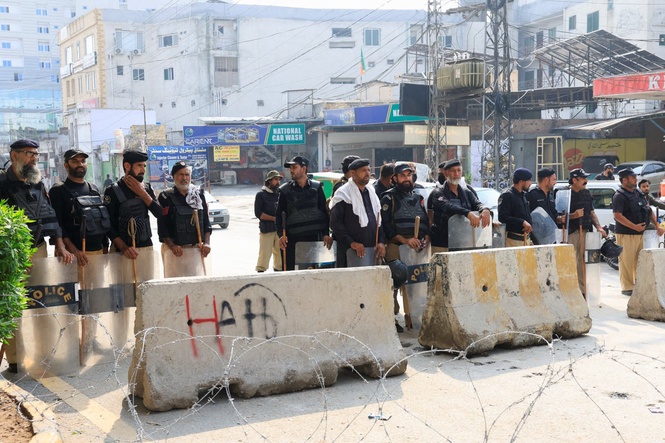
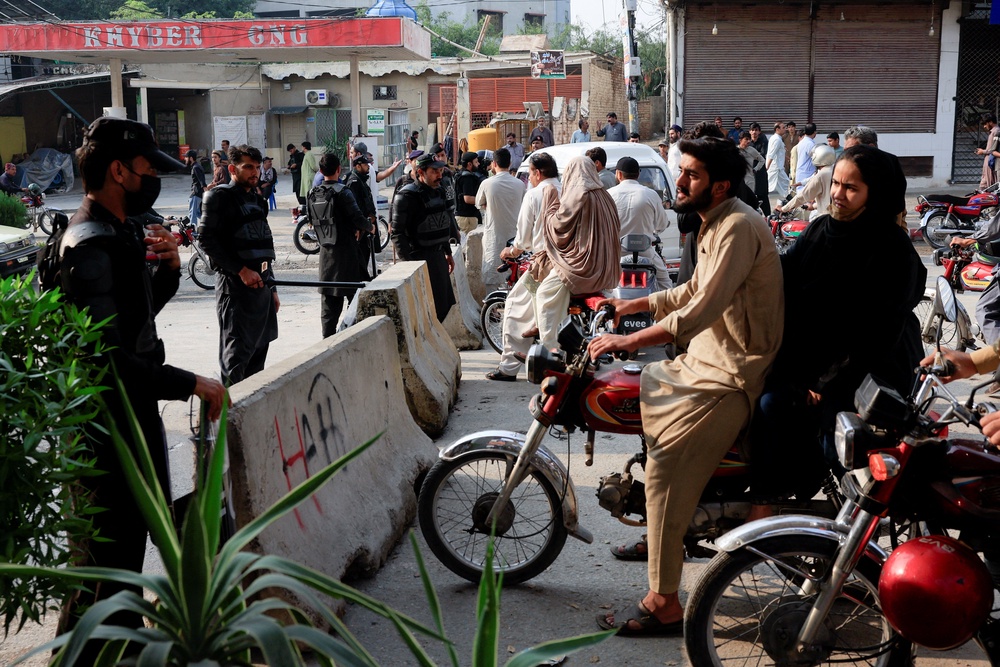
Ahead of the declaration, police had detained several PTI supporters overnight. On Sunday, additional police and security personnel were deployed in Khyber Pakhtunkhwa and Islamabad to prevent unrest.
Read MoreFamilies demand answers after deadly poll violence in Pakistan-administered Kashmir
Kashmiri filmmaker detained by ICE on way to ‘art as resistance’ panel discussion
Imran Khan’s supporters march on capital to demand his release
Children among nine killed in Pakistani airstrikes in Afghanistan, Taliban say
Nepal issues evacuation orders after flash floods leave four people missing
Saudi Arabia sentences man to death over Facebook post. Why isn’t there an outcry?