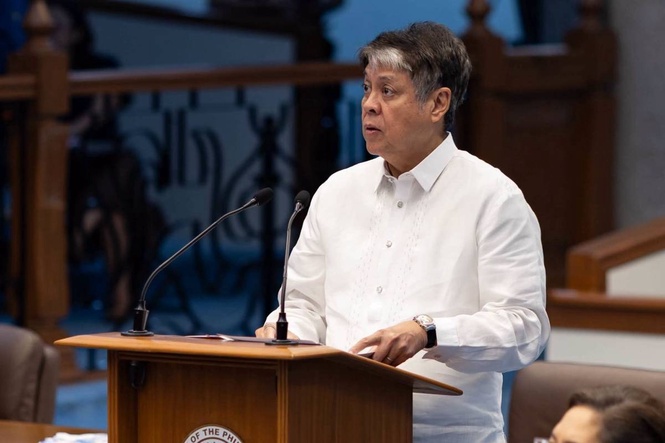
SEN. Francis Pangilinan has called on the national government to immediately develop province-by-province preparedness plans for the expected intensification of El Niño, warning that drought and water shortages could put farmers, fisherfolk and Filipino families at greater risk in the coming months.
Pangilinan urged the Department of Agriculture (DA), National Irrigation Administration (NIA), Bureau of Fisheries and Aquatic Resources (BFAR), Philippine Atmospheric, Geophysical and Astronomical Services Administration (Pagasa) and local government units (LGUs) to translate national preparedness efforts into specific, localized action plans.
“We already have a warning. We should be preparing now, not waiting until the fields are dry and there are no more fish to catch before we act,” he said in a statement.
“We cannot stop El Niño, but we can reduce its impact on our farmers, fisherfolk and consumers. We must get ahead of the problem. After all, the government has the power to ease the hardships our people will face,” he added.
Pangilinan, who chairs the Senate Committee on Agriculture, Food, and Agrarian Reform, issued the call following a recent Pagasa climate advisory on the intensifying El Niño phenomenon.
The agency said a strong El Niño could persist until the second half of 2027, increasing the likelihood of below-normal rainfall and associated impacts such as dry spells and drought in parts of the Philippines.
Pangilinan said the proposed province-by-province preparedness plans should identify areas at risk, available irrigation water, crops already planted, fishing and aquaculture communities that may require assistance, government officials responsible for the response, and interventions that can be delivered before losses occur.
He urged the DA and NIA to accelerate the repair and rehabilitation of irrigation systems, particularly in drought-prone areas, while ensuring the timely distribution of drought-tolerant seeds and other agricultural inputs and identifying reliable water sources for farming communities that may be affected by prolonged dry conditions.
To prevent farmers and fisherfolk from falling deeper into debt, Pangilinan said the government should prepare rapid crop-loss assessments, affordable credit, insurance support and recovery assistance for affected families.
“In situations like this, the government should be the support system for our farmers and fisherfolk. They should not have to turn to loan sharks who will take advantage of and exploit their needs. The government should be the one they can rely on, especially in the coming months,” he said.
He urged BFAR to closely monitor fishing grounds, inland waters and coastal areas that could be affected by prolonged heat and changing water conditions and prepare assistance for fisherfolk whose livelihoods could be disrupted by the changing conditions.
The senator also proposed the creation of a public dashboard for El Niño preparedness that would provide regular updates on drought risks, water availability, irrigation-system conditions, affected agricultural areas and communities, government interventions, assistance delivered, and reported income and production losses.
Such a dashboard, he said, would allow national government agencies, LGUs, farmers and fisherfolk organizations, and the public to monitor the implementation of government interventions and help ensure that assistance reaches affected communities.
Pangilinan also backed calls to reactivate the Presidential Task Force on El Niño.
He said the Senate could convene an oversight hearing to discuss the proposed reactivation of the task force and assess the government’s preparedness and response measures.
“If we neglect our food producers, food prices and supply will once again be affected. Our fellow Filipinos will face even higher prices, which is why the national government and LGUs must start taking action now,” he added.