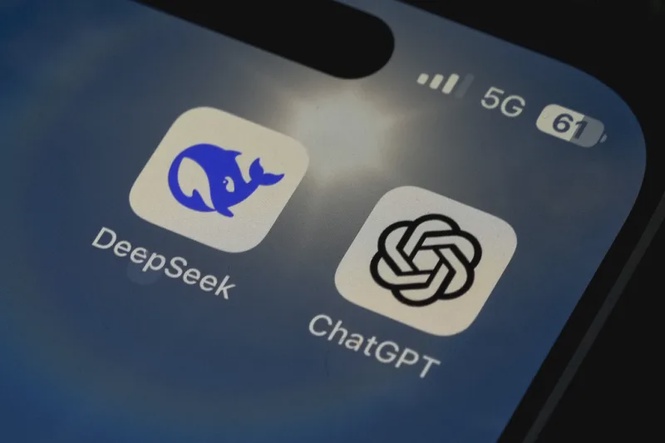
Doctors in Taiwan say a growing number of patients now walk into their clinics having already consulted ChatGPT, DeepSeek, or another AI chatbot, and some are using those answers to question, and at times openly challenge, their physicians' diagnoses and prescriptions.
The issue gained attention after Hsu Kuo-feng, a practitioner of traditional Chinese medicine, publicly vented his frustration over a patient who trusted AI more than his advice. Several physicians who spoke to Storm Media said nearly every doctor in Taiwan now has similar stories, and that the shift is here to stay.
Lin Ying-jan, honorary chairman of a national association of Taiwan's primary care physicians, said that in the age of AI, patients arriving with chatbot printouts, whether to consult or to argue, is almost impossible to avoid. He added that some medical specialties, such as diagnostic imaging, could be among the first to be taken over by AI, calling it an unstoppable trend.
Young Patients Run Every Prescription Through AI
According to Lin, the patients most likely to bring AI output into the consulting room are young people, for whom chatbots are already part of daily life. Many search their symptoms before an appointment, then run the prescribed drugs through AI afterward to look for side effects the doctor did not mention. If they find any, they often come back with questions.
Even doctors lean on the technology. Around the Mid-Autumn Festival on September 25, Lin said, many patients asked whether their medications could safely be taken with pomelo, a citrus fruit traditionally eaten during the holiday that, like grapefruit, can interact with certain drugs. With thousands of medicines on the market, he said, many physicians checked AI themselves before answering.
Lin also noted that at least one U.S. state has begun accepting AI decisions as a route to prescription drugs. Utah in January 2026 launched a state-backed pilot allowing an AI platform, Doctronic, to renew certain routine prescriptions for patients with chronic conditions without a physician signing off on each refill.
Chatbot Recast A Weight Loss Doctor As A Cardiologist
Hsiao Tun-jen, a gastroenterologist and honorary chairman of the Taiwan Association for the Study of Obesity, said patients regularly confront him with AI-generated material. Most remain polite, he said, but one patient once raised his voice and demanded: "How come what you're saying is different from AI!"
Hsiao said he did not know whether to laugh or cry. If AI were so authoritative that any disagreement with it meant the doctor was wrong, he said, people could simply have AI treat them and skip the clinic altogether.
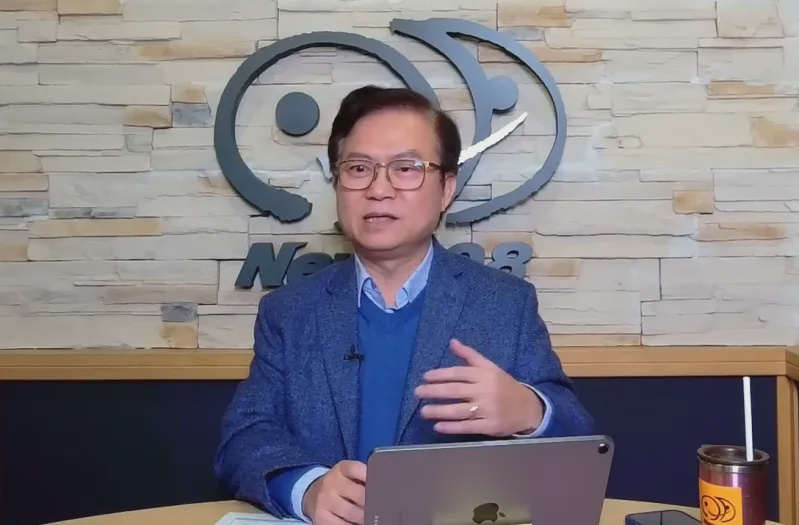
He has his own reasons for skepticism. When chatbots first became widely available, Hsiao tested one by asking, "Do you know Dr. Hsiao Tun-jen?" The AI replied: "Yes, Dr. Hsiao Tun-jen is a well-known cardiologist."
Hsiao burst out laughing. He has worked in weight management for more than 30 years and served several terms as chairman of the obesity association, but has nothing to do with cardiology.
That, he said, is the nature of AI. Instead of admitting it does not know something, it will invent a plausible answer, a phenomenon known as AI hallucination. Its goal, Hsiao said, is simply to fulfill the user's command.
When AI Got It Right, A Patient Never Returned
Lin stressed that AI medical advice should be treated only as a reference. A chatbot never sees the patient, cannot perform a physical examination, and has no way of judging whether the information a patient feeds it is accurate or false. A "diagnosis" produced under those conditions, he said, cannot be fully trusted.
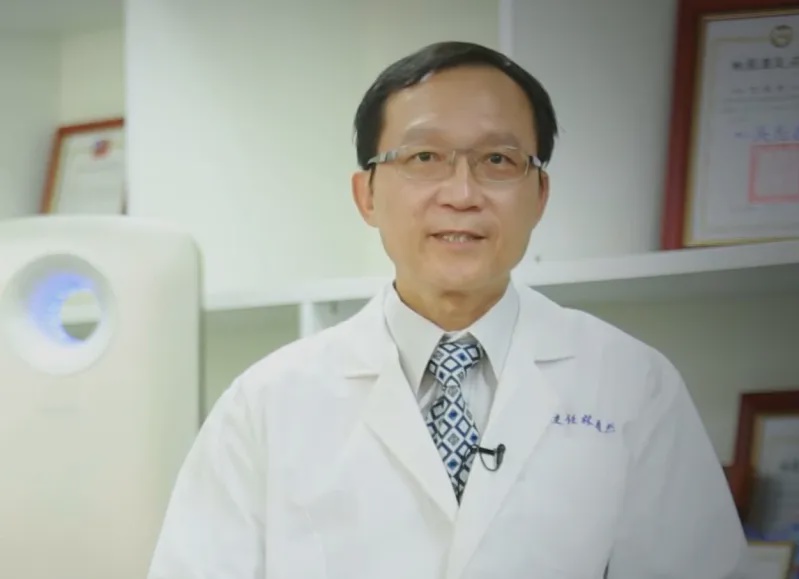
Still, he admitted AI sometimes gets it right. One patient told Lin he had G6PD deficiency, an inherited enzyme disorder in which certain drugs or foods can trigger the destruction of red blood cells, also known as favism. Lin prescribed a broad-spectrum antibiotic. At home, the patient checked the drug with AI, learned it could carry a risk of hemolysis for people with his condition, and returned to the clinic.
"Didn't I tell you I have G6PD deficiency? Why did you still prescribe this antibiotic?" the patient asked.
Lin said he had always considered the antibiotic very safe. When he checked AI himself, he found the risk did exist, though it was small. He explained this at length, but the patient refused to accept it, convinced that "a doctor shouldn't be allowed not to know this." The patient left unhappy and never came back.
Lin said patients often expect a perfect drug that cures them quickly with no side effects at all. Yet even aspirin, taken by huge numbers of people in Taiwan to prevent blood clots, has a list of possible side effects that could fill more than a sheet of A4 paper. Doctors frequently have to choose the lesser of two harms, he said, because a flawless medicine does not exist.
Chiayi Pediatrician Says AI Answers Leave Parents Anxious
Tu Sheng-hsiung, who runs a pediatric clinic in the southern Taiwan city of Chiayi, said parents frequently bring him AI-generated information about their children. Perhaps because people in southern Taiwan tend to show doctors more deference than those in the north, he said, he has yet to meet a parent who was rude about it.
The bigger problem, Tu said, is that AI answers are often one-sided and incomplete. Parents who spot even a slight resemblance between a chatbot's description and their child's symptoms tend to panic, and in most cases the worry proves unfounded.
Tu said AI may be powerful at searching academic or historical information, but in medicine it cannot see the patient or follow how a condition changes from hour to hour, so mistakes are common.
The doctors agreed that AI, used in the right place, can be a powerful tool, but for now it can serve medicine only as a reference. They also urged patients to stay courteous and respectful when raising questions with their doctors, whatever the source, noting that the doctor-patient relationship, like any relationship, works both ways.