
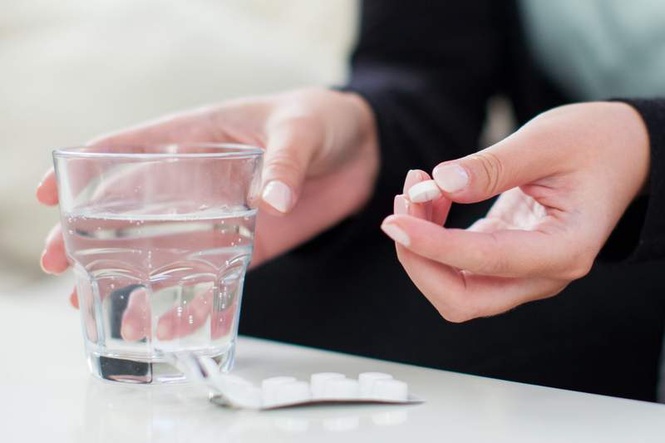
Anyone taking pills or capsules should probably avoid mineral water, as its alkalinity can cause the active ingredient to be released too soon after ingestion, blunting the treatment’s impact, pharmacologists are warning.
Doctors often advise patients on what time of day they should take tablets, but the Budapest-based authors of new research into the impact of mineral water on medicine say people need to be better informed about how they swallow medication and what with.
After testing 22 “commonly consumed beverages,” a team at Semmelweis University in Budapest concluded that “alkaline bottled waters with high mineral content” can lead to a pill’s active pharmaceutical ingredient (API) being released too early in the stomach rather than the intestinal tract.
In some cases, the impact not only diminishes but can "even eliminate" the effectiveness of drugs across a wide range of treatment areas, including anti-reflux, gastroprotective, psychiatric and anti-inflammatory pain-relievers.
The researchers pinpointed the effect of drinks on the enteric coating, which is designed to prevent the active ingredient from being released too early by slowing the breakdown of the medication inside the human body.
“In some cases, the enteric coating began to deteriorate after just five minutes, and after 15-30 minutes of pre-soaking, more than 90% of the active ingredient had been released prematurely,” Semmelweis University explained in a press release.
While tap water is probably the best bet to swallow medication with, slightly acidic drinks could be an alternative, the team found, after observing that apple juice caused "almost no premature release of the active ingredient," with the pill’s coating staying "far more stable than in alkaline waters."
"In the pharmacy, we regularly see that many patients are unaware of how much it matters what they take their medication with," said Adrienn Demeter of Semmelweis University, who warned that this "can affect whether the treatment works as intended."
"Functional coatings, such as films that dissolve in the intestine or stomach, are widely used in oral drug delivery to protect APIs from degradation in the stomach, to control the location and rate of drug release," the researchers said in their paper, which was published in the journal Pharmaceutics in April.
There is a need for "more precise and explicit guidance" about what liquids are suitable for downing meds, the team said in the paper.
"Recommending slightly acidic or pH-neutral liquids and discouraging the use of alkalizing mineral waters may significantly reduce the risk of unintended premature drug release and improve patient safety, particularly in elderly and dysphagic populations," they concluded.
Patients should ask a doctor before breaking up or mixing pills into food, the Semmelweis team added, as this can also mean the active ingredient gets released too early.