When my October water bill arrived showing RM13, my first thought was that I might have another underground pipe leak—or perhaps a tap had been left running. But the consumption reading told a different story. The change was in the tariff, not my water use.
The October bill reflects the second household tariff adjustment in less than two and a half years. Before February 2024, Penang households paid 22 sen per cubic metre (m³) for the first consumption band. A final tariff effective 1 February 2024 was 62 sen per m³, including a 7-sen electricity-cost component. That was an increase of about 182% from 22 sen. On 1 July 2026, the same band rose again, from 62 to 65 sen — smaller in percentage terms, but another increase nonetheless. It’s now nearly three times its previous level, how much more would be enough and will we see more increases in near future, perhaps due to another justifiable reason like rising fuel cost?
The minimum monthly charge tells a similar story but not sure what is the intention behind it. Before February 2024 it was RM2.50, then RM6.20, and from July 2026 RM6.50. For a two-month bill, the latest minimum rose from RM12.40 to RM13. My household’s actual consumption of 9 m³ should cost only RM5.85. PBA says it wants to encourage conservative usage behavior; however low-consumption households have good reason to ask whether the stark increase in minimum charges reinforces it.
I recognise that clean, reliable water is not free to produce. Treatment chemicals, electricity, maintenance, ageing pipes and new supply infrastructure to replace the old, all of these cost money. PBAPP says its operating costs rose substantially over earlier years, with a further 5% supply-cost increase since the February 2024 review. It also reports that Penang residents consumed an average of 267 litres per person per day in 2025. Responsible water use matters. But the scale of the 2024 rise, followed by another revision in 2026, makes transparent performance obligations even more important.
What is NRW and why is this measurement important?
Earlier this year, I saw a PBA technician walking through my neighbourhood with a long listening device, checking for underground leaks. When I asked what he was doing, he explained that he was searching for leakage. I appreciated the effort, but it reminded me of an important measure of any water utility's efficiency: non-revenue water, or NRW.
NRW is treated water that enters the distribution system but does not generate revenue. NRW rates in Malaysia range from 30% to 50%, mostly caused by pipe leakages and breakage [reference 1] while PBA reported NRW of around 28% [reference 1 & 2]. I come from a manufacturing background. Imagine a factory producing 100 components but failing to recover revenue from the equivalent of 28 of them. No competent management team would simply accept this indefinitely as a cost of doing business. Engineers would investigate the root causes, prioritise the largest losses, allocate capital to prevention and track progress month by month. A water distribution network is more complex than a factory, and NRW is not identical to manufacturing scrap, but the principle of operational discipline and expectation is the same, leading to yearly target setting and improvements.
PBA is a regulated essential-service provider, and households cannot readily switch to a competing piped-water network. The tariffs are set through a regulated process, not unilaterally at PBA’s discretion. Precisely because customers have little choice, the regulator and operator should demonstrate not only a need for revenue but also measurable value for money. The cumulative change from 22 to 65 sen in the first band is the context in which this latest three-sen increase should be assessed.
I am not here to judge PBA’s performance and justification for the tariff increase; I am only interested to see the result of capital expenses and investment from the extra revenue collected improving year to year on the important NRW indicator. If NRW improves and other un-controllable factor like inflation and operating costs remains stable, then there is good reason to further reduce and reward the low consumption users.
I read with interest the article in reference#1, where public involvement and support is minimal in the context of NRW. A simple and effective improvement channel is through reward program for confirmed leaks and residents will be more willing to report leaks that is outside their metered piping.
Why aren't we doing more to encourage rainwater harvesting?
Malaysia is blessed with abundant rainfall, yet we continue to rely heavily on treated water for purposes that do not necessarily require it.
IKEA has demonstrated what can be achieved through thoughtful building design. Its stores in Cheras and Batu Kawan incorporate rainwater harvesting systems for landscape irrigation and, more importantly, toilet flushing, supported by water-saving fixtures. According to the building's sustainability consultant, IKEA Cheras uses approximately 50% less water than an earlier IKEA store in Malaysia through these combined measures.
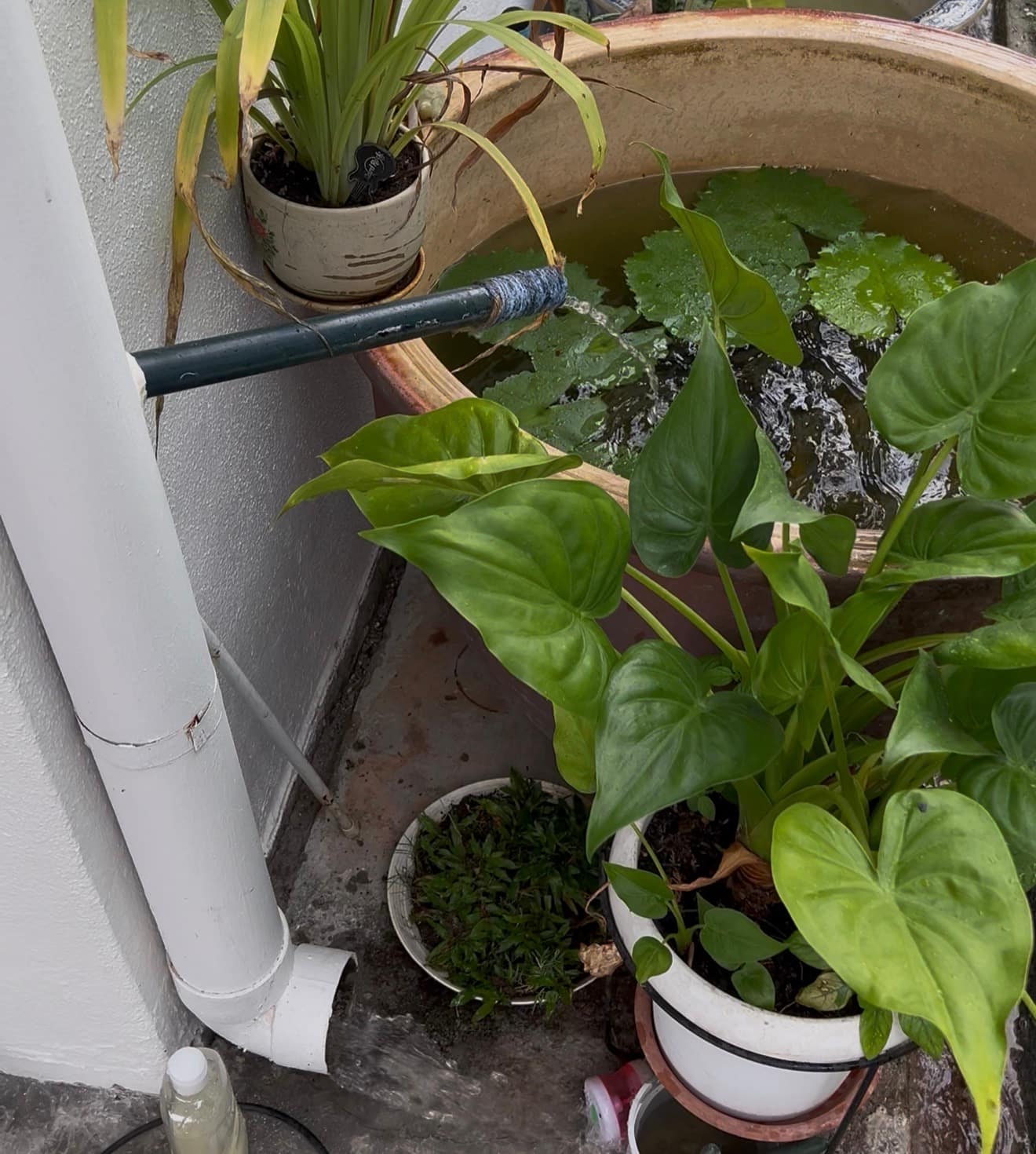
This is a practical example worth encouraging through government policies and incentives, particularly for new residential and commercial developments. Just as Malaysia has introduced programmes to encourage rooftop solar installations, why shouldn't PBA and other state water authorities play a more proactive role in promoting rainwater harvesting? Working with local authorities and property developers, they could encourage new buildings to incorporate rainwater storage and separate plumbing for non-potable uses from the outset, when installation is far more practical and economical than retrofitting existing buildings.
Water conservation should not come at the expense of reasonable household comfort and affordability.
An affordable water tariff should allow families to enjoy the occasional refreshing bucket bath rather than feeling compelled to take the quickest possible shower. Neither should households have to accumulate several days of soiled clothes simply to avoid the cost of running their washing machines more frequently.
Of course, this does not mean encouraging wasteful consumption. Public education should continue, with greater emphasis on practical water-saving habits, such as using trigger-operated hose nozzles instead of leaving water running continuously when washing cars or watering gardens, repairing leaking taps promptly, and adopting water-efficient household fixtures.
There is an important distinction between using water responsibly and being forced to use less because it is becoming increasingly expensive. Ultimately, PBA's responsibility should extend beyond supplying water and collecting tariffs. It should also lead efforts to reduce distribution losses, encourage alternative water sources where practical, and help consumers use water efficiently without unnecessarily compromising their quality of life.
Accountability and Responsibility from each of us.
Finally, I am not arguing that Penang’s water tariff must never increase, I am arguing that each increase should come with a visible, independently scrutinised commitment to efficiency. When customers pay more — particularly after the steep 2024 adjustment — they should be able to see meaningful results in leakage reduction, service reliability and efficient alternative water use. Water conservation must be a shared responsibility, not solely rest on households through tariffs.
References
2. NRW % as reported by PBAPP
3. IKEA Cheras — sustainable building features
https://www.ien.com.my/projects/ikea-cheras
Albert Lee (keanlay@yahoo.com) is a content creator under the Newswav Creator programme, where you get to express yourself, be a citizen journalist, and at the same time monetize your content & reach millions of users on Newswav. Log in to creator.newswav.com and become a Newswav Creator now!
The User Content (as defined on Newswav Terms of Use) above including the views expressed and media (pictures, videos, citations etc) were submitted & posted by the author. Newswav is solely an aggregation platform that hosts the User Content. If you have any questions about the content, copyright or other issues of the work, please contact creator@newswav.com.