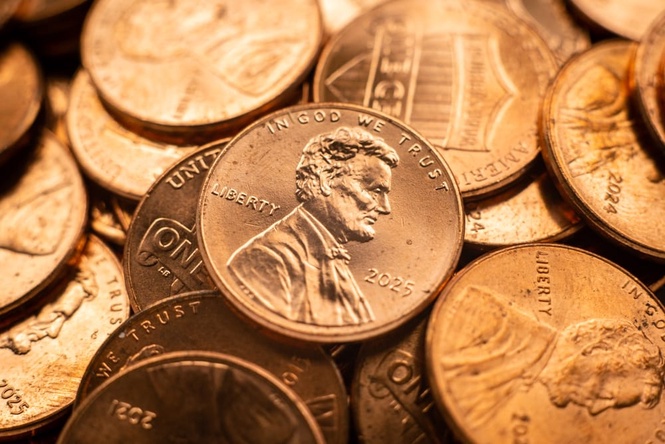
That jar of pennies sitting beside your washing machine just became a little more interesting. The U.S. Mint stopped producing circulating pennies in November 2025, ending a 232-year run. Your coins haven’t become worthless overnight, but the change could affect how you pay for purchases, deposit loose change, and decide whether an old penny deserves a closer look.
The reason for the change comes down to an awkward financial reality: making a penny costs more than a penny. According to the U.S. Mint, production costs climbed to 3.69 cents per coin. The Treasury Department expects to save about $56 million annually in material costs by ending production.
Now comes the transition. Existing pennies remain legal tender, and billions are still in circulation. Rather than tossing your coins into a drawer and forgetting about them, you have several practical options. A few minutes of sorting could turn forgotten change into spending money, a small donation, or even a collectible worth investigating.
Why Pennies Are Falling Out of Favor
The penny’s decline wasn’t exactly a surprise to anyone watching the numbers. Producing and distributing a coin worth one cent for nearly four cents made little financial sense, especially as Americans increasingly use cards and digital payments. The Mint ended circulating penny production on November 12, 2025, although it can still produce limited quantities for collectors.
The Treasury Department estimates that approximately 114 billion existing pennies will continue circulating for as long as possible. The U.S. Mint has separately cited an estimate of roughly 300 billion pennies in circulation, illustrating that estimates vary. Either way, the country already has an enormous supply. The immediate change isn’t that pennies have vanished, but that the government has stopped replenishing the supply of everyday coins.
Businesses may feel the effects as their penny supplies shrink. Cashiers need coins to make exact change, and retailers must adapt when their drawers run low. The Federal Reserve continues to facilitate penny deposits, while coin distribution depends on available inventory. The transition will therefore happen unevenly rather than through one nationwide moment when pennies suddenly disappear.
Nostalgia won’t help the Mint balance its books, but it explains why the penny’s departure feels surprisingly personal. Generations of Americans grew up saving pennies, checking them for good luck, or dropping them into donation jars. The coin may be losing its place in everyday commerce, but it isn’t losing its legal value.
The Hidden Value Sitting in Your Coin Jar
Before cashing in your pennies, consider sorting through them. Most are worth exactly one cent, but certain dates, mint marks, errors, and unusually well-preserved examples can attract collectors. An ordinary penny from an older year isn’t automatically valuable, so a little research beats assuming you’ve discovered a miniature fortune.
Start with coins dated before 1982. Most pennies minted before that year contain 95% copper, while pennies produced later generally use a zinc core with a thin copper coating. The year 1982 is a transition year, so pennies from that date can have different compositions.
That copper content makes older coins interesting, but it doesn’t guarantee a payday. Collectible value depends on factors such as rarity, condition, and collector demand. Some coins with unusual minting errors or scarce varieties can command premiums, while millions of ordinary copper pennies remain worth only their face value.
Check reputable coin references and compare your coin with examples that have actually sold, rather than relying on optimistic online asking prices. A local coin dealer can also help assess a potentially valuable find. Avoid cleaning coins before an evaluation. Polishing away discoloration or scratches can damage the original surface and reduce collector appeal.
One important caution: don’t assume you can profit by selling ordinary pennies for their copper content. Federal restrictions prohibit melting pennies for metal recovery in many circumstances. Research the rules before pursuing any metal-value strategy.
Smart Ways to Put Your Pennies to Work
If your collection consists mostly of ordinary coins, turning them into usable money is usually the simplest move. Count your pennies, separate them from other coins, and check your bank or credit union’s deposit policy. Some institutions require rolled coins, while others accept loose change. Rules and fees vary, so a quick phone call can save an unnecessary trip.
Coin-counting kiosks offer another option. Some charge a fee for cash redemption, while others provide fee-free alternatives under certain conditions. Check the terms before feeding in a mountain of pennies. Paying a percentage to convert money you already own can make an otherwise satisfying cleanup less rewarding. You can also direct your change toward a specific goal. Put the proceeds into an emergency savings fund, use them for groceries, or start a small savings challenge. A jar containing $20 in pennies won’t transform anyone’s retirement, but it can cover a modest expense or give a savings goal a useful nudge.
Charities and community fundraisers may welcome loose change, too. Check whether a local organization accepts coins before dropping off a heavy container. And if you enjoy crafts, pennies can become decorative projects, provided you follow applicable rules and don’t mistake a creative reuse project for an investment strategy.
The simplest option may be the most overlooked: spend them. The Treasury Department has encouraged Americans to use their existing pennies to help keep coins circulating during the transition. You don’t need to race to the bank or hoard every coin. Just stop treating the jar as permanent household furniture.
How Penny Shortages Could Change Your Checkout Total
The practical change for shoppers comes when a store runs short of pennies. In those cases, cash transactions may be rounded to the nearest five cents, depending on applicable state rules and the retailer’s policy. Electronic payments generally continue to be processed to the exact cent.
Under a common symmetrical rounding method, a final cash total ending in 1, 2, 6, or 7 cents rounds down, while totals ending in 3, 4, 8, or 9 cents round up. A total ending in zero or five stays unchanged. For example, a $12.42 cash purchase would become $12.40, while $12.43 would become $12.45.
Rounding generally applies to the final transaction total after taxes, not to each individual item. That distinction matters because rounding every item separately could produce a different result. State rules also vary, so consumers shouldn’t assume every retailer follows the same procedure.
The National Conference of State Legislatures reported in June 2026 that at least 23 states had passed rounding laws, while 11 state agencies had issued guidance for retailers. Those numbers reflect the developing policy landscape, not one universal national rule.
If a receipt shows a rounding adjustment, check that the store applied its stated policy consistently. A fair system rounds totals both up and down. The change shouldn’t affect card payments simply because pennies are no longer being manufactured, and sales tax calculations generally remain subject to state and local requirements.
Your Pennies Still Have a Job to Do
The penny’s production run has ended, but its usefulness hasn’t. Your coins can still buy something, go into a bank deposit, support a charity, or become part of a collection. The smartest choice depends on what you have and whether you value convenience, savings, or the possibility of finding a collectible.
Start by sorting your coins, checking for anything genuinely unusual, and depositing or spending the rest. There’s no need to panic, hoard every penny, or expect a common old coin to fund your next vacation. A little attention can turn forgotten change into money you can actually use.
What will you do with your pennies: spend them, save them, donate them, or check for collectible coins first? Share your approach in the comments.
You May Also Like…
Banks Are Moving Toward All-Digital Payments — What That Means for Your Money
9 Rare Coins Sitting in Your Change Worth a Small Fortune
The “Loud Budgeting” Trend and Transparent Money Conversations
Holiday Frugal: 5 Gift Hacks That Save Money Without Looking Cheap
Utility Companies Are Ending Paper Billing — How It Will Change Your Monthly Payments
The post Pennies Are Disappearing — Here’s What You Should Do With Yours appeared first on The Free Financial Advisor.