A surge of scientific interest has swept through the medical community as new research links stronger, higher quality chest and back muscles to a reduced risk of heart attack.
This study, published in the journal Radiology, is reshaping how experts think about cardiovascular risk assessment. The findings are more than just another piece of the puzzle; they illuminate a pathway connecting muscle health and heart health, drawing attention to the role of resistance training in preventing cardiovascular disease.
The investigation was extensive. Researchers harnessed artificial intelligence to analyse coronary computed tomography angiography (CCTA) scans from over 1,700 individuals, average age 57, who sought medical care due to chest pain.
In the UK alone, roughly 350,000 people undergo CCTA scans each year. These scans serve to detect narrowing or blockages in the arteries that supply blood to the heart, a critical factor when assessing risk for a heart attack.
What set this study apart was its innovation. The researchers deployed AI to evaluate not only the arteries but also the upper-body muscles, bones, organs, and fat visible in the scans. In particular, they focused on muscle attenuation, a measure of brightness or darkness in the scan images. Brighter muscles signified higher density and lower fat infiltration. The AI’s efficiency was remarkable: it could assess muscle quality in less than a minute, whereas a human radiologist would need several hours.
The results were compelling. For every 10-point increase in muscle quality, as measured by scan brightness, participants recorded a 31% lower chance of suffering a heart attack.
Moreover, these individuals were 39% less likely to die within a decade after their scan. The study’s conclusions held firm, even when adjusting for age, sex and arterial calcium buildup—factors known to influence heart attack risk.
But there is nuance here. The research indicated that muscle quality mattered more than mere muscle size. Simply having bulky muscles did not confer protection; instead, it was the aspect of muscle density and lower fat content that proved consequential.
The reasoning behind this is clear. Healthier muscles are likely being used and exercised regularly, reflecting broader lifestyle choices that favour cardiovascular health.
Experts involved in the study suggest that these findings add weight to existing evidence supporting the benefits of exercise particularly strength training for heart health.
The American Heart Association has previously highlighted that resistance training can help maintain or improve muscle mass while reducing cardiovascular risk factors. This includes both traditional markers such as blood pressure and cholesterol, and newer indicators like inflammation levels.
The implications for clinical practice are significant. In future, routine heart scans may offer more than just an assessment of coronary artery health. They could become tools for identifying individuals with poorer muscle quality who may require targeted interventions such as exercise programmes, lifestyle adjustments or medication to reduce their risk.
However, caution is warranted. While the association between muscle quality and reduced heart attack risk is strong, it does not establish causality. More research is needed to unravel the underlying mechanisms and determine whether improving muscle quality directly translates to better cardiovascular outcomes. For now, these findings are best viewed as promising signs rather than definitive answers.
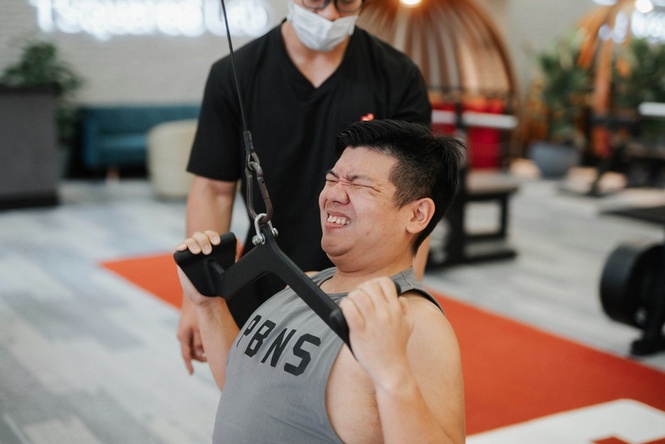
From a practical perspective, maintaining muscle health should become an integral part of overall wellness strategies. Experts recommend regular strength training and load-bearing exercises as key components for preserving muscle quality and enhancing metabolic health.
Importantly, these activities do not have to be extreme—moderate, consistent effort can make a meaningful difference.
Current guidelines advocate for 150 minutes of moderate-intensity exercise each week, accompanied by two days dedicated to strength training. A balanced approach works best: combining aerobic activities such as walking, cycling or swimming with resistance exercises yields optimal benefits for heart and general health.
This shift in focus from merely measuring arterial blockages to considering muscle quality—offers new opportunities for prevention and intervention. Technologies like AI are streamlining assessments that would otherwise be labour-intensive, making it easier for clinicians to spot at-risk individuals quickly and accurately.
As scientific understanding evolves, so does public health messaging. The push towards integrating exercise into daily routines is gathering momentum. People are encouraged to adopt habits that preserve muscle density with lifting weights, practising yoga or engaging in bodyweight exercises, all of which contribute to better cardiovascular outcomes.
Yet it is important to recognise that muscle health is one piece of a complex puzzle. Other factors—diet, stress management, sleep quality and genetics play equally vital roles in determining heart attack risk. Comprehensive strategies that address multiple aspects of wellbeing remain essential.
This study is timely, arriving as sedentary lifestyles continue to dominate modern society. Many people spend hours sitting at desks or commuting in cars with little physical activity woven into their day. The research offers a reminder that movement matters.
Exercising muscles not only builds strength but may also protect the heart.
Technological advances are accelerating progress in medicine. Artificial intelligence is transforming how data from routine scans is interpreted, enabling faster and more precise insights into patient health. As these tools become more widely available, they will likely reshape screening protocols and preventive strategies across healthcare systems.
Moreover, the emphasis on muscle quality rather than size challenges popular perceptions about fitness. It shifts attention away from superficial measurements towards deeper markers of health. This is particularly relevant for older adults, who may lose muscle mass with age but can still preserve or improve muscle density through targeted exercise.
On the research front, further studies are needed to clarify how muscle quality interacts with other risk factors and how interventions can be tailored for maximum benefit. This could include examining different exercise regimens or exploring the role of nutrition in supporting muscle health.
The story does not end here. As medical science continues its quest for answers, the relationship between muscles and the heart remains a fascinating frontier. The prospect of using routine scans for more holistic risk assessment holds promise for early detection and improved outcomes.
The challenge now is translating knowledge into action—both at the individual level and within healthcare systems. As society grapples with rising rates of heart disease, this research offers hope and direction.
It urges us all to keep moving, to value our muscles as allies in safeguarding our hearts.
The post People with Strong Chest and Back Muscles Had 31% Lower Risk of Heart Attack, New Study Finds first appeared on PP Health Malaysia.