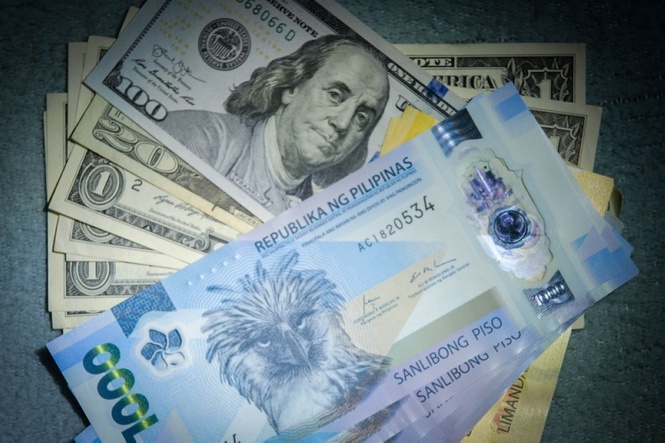
FOR the fourth straight day, the Philippine peso plunged to another record low against the US dollar on Friday, while the stock market experienced its second day of decline as persistent currency weakness, elevated oil prices and concerns over inflation weighed on investor sentiment.
The peso yesterday closed at P63.615 per dollar, surpassing its previous record low of P63.545 on Thursday.
Meanwhile, the Philippine Stock Exchange index (PSEi) fell 51.10 points, or 0.88 percent, to close at 5,728.63, extending losses after the Bangko Sentral ng Pilipinas (BSP) delivered a 50-basis-point interest rate hike on Thursday.
A currency trader said the BSP’s affirmation that it does not target a specific peso exchange rate level had added to the currency’s weakness, as speculators tested the central bank’s tolerance for further depreciation.
“Fundamentally speaking, same backdrop. Weak economic growth, growing budget deficit, then you have a potential snag in government spending given latest SC ruling on budget,” the trader said.
The trader also cited renewed inflation concerns after the BSP raised its inflation outlook for 2027, adding that the peso could remain under pressure next week ahead of the US Federal Reserve’s policy meeting.
The peso’s weakness came alongside elevated global oil prices, with Brent crude hovering around $113 per barrel, its highest level in 52 weeks. As a major oil importer, the Philippines remains exposed to higher import costs, which could add to domestic inflationary pressures.
Japhet Tantiangco, research manager at Philstocks Financial Inc., said the unexpected 50-basis-point rate hike, persistent peso weakness and elevated oil prices had heightened the stock market’s vulnerability.
Luis Limlingan, head of sales at Regina Capital Development Corp., said investors continued to digest the BSP’s rate increase, while weaker Asian markets further dampened sentiment.
Continued peso depreciation added to concerns over the domestic economic outlook, while falling precious metal prices amid persistently high oil prices contributed to cautious trading, Limlingan said.
Trading on the local bourse reached P4.53 billion in net value turnover, excluding extraordinary block sales. Foreign investors’ net position was not immediately available.
Only the financial sector advanced, gaining 0.03 percent, while the other sectors declined. Century Pacific Food Inc. was the index’s top gainer, rising 1.78 percent to P28.55 per share, while Manila Electric Co. was the biggest laggard, falling 4.86 percent to P418.60.
Across the broader market, decliners outnumbered advancers, with 111 stocks falling, 66 rising and 56 unchanged.