THE Department of Foreign Affairs (DFA) said the Philippines acknowledges the International Court of Justice’s (ICJ) ruling about the genocide case brought by the African nation of The Gambia against Myanmar.
On Nov. 19, the ICJ, the United Nations' top court, ruled 9-6 that Myanmar committed genocide against the Rohingya, a Muslim ethnic minority group.
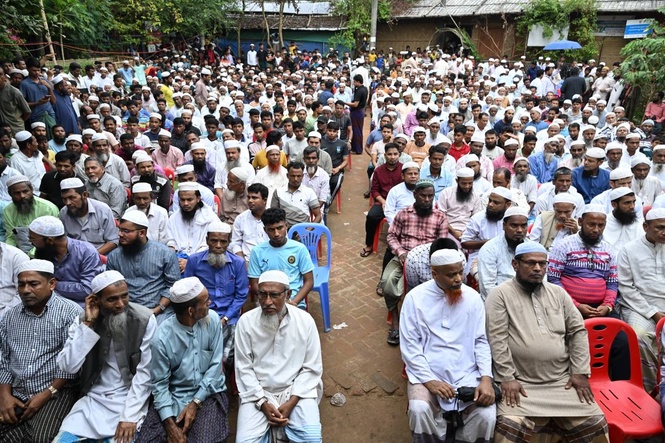
In 2017, Myanmar's military carried out a brutal crackdown against the Rohingya Muslim minority — involving mass killings, sexual violence, and the burning of villages — that forced over 700,000 people to flee into neighboring Bangladesh and was later determined to constitute genocide.
At the time of the 2017 crackdown, Myanmar was led by Nobel Peace Prize winner Aung San Suu Kyi as state counselor.
In 2019, she argued that Myanmar’s military was conducting lawful counter-terrorism operations during an internal armed conflict, rather than committing genocide. The court eventually rejected this defense.
In a statement, the DFA reaffirmed Manila’s commitment to a peaceful settlement of disputes.
“Consistent with its longstanding commitment to the rule of law, the Philippines reaffirms its support for the peaceful settlement of disputes and full adherence to international law, including the obligations of states under the Genocide Convention,” the statement reads.
“The Philippines likewise underscores the importance of respecting the decisions of the International Court of Justice as the principal judicial organ of the United Nations,” it added.
Manila has also reiterated its concern over the civilians affected by the conflict in Naypyidaw, stressing the need to foster a safe environment.
“The Philippines remains steadfast in supporting constructive and inclusive dialogue among all concerned parties, the exercise of utmost restraint, and strengthened international cooperation toward the peaceful and sustainable resolution of conflicts, in keeping with the principles and purposes of the Charter of the United Nations,” the statement concluded.
During his attendance at the Association of Southeast Asian Nations (Asean) Summit last week, outgoing UN Secretary General Antonio Guterres condemned the escalating violence in Myanmar.
“The violence must stop, the impunity must end and humanitarian assistance must flow to people in need, irrespective of territorial control, immediately and unconditionally,” he said.
He also recalled seeing the suffering of more than 1 million Rohingya fleeing Bangladesh, stressing that safety and accountability must be given to the group.
“I have seen firsthand the suffering of the more than 1.2 million Rohingya forced to flee to Bangladesh. And I renew my appeal for their continued protection and support,” he said.
“Conditions for safe, voluntary, dignified and sustainable return are essential and remain absent. Without those guarantees, attempts to repatriate Rohingya refugees violate international protection obligations and put lives in jeopardy,” he added.