
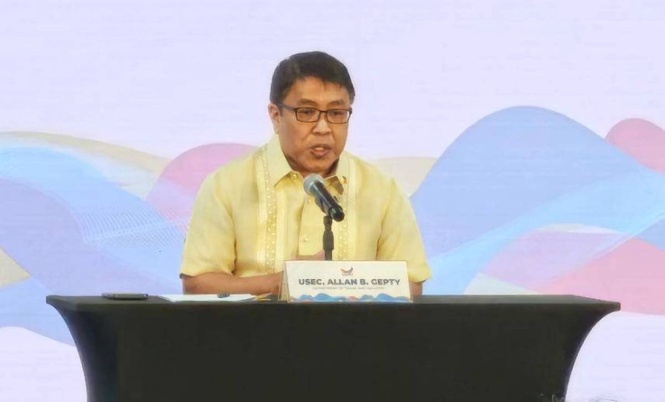
THE Philippines and Canada aim to conclude negotiations for a free trade agreement (FTA) by November after completing their final full round of talks, Trade Undersecretary Allan Gepty said.
The two countries have made “substantive and positive progress,” leaving only a few issues to be settled through smaller or virtual meetings and email exchanges, Gepty noted, adding that “there will be no more full round of negotiations. We’re very close.”
He declined to identify the unresolved issues, citing the confidentiality of the negotiations.
He said market access, particularly for agricultural products, is usually among the most sensitive parts of FTA negotiations. Another issue is the level of commitment each country is prepared to make in adopting and implementing agreed measures.
For the Philippines, the goal is to secure zero tariffs on as many products as possible.
“But that requires very challenging negotiations, so our goal is to obtain the best value possible,” Gepty said.
After the negotiations are completed, the proposed agreement will undergo a legal review, which could take several weeks or months. The government must then obtain authority to sign the deal.
The agreement will still have to undergo ratification after it is signed. If the Department of Foreign Affairs recommends that the FTA be treated as a treaty, it will be submitted to the Senate for concurrence.
Schedules for the remaining technical meetings will depend on the availability of negotiators, who are also working on other trade agreements.
Separately, the Association of Southeast Asian Nations (Asean) and Canada are negotiating a regional FTA, which the parties also hope to conclude this year.
Gepty said it was difficult to compare the progress of the Philippines–Canada and Asean-Canada negotiations because one is a bilateral agreement while the other involves several countries.
The two deals also cover different issues and levels of complexity, he pointed out.
