
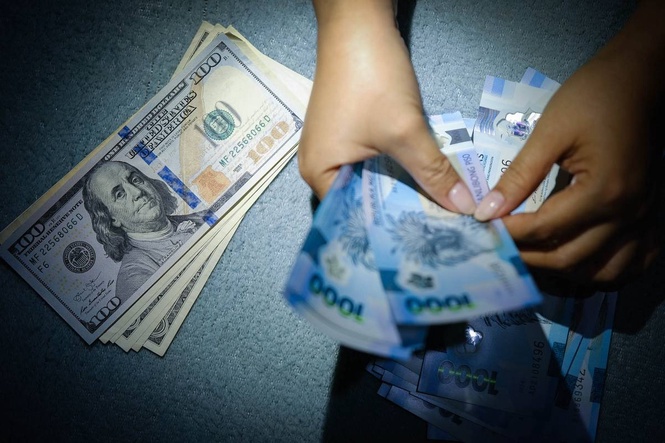
THE country’s gross international reserves (GIR) further dropped to below $100 billion in October amid efforts to smoothen peso volatility.
Bangko Sentral ng Pilipinas (BSP) data showed reserves were at $97.35 billion as of end-October, markedly lower than the $110.25 billion and $99.49 billion recorded a year and month earlier, respectively.
This is the lowest reserves recorded since December 2022’s $96.15 billion.
The central bank said the decline was mainly due to its net foreign exchange operations which refer to its buying and selling of foreign currencies in the spot and derivative markets to manage exchange rate volatility, maintain market order, and build or preserve international reserves.
It added that lower global gold prices, which led to downward valuation adjustments, also weighed on the reserves.
The “national government’s net foreign currency withdrawals from its deposits with the BSP for external debt servicing and other funding requirements” was also cited.
Union Bank chief economist Ruben Carlo Asuncion said the decline in reserves was “significant and bears watching.”
However, he stressed that the latest figures did not indicate a “reserve-adequacy problem.”
“More important than the absolute level is the pace and persistence of the drawdown, particularly if accompanied by sustained peso pressure,” Asuncion said.
“For now, the external buffer remains adequate, but continued reserve losses could gradually reduce the BSP’s room to manage external shocks and excessive FX volatility,” he added.
The peso has been on a weakening trend since the Middle East war broke out in March, when the local currency began trading at the P60-to-a-dollar level.
It further depreciated to the P63:$1 level and hit a record low of P64.17 on Oct. 27, despite the BSP’s jumbo rate hike on Oct. 22.
Despite the decline in reserves, the central bank said the latest GIR level was enough for up to 6.1 months’ worth of imports of goods and payments of services and primary income.
It can also cover about 3.1 times the country’s short-term external debt based on residual maturity, the BSP added.
The central bank said the reserves “provide sufficient foreign currency to meet the country’s import needs, service its external debt obligations, and serve as a buffer against external economic shocks.”
The GIR level is considered adequate if it can finance at least three months’ worth of the country’s imports of goods and payments of services and primary income.
It is also considered sufficient if it provides at least 100-percent cover for the payment of the country’s foreign liabilities, public and private, falling due within the immediate 12-month period.