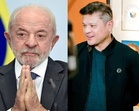
OFFICIALS and business leaders from the Philippines and Brazil pushed to convert diplomatic relations between the two countries into tangible trade and investment across different sectors during Brazilian President Luiz Inácio Lula da Silva’s visit to the Philippines.
Nearly 400 delegates from the government and the business sector attended a forum that marked 80 years of diplomatic relations between the two countries and the first state visit to the Philippines of a sitting Brazilian president.
Both governments presented new agreements on agriculture and competition law enforcement during Lula’s visit.
Philippine private-sector stakeholders called for predictable, science-based trade policies.
“There are many opportunities to bring our economies closer together. It is our responsibility to turn them into concrete results,” Lula said in his remarks read by Brazilian Minister of Development, Industry, Trade, and Services Márcio Fernando Elias Rosa. He also urged businesses to treat Brazil as a gateway to South America.
“Look at Brazil, not only as a large consumer market, but as a partner to invest [in], produce, innovate, and reach all of South America,” he said.
“To achieve stability, we need predictability. And to achieve predictability, we need science-based policies,” said Meat Importers and Traders Association President Emeritus Jesus Cham.
Brazil exported $2.4 billion in goods to the Philippines in 2025, a 760 percent jump since 2006, according to the Brazilian Trade and Investment Promotion Agency, or ApexBrasil. These exports were led by pork, beef, and iron ore.
It also supplied 194,000 metric tons, or 67 percent, of the country’s pork imports from January to May 2026.
Brazilian Animal Protein Association President Ricardo Santin sought deeper ties with Philippine food processors.
Meanwhile, Frabelle Food Group general manager Reysan Lero raised opportunities in meeting Philippine demand for alternative beef cuts by pairing Brazilian production with local distribution.
“Your strength is production. The Philippines has market knowledge and distribution capabilities,” he said.
Trade Secretary Cristina Roque also talked about partnership opportunities in cold storage.
Port infrastucture
Infrastructure and ports were also part of the discussion. Brazilian Minister of Ports and Airports Tomé Barros Monteiro da Franca noted that Philippine investment was already well established at Tecon Suape in Pernambuco and Rio Brasil Terminal in Rio de Janeiro.
He named Philippine company International Container Terminal Services Inc. (ICTSI) among its established foreign investors. ICTSI has been operating in Brazil since 2001 and has invested about 2.5 billion Brazilian reais.
“ICTSI’s presence shows that the distance between Manila and Brasília is no obstacle for those who see opportunities,” said Lula.
Brazil plans 34 port concession auctions through 2030, worth over $3.6 billion in projected investments.
Meanwhile, ICTSI plans another 1.2 billion reais in investments in Rio de Janeiro through 2031. Its Rio Brasil terminal expansion aims to boost terminal capacity from 450,000 to 750,000 20-foot equivalent units by 2029.
Renewable energy
Renewable energy and energy security were also among the topics, raised through discussions among executives from Petrobras, Prime Infrastructure, ACEN Corporation, Emraer, and Brazilian biofuel producer Be8.
Prime Infrastructure President and CEO Guillaume Lucci said the company extended the Malampaya natural gas field’s life to 2034 through two new wells.
The company is also building a 1,400-megawatt pumped-storage hydropower plant targeted for completion by 2030.
ACEN, Petrobras, and Be8 also explored knowledge transfer and potential ethanol and biodiesel exports.
Manufacturing, technology
Attendees from the two countries also looked at opportunities in manufacturing and technology.
Ayala Corporation Chairman Jaime Augusto Zobel de Ayala cited the two countries’ complementary strengths. He talked about Brazil’s industrial innovation and the Philippines’ electronics, services and access to Southeast Asia.
Roque also spoke on targeting investments in semiconductor and ethanol production.
“We want to move beyond recognizing opportunities and begin turning them into investments and concrete business results,” she said.
Brazilian mining giant Vale CEO Gustavo Pimenta also highlighted strategic minerals, such as copper, nickel, iron ore, and rare earths, for tech and clean energy.