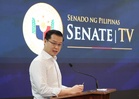
STRATBASE Institute President Victor Andres Manhit said Friday that the Philippines should capitalize on its 2026 Asean chairmanship gains by turning strategic partnerships with the United States and Japan into investments, jobs and better economic opportunities.
“The true measure of our Asean leadership will not simply be the meetings convened, declarations adopted, or initiatives launched. It will be the partnerships we sustain, the opportunities we create, and the regional priorities we continue to champion long after our Chairship has ended,” Manhit said at the 11th Pilipinas Conference 2026.
He cited the US- and Japan-backed Luzon Economic Corridor, which links Subic Bay, Clark, Manila and Batangas, as a key initiative to attract investments in transport and logistics, energy, digital connectivity and advanced manufacturing.
Manhit said the project was a strategic opportunity to strengthen the country’s position in the global economy as technology increasingly shapes economic competitiveness and national security.
He cited a Pulse Asia survey commissioned by Stratbase Group showing that 35 percent of Filipinos want the government to make food, particularly rice, meat and fish, more affordable; 26 percent prioritize jobs and livelihood opportunities; and 24 percent want the government to address corruption and improve public services.
Seventy-one percent also want the administration to prioritize controlling inflation.
“These figures tell us something fundamental: Filipinos want an economy that works for them. They want affordable necessities, decent jobs, reliable public services, and opportunities to improve their lives,” he said.
Manhit said strategic partnerships must produce competitive industries, better-paying jobs and stronger local enterprises rather than remain limited to diplomatic agreements and investment announcements.
“Our strategic partnerships must deliver results that Filipinos can feel — not just opportunities that look good on paper,” he said.
The survey found that 73 percent of respondents identified the United States as the country’s most important economic partner, followed by Japan at 62 percent. Canada, Australia and South Korea also figured prominently.