Travelers from the Philippines have become Taiwan's largest source of Southeast Asian visitors, with 450,016 arrivals recorded in the first seven months of 2026, according to figures released by Taiwan's Tourism Administration.
The tally, drawn from the agency's monthly analysis of inbound and outbound passenger movements for July, is 25.1% higher than the 359,712 Philippine visitors logged over the same stretch of 2025 and 51.7% above the comparable period of 2019, the last full year before the pandemic closed Taiwan's borders.
Hong Kong And Macau Led Taiwan's July Arrivals
Hong Kong and Macau remained Taiwan's single biggest market in July, sending 122,193 travelers, up 7.9% from a year earlier. Japan followed with 80,557, a decline of 6.1%, while the United States supplied 61,099 visitors, up 7.5%, and mainland China 58,869, up 8.3%. South Korea slipped 7.1% to 46,322.
Measured across January through July, the ranking shifts. Japan remains the largest market overall at 761,056, though essentially flat at down 0.7%. Hong Kong and Macau follow with 693,088, down 4.6%, and South Korea with 572,097, down 1.6%. The United States, at 455,229 and up 9.3%, sits just ahead of the Philippines in fourth place.
Philippine Traffic Outpaced Every Other Southeast Asian Market
In July alone, the 49,189 Philippine nationals who entered Taiwan outnumbered arrivals from Vietnam (41,261), Thailand (29,041), Singapore (21,173), Indonesia (20,682) and Malaysia (19,071).
The gap widens over seven months. Vietnam, the region's second largest market, contributed 282,386 visitors, followed by Thailand at 241,267, Singapore at 229,914, Malaysia at 201,422 and Indonesia at 151,001. Malaysia was the only major Southeast Asian market to contract, falling 7.4%.
The Philippine total also exceeded arrivals from the whole of Europe, which reached 234,232 for the period, an increase of 5.0%.
Visa Waivers And Short Flights Lowered The Barrier
Much of the growth traces back to paperwork that no longer has to be filed. Taiwan's visa waiver trial for Philippine passport holders has stripped out the application fees, processing time and uncertainty that once made a short holiday in Taipei a decision to be planned months ahead.
Geography does the rest. Flights from Manila and Cebu to Taoyuan and Kaohsiung take roughly two hours, and a dense schedule served by budget carriers has turned Taiwan into a weekend option rather than a major trip.
Night Markets And Seasonal Scenery Drive Repeat Visits
Taiwanese food carries unusual weight on Philippine social media, where bubble tea shops, night market stalls and hot pot chains circulate as destinations in their own right and draw younger travelers who arrive with a list of places to eat.
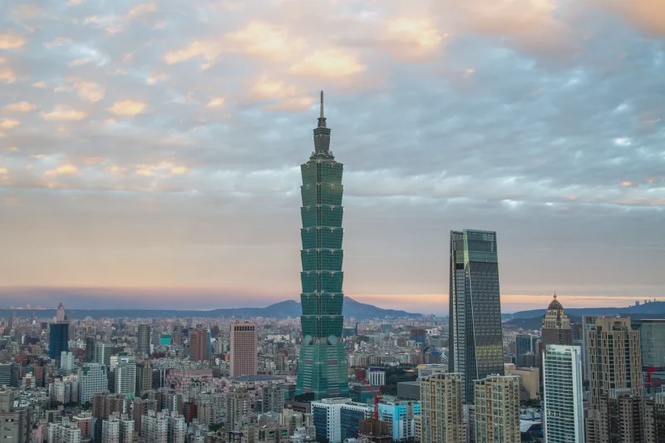
Taiwan also offers something the tropical Philippines cannot. Cherry blossoms in spring and snow on Hehuanshan in winter are genuine novelties for Filipino visitors, alongside the hillside lanes of the old mining town of Jiufen and the observation deck at Taipei 101. Shopping districts such as Ximending and Xinyi add a further draw, with clothing and cosmetics priced well below what comparable brands command in Manila.
Work And Study Ties Anchor The Travel Boom
Tourism accounts for only part of the traffic. Taiwan's semiconductor and electronics manufacturing base has recruited Filipino engineers and technicians for years, alongside a large contingent of nurses and caregivers, and those residents generate a steady stream of visiting relatives and friends.
Universities have added to the pull. Taiwanese institutions have expanded recruitment across Southeast Asia with English taught degree programs and scholarship packages, positioning the island as a lower cost route for Filipino students pursuing qualifications in science, technology, engineering, mathematics and business management. That effort sits within the New Southbound Policy, the government strategy launched in 2016 to deepen Taiwan's trade, education and cultural links with South and Southeast Asia and reduce its economic reliance on China.
Diversification Gives Taiwan A Wider Safety Net
The July data point to an inbound market that no longer rests on Northeast Asia alone. Arrivals from Japan and South Korea, long the backbone of Taiwan's tourism industry, were both down year on year, while Southeast Asian markets posted gains almost across the board.
For Taiwanese restaurants, hotels and retailers, a Philippine market growing at 25.1% and supported by work, study and family ties as well as leisure travel represents demand that is less exposed to the currency swings and seasonal slumps of any single country. Further expansion of routes between the two sides would reinforce that cushion.