
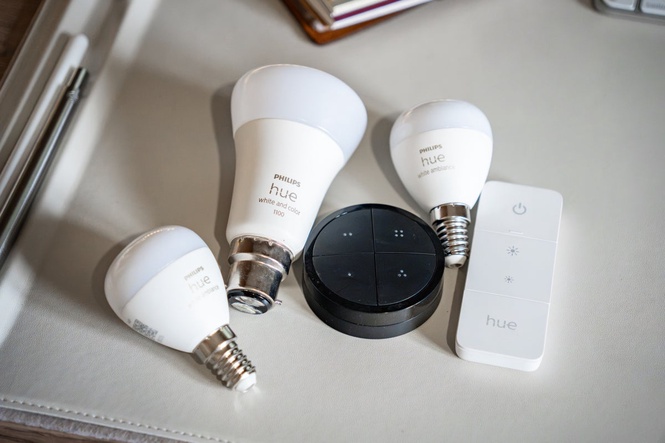
Smart lighting is one of those technologies that instantly makes your home feel futuristic.
Scheduled, automated and app- or voice-controlled lighting is impressive enough. But bulbs that change colour, brightness and temperature, plus light strips, garden lighting, and even lights that respond to what’s on television, are what really set smart lighting apart.
Philips Hue is arguably the market leader, having been around since 2012 and grown to include comprehensive lighting systems built to illuminate every corner of your home, inside and out. Hue products are not cheap; they never have been. But as the market has matured and rivals have emerged, its owner, Signify, has responded with a range of simpler, more affordable bulbs alongside the feature-packed flagships.
As well as bulbs, strips and chandeliers of all shapes and sizes, Philips Hue makes switches, sensors and other accessories too. There is even a system for having your lighting react to what’s on your TV, projector or gaming monitor, react to movement, and mimic presence to help deter burglars while you’re away.
More recently, Hue has expanded into smart home security too, with a video doorbell, door/window contact sensors, spotlights and outdoor security cameras. Is Philips Hue the right smart lighting system for you? Read on to find out.
Read more: Everything to know about smart lighting, according to an expert
Philips Hue
Why we love it
- Huge breadth of products
- Excellent lighting
- Highly customisable
Take note
- Expensive
- Switches lack premium aesthetic
- Bridge Pro not worthwhile (yet)
Now well over a decade old, Philips Hue has become something of a gold standard for smart home lighting. Over the years, the system has been expanded and upgraded through multiple generations, and most recently gained a new, more powerful control unit called the Hue Bridge Pro.
Hue products are sold individually or in bundled starter kits. Some bulbs and light strips can be set up and used on their own, although full functionality (and remote control away from home) is unlocked with the addition of a Hue Bridge or Bridge Pro.
The Hue product range is massive. It includes indoor and outdoor lighting, and a wide range of bulbs to fit numerous socket types.
Hue’s full-colour lights can be adjusted by temperature, brightness and colour, while its mid-range white ambience bulbs lose the option for different colours, but retain the ability to change brightness and shift from cool, bluish white through to warm, orange white. Entry-level Hue lights emit only soft, warm white light, but are still dimmable.
Buy now £199.99, Amazon
Bulbs
The Hue online store lists 98 different smart bulbs for sale. These are split across different abilities: full colour, temperature adjustable, plain white, and include several different socket types.
The most popular types of connection are B22 bayonet and E27 screw, which are accounted for, along with the popular GU10 spotlight, candle-shaped E14 screw, Edison-style filament bulbs, tiny bulbs for bedside lighting, and more. Chances are, you’ll find several Hue bulbs that fit right into your existing bulb sockets.
I’ve owned several E27 and B22 Hue bulbs for years now, from both the full-colour and white ambience range, and they’ve performed flawlessly. Some, like the bulb in my office, are used all day, every day, and haven’t once failed, switched settings unexpectedly, or otherwise failed to work.
Philips Hue white and colour ambiance starter kit
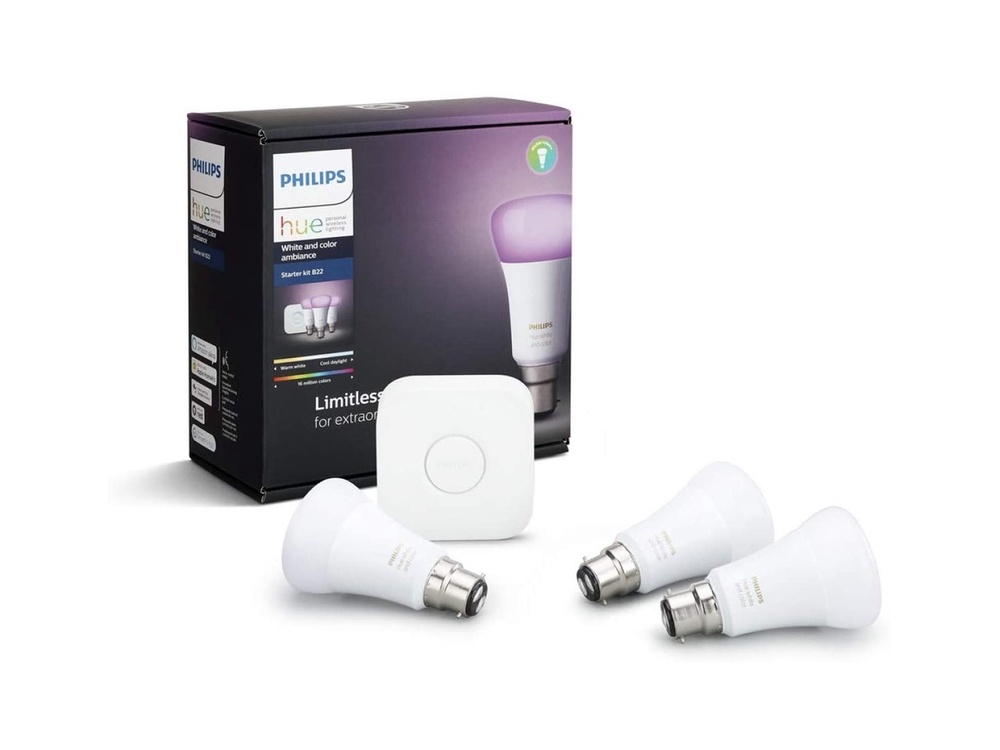
Philips is the industry leader when it comes to energy saving LED smart bulbs. It offers a huge range of bulbs, with white, dimmable and colour changing lighting solutions designed to fit every room in the home. There are strip lights, sconces, lamps, bathroom lights and even garden lighting to choose from.
Our reviewer was impressed by the versatility of the Hue range, as well the option to keep using your traditional light switch if you prefer. “The bulbs are capable of 16 million colours, so you can choose exactly the shade you like,” they said. “The kit also comes with a battery-powered light switch that can be mounted on the wall, which is handy if you are away and someone in the house is not so tech literate. You can expand the range as you are ready, with dozens of bulbs able to talk to the same Hue bridge.”
Buy now £169.99, Philips-hue.com
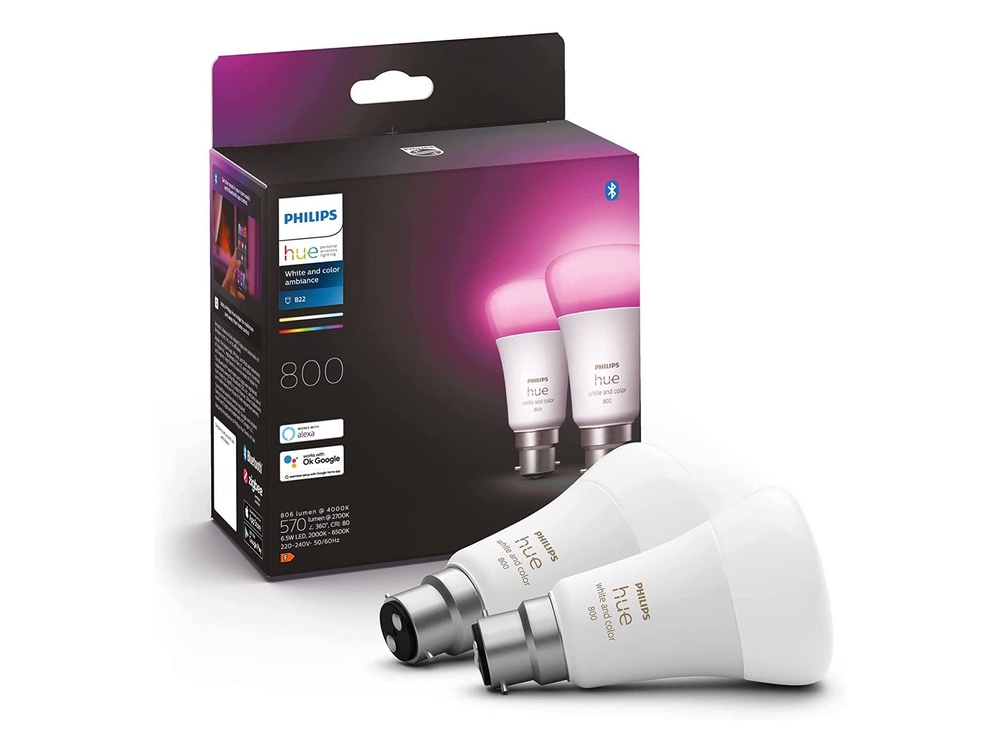
Philips hue white and colour E27, twin pack
Buy now £69.88, Amazon.co.uk
- Light type: LED
- Wattage: 9 watts
- Connectivity: Bluetooth
- Fitting: B22 bayonet cap (other options available)
- Brightness: 800 lumens
- Works with: Alexa, Google Assistant, Apple HomeKit (Hue Bridge required)
Unlike previous models, the latest generation of Philips hue bulbs do not require a hub connected to your Wi-Fi router to function. They can still connect to a hub if you already own one, but they also now include Bluetooth for direct control from the Hue app on your smartphone.
The hue app is attractive and intuitive, making it easy to set up the bulbs, add them to your existing system (or create a new one from scratch) and control them in just a few taps. Several lighting presets demonstrate what the bulbs are capable of, switching from the cool, bright “concentrate” mode, to a warmer, softer mode dubbed “relax”.
It’s also easy to pick any colour you like, with LED bulbs capable of shining 16 million different shades. Sliders make it simple to adjust the brightness and temperature of each colour, and there’s an automation system for configuring schedules, like one that gradually brightens the bulb to wake you up each morning.
Read more: 8 best smart lights for your connected home
That said, hue’s gradual wake-up function, plus many other features, are only available if the bulbs are connected to the hub mentioned earlier, known as the hue bridge (£44.99, Amazon.co.uk), and sold separately. This increases the maximum number of lights on a system from 10 to 50, adds support for Apple HomeKit, enables timers, and lets you control the light from anywhere, inside or outside of the home. Without the Bridge, the lights can only be controlled when within Bluetooth range of your smartphone.
For simpler applications, such as a bedside light or desk lamp, a Bluetooth connection without buying the Bridge is fine. But for the full Philips hue experience the Bridge is required. Take this step and you’re looking at a significant initial outlay for a hue starter pack (£169.99, Philips-hue.com), which includes three colour bulbs, the Bridge and a configurable wireless dimmer switch.
But, once you have coughed up for some bulbs, a Bridge and a dimmer switch, the hue product range is the best out there. As well as regular bulbs, Philips hue offers light strips (£63.38, Amazon.co.uk), weatherproof outdoor lighting (£65.38, Amazon.co.uk), decorative Edison-style filament bulbs (£19.99, Amazon.co.uk), lamps, spotlights, chandeliers, and even lights that synchronise with what you’re watching on TV (£103, Amazon.co.uk). It’s a comprehensive system that integrates neatly with other smart home platforms, but every component carries a high price.
Buy now £69.88, Amazon.co.uk
Hue bulbs are frequently discounted, especially during sales events like Black Friday and Amazon Prime Day, so look out for healthy discounts then. It’s also often cheaper to buy a multi-pack. Prices start at just £10 for a plain white E27 bulb, but can rise to almost £100 per bulb for Hue’s extravagant Ellipse models, or around £130 for a set of three full-colour E27 bulbs.
Starter kits bundling two soft white bulbs, a wireless button and the Hue Bridge hub costs from £40, while kits with three colour bulbs, a button and the new Bridge Pro cost around £170.
Light strips
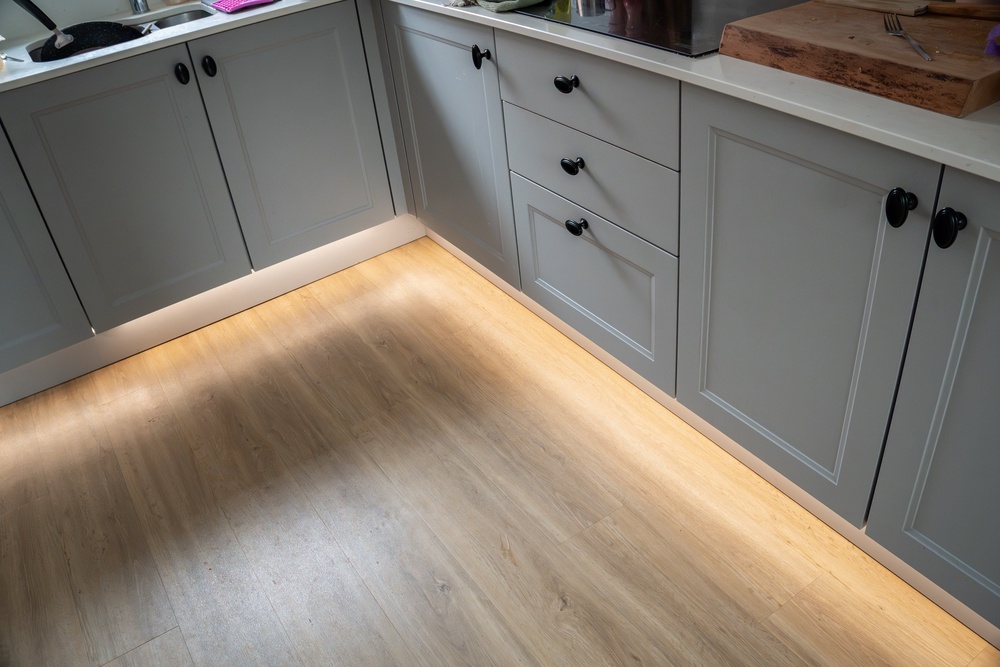
There are more than 50 products in Hue’s strip lighting catalogue. These start at around £50 for the five-metre Essential strip light, and run through a broad range of lights for TV, movies, gaming and adding ambience to any room. There are light strips for outdoor use too, but I’ll come to those in the next section.
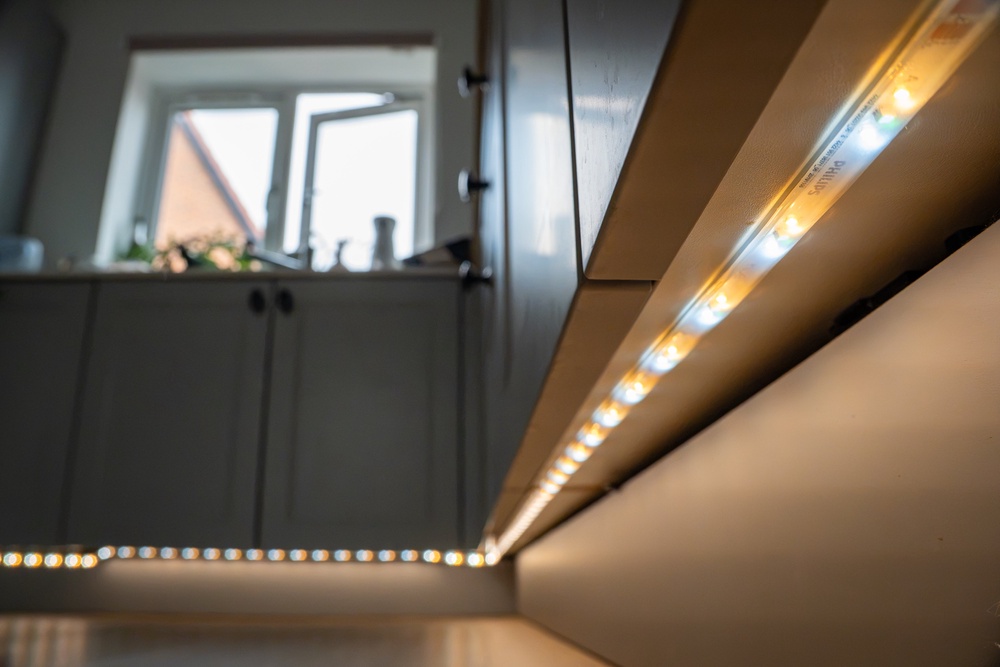
Smart LED light strips are a great way to add some ambient lighting to your home. I’ve installed them on the backs of televisions, under kitchen cabinets and behind desks to create pools of light behind and below furniture. They come with an adhesive back for easy installation (make sure the surface is perfectly clean for best results), are mains-powered, and can be extended with additional strips bought separately.
Third-party mounts are also available, including those that wrap the strip in frosted plastic to help diffuse the light. These are great when installing light strips above a kitchen counter.
Hue’s older light strips displayed just one colour at a time, while newer versions can shine multiple colours at once. There are also sets of light strips designed specifically for gaming monitors and televisions of certain sizes, from 27in to 75in. Pair one of these with Hue’s Sync Box, which attaches between your television and devices like game consoles, and the light strip will react to what’s on the screen. Add two Hue Play Bar lights that project onto the walls, and suddenly your entire room is responding to the TV – it’s a lot of fun, but a full lighting kit like this can cost well over £500.
Philips Hue Play: TV lighting and Sync Box
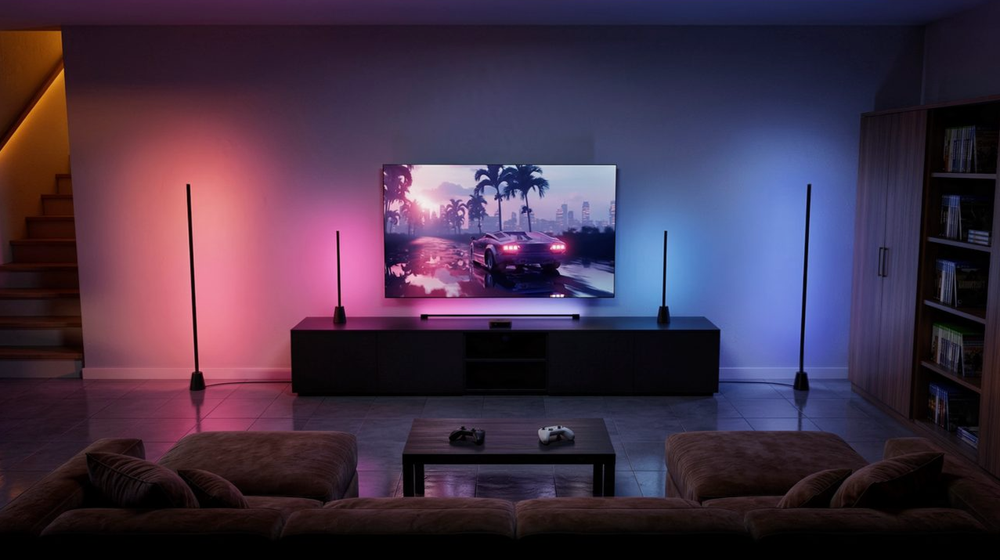
Play is a subsection of Philips Hue that sees compatible lights respond to what’s on your television. The system has been around for a few years now and works across bulbs, strips and dedicated Play lights designed to sit on the floor or a shelf and flood nearby walls with light, extending the colours of a film, TV or video game to the entire room.
The Play system is primarily controlled by the Hue Play HDMI Sync Box, which connects to your television and inputs (like game consoles and TV streaming boxes), then wirelessly tells your lights what to do via the Hue Bridge. A newer, smaller and cheaper version of this box, called the Hue Play HDMI Sync Box 4K, was released in 2026 – and I’ve been testing it for this review.
Priced at £109.99, the box accepts a single HDMI input (compared to four for the pricier version) and works at up to 4K resolution (the other version goes to 8K). I tested it with a 55in Hue Play gradient light strip fitted to the back of my television, and an Xbox Series S.
Quick and easy to set up via the Hue app, the box is small and can be tucked away in a cupboard if you prefer, since there’s no remote control required. It either powers up automatically or can be switched on from the Hue app, where you can also tell it which lights in the room to control, and where they all are in relation to the TV. You can also adjust the brightness, mode (like TV or gaming) and the intensity – in other words, how quickly the lights change to match the screen.
Philips Hue Play HDMI Sync Box 4K
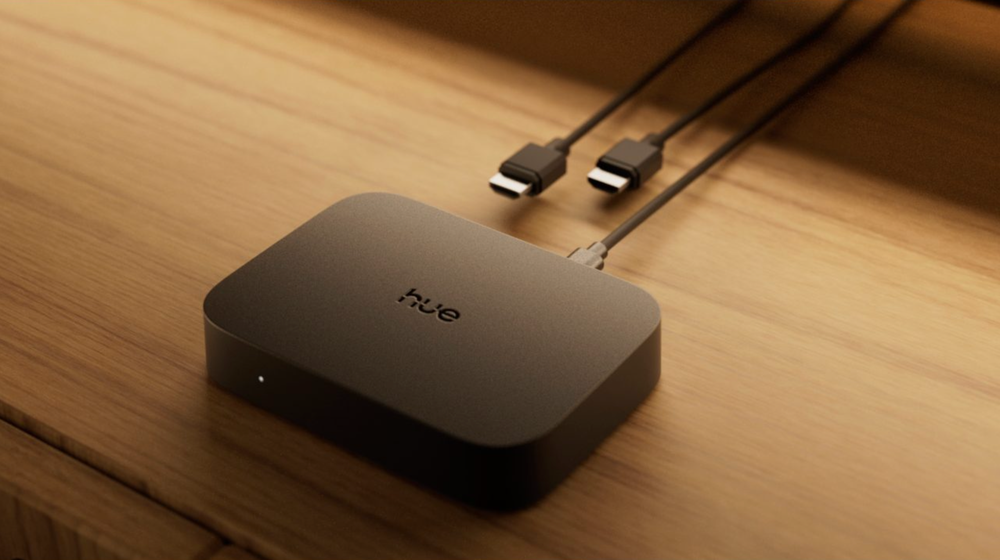
Dimensions: 117 x 87 x 23 mm
Input: HDMI x1
Output: HDMI x1
Video resolution and frame rate: 4K at 60FPS
Smart Home connectivity: Alexa, Google Home, Apple HomeKit, IFTTT, Matter, SmartThings, Sonos
Why we love it
- Smaller and more affordable than the 8K model
- Transforms TV, movies and gaming
- Wide range of compatible lighting products
Take note
- Expensive
- Requires compatible Hue Play lighting
- Just one HDMI input
The new Philips Hue Play HDMI Sync Box 4K is a smaller, cheaper and simpler version of Philips Hue’s original 8K model. The new box has just a single HDMI input instead of four, and its resolution is limited to 4K instead of 8K. But the end result is equally impressive, as it synchronises whatever’s on your television with compatible Hue lights.
Put on a film or play a video game, and compatible lights react instantly to the content on-screen, filling the room with colour that matches whatever you’re watching. It’s expensive – especially when you factor in the cost of compatible Hue Play lights, bars and strip required – but the result is transformational.
Buy now £109.99, Amazon
It’s an unusual experience at first; you’re constantly looking to the sides of the TV to see how the lights are reacting. But once you get used to it (and turn all other non-Play lights right down), it adds a new dimension to whatever you’re watching. Yes, it’s probably overkill for the six o’clock news, but for action films, games and other high-paced content it’s a lot of fun.
Having just one HDMI input will feel quite limiting to some users, especially if you have a TV streaming box like an Apple TV 4K and a games console. But I soon got used to opening streaming apps on the Xbox instead of elsewhere – and remember, it needs an input to function, so the lights don’t react to apps installed on the TV itself.
Although less than half the price of the original Sync Box 8K, the new model still isn’t cheap, especially when you factor in the £185 Play gradient light strip and perhaps a £130 two-pack of Play light bars for casting onto nearby walls, too. But there’s no denying just what a visual upgrade this all brings to every gaming session or movie night.
Outdoor lighting
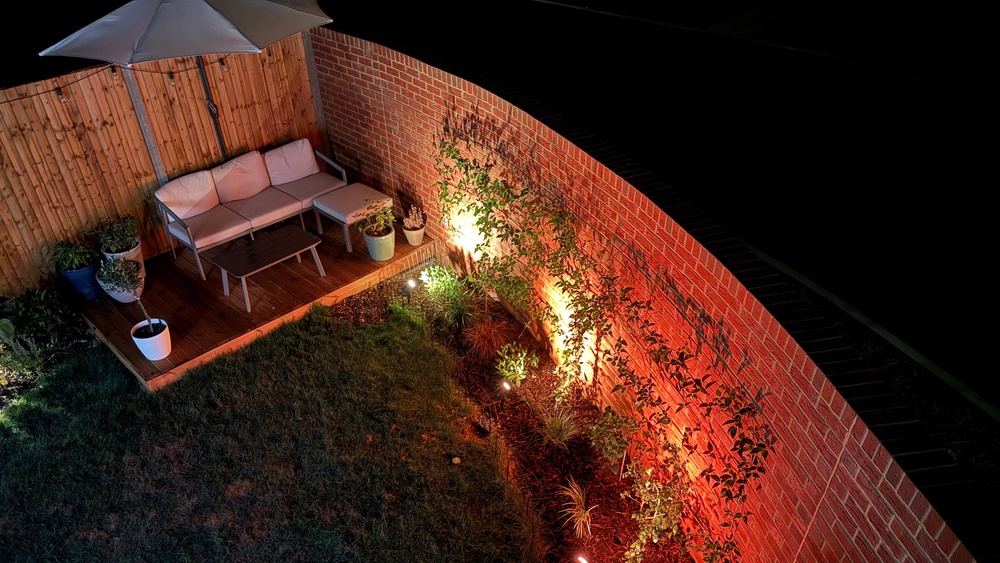
Philips Hue sells dozens of outdoor lights. These include wall-mounted lights that use your property’s existing hardwiring, as well as plug-in spot lights that illuminate flowerbeds, pillar lights for paths and drives, and the Festavia range of multi-coloured string lights.
Most outdoor Hue lights are full-colour, so are somewhat more expensive than white-only alternatives you might find elsewhere. You’re looking at £100 for a single Lily garden spotlight, £140 for a bollard light, and over £300 for a whole house’s worth of festive string lights on a 40-metre cord. Extension cables of various lengths are available, along with weatherproof motion sensors.
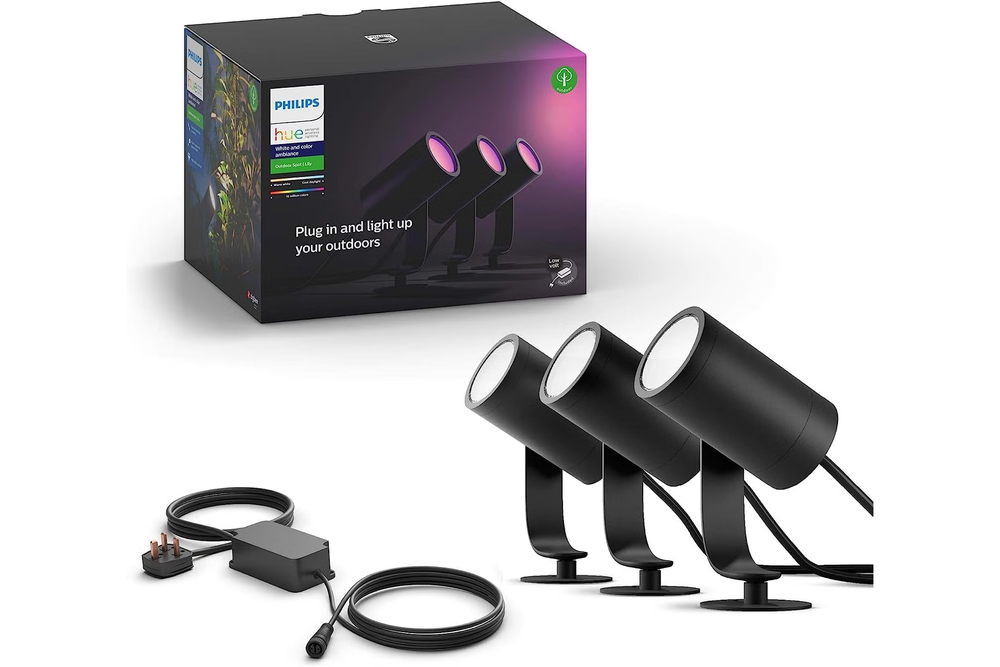
I tested a three-pack of Lily spotlights on a five-metre cable for this review. They’re expensive, at £320 (reduced to £237 at the time of writing), but there’s no denying the quality of both the hardware and the light they produce. Made from aluminium, they are clearly built to last, and come with three mounting options, including screwing to a flat surface or fixing into the ground at two different heights.
Philips Hue Lily Outdoor Spotlights
Best: Outdoor smart lighting
Light quantity: 3
Water resistance: IP65
Extendable: Yes
Full colour: Yes
Mains or hardwired: Mains, three-pin plug
Mounting options: Wall-mountable plates + ground stakes
Why we love it
- Quality hardware
- Excellent lighting
- Easy installation
Take note
- Expensive
- Extension cables may be required
Philips Hue Lily spotlights are weather-resistant, mains-powered and extendable lighting for your garden. Designed for illuminating flowerbeds, pathways, walls and potted plants, this kit includes three spotlights with full-colour bulbs, power cables and a mains plug. The cables are extendable (extensions sold separately) and there are two spotlight mounting options included in the box: plates for wall-mounting and stakes for fixing into the ground.
Buy now £241.82, Amazon
They draw power from a regular plug socket, so installation is easy if you already have a weather-resistant outdoor socket, and they connect to the Hue app just like indoor lighting. The chunky cables are designed to be buried under soil and their connections screw together for a secure, weatherproof fit. They can be extended easily, with extra lights or a longer power cable. I purchased a five-metre extension cable (about £17 from Amazon) to improve the location of the lights in my garden, and it all works perfectly.
Accessories
Hue Bridge Pro
Many Hue lighting products can be controlled directly from the Hue app on your smartphone or tablet, no hub required. But to unlock full functionality, you’ll need the Hue Bridge or newer Hue Bridge Pro.
I’ve used the former for years with no issues at all. The Hue Bridge plugs into your router with an Ethernet cable, then connects your whole system to the Hue app, where it can be controlled locally or while away from home. Adding new lights and accessories is as simple as scanning their QR code with the app and pressing the big, single button on the front of the Bridge.
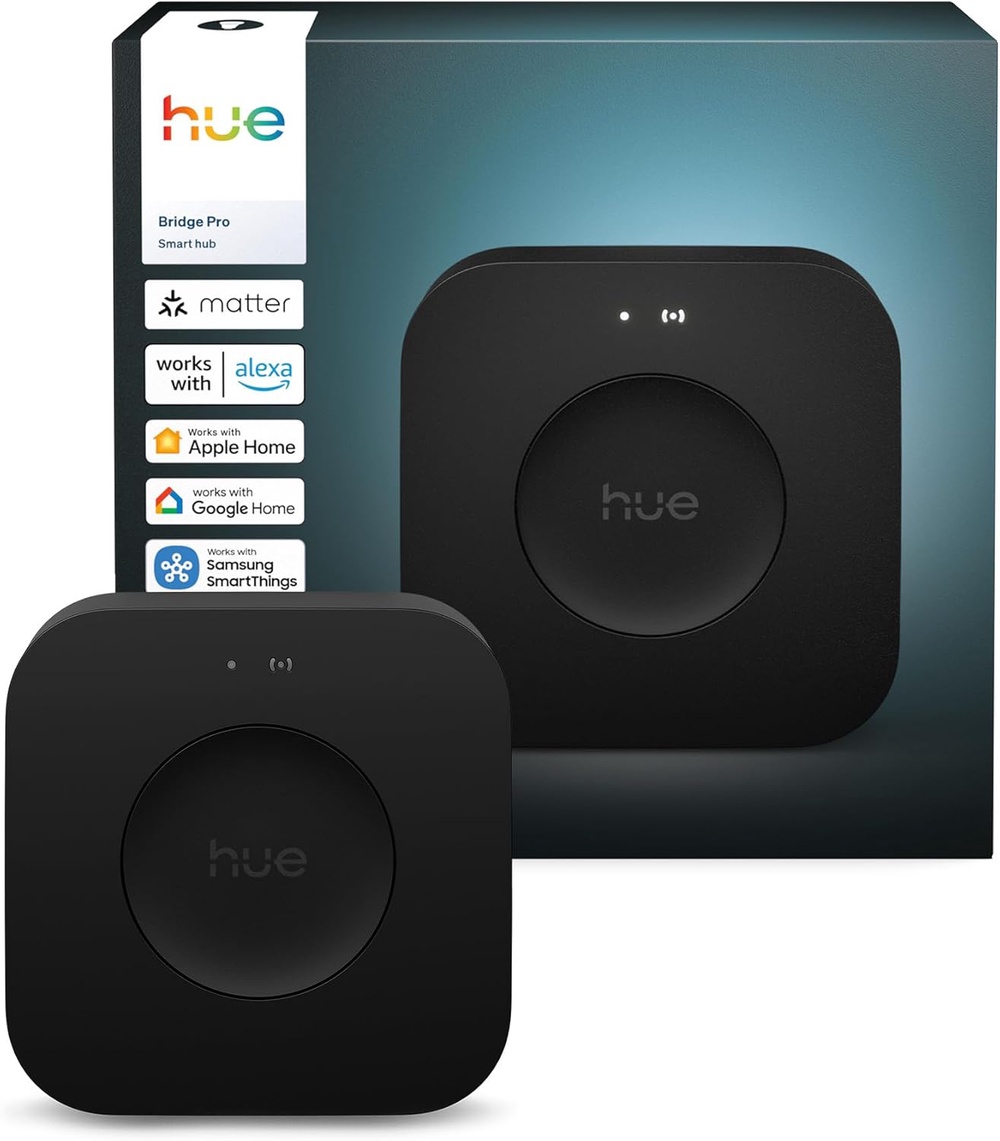
Philips Hue Bridge Pro
Connectivity: Wifi and Ethernet
Light limit: Over 150 lights
Accessory limit: Over 50
Matter compatible: Yes
Why we love it
- Much more powerful than standard Bridge
- Enables Hue MotionAware
- Enhanced connectivity
- Easy to add to existing systems
Take note
- Expensive
- Speed improvements hard to spot
- Little benefit over old Bridge (for now)
The new Bridge Pro is a major upgrade over the aging standard Hue Bridge...at least on paper. There’s more power and an ability to communicate with even more lights and switches, plus Wifi support for the first time, but for now only power-users are likely to spot the difference in performance.
The new MotionAware feature is a clever way of adding motion control – where walking into a room can turn the lights on – to your existing Hue bulbs, but for now the Bridge Pro feels like sensible future-proofing rather than delivering a huge upgrade.
Buy now £79.99, Amazon
But that Bridge has its limits. It can work with up to 50 lights and 12 accessories (like switches and sensors), meaning larger lighting systems require multiple Bridges. The new Hue Bridge Pro addresses this; it’s more powerful, faster to respond, and works with 186 lights and over 50 accessories. It also has wifi, so it doesn’t rely on an Ethernet connection – handy if you’ve no free ports left on your router.
I switched my system to the Hue Bridge Pro in summer 2026. It’s a process that was simple enough, but took about 45 minutes for the app to complete. And, while I like how my system now has lots of headroom to expand, I haven’t really noticed any difference in performance. I wouldn’t recommend Hue Bridge owners upgrading to the Pro unless they’ve reached the lighting and accessory limit, or need to switch their system from Ethernet to wifi.
Switches
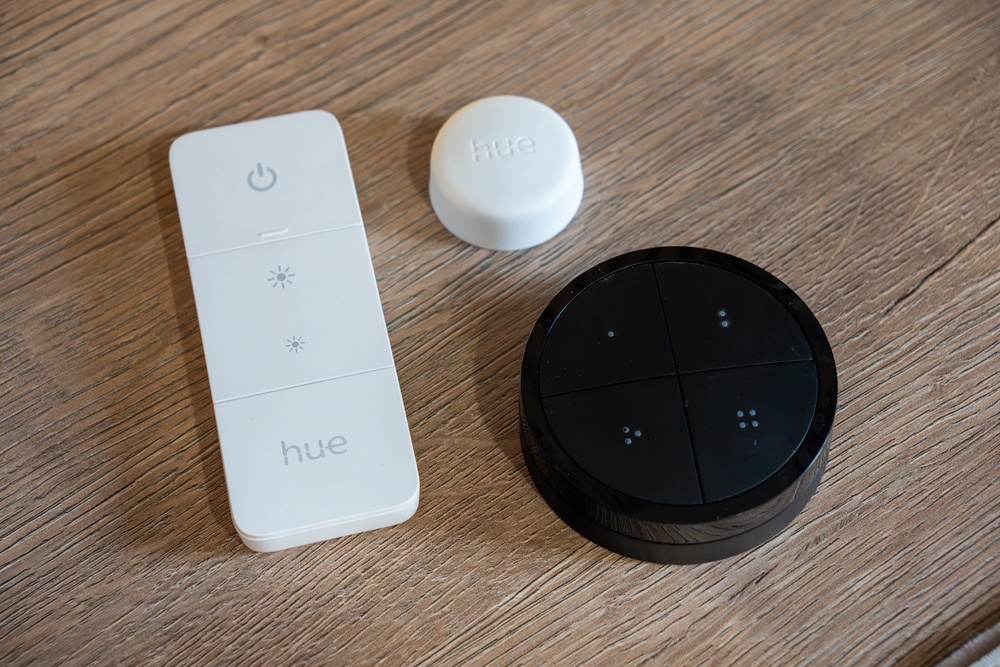
Hue sells a range of switches, from singular buttons to wall-mountable dimmers and buttons that can enable several pre-programmed scenes with a press. These are all wireless and powered by coin-style batteries, but also come with magnetic mounting plates, which can be stuck or screwed to a wall. The switch then snaps into place magnetically for handy storage.
My home setup includes several Hue buttons and switches. I have wall-mounted dimmer switches in the bedrooms, plus a Hue Tap Dial for switching between several settings in the lounge – this tends to live on the sofa, side table or footstool – and a Hue Smart Button, which is fitted to my bedside table and, with a press, turns off every Hue light in the house.
Read more: Can you use smart light bulbs with regular fixtures? An expert explains
App control
The Hue smartphone app is packed with features, but remains simple enough to use without becoming overly complicated as your system grows. It’s quick and easy to add new lights and accessories, give them names and organise them into zones and rooms. It’s also easy to adjust the brightness, temperature and colour of each light, save the settings you want, and browse the huge selection of presets (known as scenes) created by Hue itself.
There’s a section for automations, such as the ‘mimic presence’ feature, where your lights will turn on and off to make your home look occupied while you’re away. Other automations include a sunrise simulation, which can be applied to any Hue lights and configured to last between five and 60 minutes. I really like being woken up in the winter by my bedroom lights gradually shifting from cool blue to warm orange and eventual daylight as they brighten.
The app can start to feel cluttered with larger homes, especially if you have Hue lighting in every room, and perhaps even several zones in one room – I have our bedside lights set as their own zone, for example.
Smart home integration
Philips Hue lighting can be controlled by a broad range of smart home platforms, including Alexa, Apple Home, Google Home, Samsung SmartThings and IFTTT. There’s also support for the Matter smart home standard, plus integration with Spotify and Sonos too.
All this means Hue lighting can be controlled by speaking to your voice assistant of choice, or via apps like Apple Home, and control hubs like Amazon’s Echo Show smart displays.
The verdict: Philips Hue smart lighting
There’s a reason why many consider Philips Hue to be the gold standard of smart home lighting. In fact, there are several reasons.
The company offers a huge breadth of products, from simple bulbs and buttons to strips, ceiling lights, garden lighting, and even lighting that reacts to your television. The Hue system also works reliably, is quick and easy to set up, and really can be expanded to fill an entire home, no matter the size. The app works very well; the switches add plenty of extra functionality away from the app and the outdoor lighting adds a whole new dimension to your garden design.
But Hue products are expensive. This isn’t as clear-cut a criticism as it used to be, since cheaper, simpler bulbs have arrived in recent years. But a single room very quickly becomes a three-figure outlay, and a whole-home system can easily stumble into the thousands if done properly.
That said, no one is forcing you to kit out an entire home with Hue. A few choice bulbs and strips can transform any room. Add in the quality hardware, feature-packed app – plus broad smart home compatibility, too – and Hue is hard to beat.
How we tested
I’ve owned a variety of Philips Hue products for over half a decade, and have reviewed plenty of others in that time too. These include bulbs and light strips, as well as switches, hubs, outdoor lighting and the company’s Play system, which works with televisions and gaming monitors.
For this article specifically, I took into account my own system at home, and also spent time with new products provided for review, including the Bridge Pro and Lily garden lights.
Why you can trust us
The Independent is committed to providing unbiased reviews and expert shopping advice across a range of home improvement products. Our team of experts has spent years testing and rating the latest smart home tech in our homes, gardens and under real-world conditions, so you can be sure our verdicts are authentic and based on personal experience with each product featured. When it comes to smart lighting, our expert testers consider everything from app features and installation to smart home connectivity.
Seeking more tried-and-tested insight? Our tech critic has reviewed Blink’s home security system