
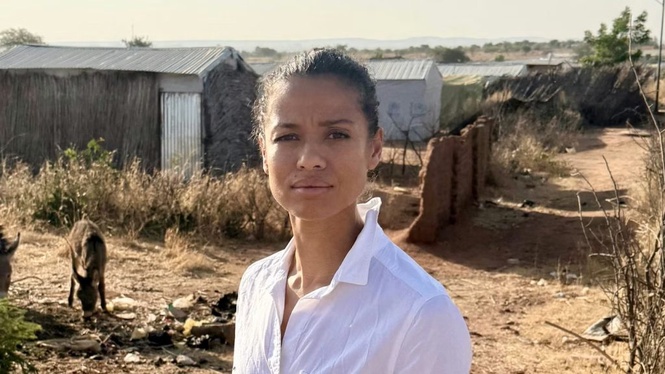
The air is hazy with woodsmoke, the sun’s heat blistering, and as I stand on the sandy border between Chad and Sudan, where stoic donkeys pull carts stacked high and wide with belongings, I see a motionless child, lying between a bundle of bags and hold my breath.
Is he sleeping? Or has the journey to safety been too much and too late?
I’m here in Adré, a remote border town in Eastern Chad, with UNHCR, the UN Refugee Agency, where at the height of the crisis 1500-2000 people were arriving every day fleeing across the border from the war in Sudan. April 15th 2026 marks three years of this conflict, with peace elusive and more recent wars in the spotlight, it’s a heavy anniversary. To date, over 12 million people have been forced to flee Sudan, with refugees seeking asylum in Chad and other neighbouring countries, yet even though this is one of the largest humanitarian emergencies in the world, it is among the least reported and funded.
I’m still holding my breath, as I watch this child, lying face up on the wagon, barely 2 years old, and try to discern if he’s breathing too. Many new arrivals across the border have travelled more than two weeks to get here in harsh conditions, and more than 80% of them are women and children. I will go on to hear countless stories of the men lost along the way, separated, killed or recruited. The child lying in front of me appears to have both parents as their cart comes to a stop at the UNHCR reception centre and the welcome shade of a tree. I’m stilled by the sight of this weary couple, their toddler one arm outstretched and head limply resting on the family’s belongings; as newly arrived myself, I try to assess the situation and what happens next for them. Did I just stumble on a fresh tragedy?
His Father pulls him up by the arm and into an embrace, and I finally exhale to see the child rouse, dusty and exhausted, but alive.
They are some of the fortunate ones to make it to Chad, which compassionately hosts 1.4 million refugees, including 900,000 Sudanese refugees since 2023 and 14,000 since the recent attack in Al Fashir in late October.
While other new-comers register their biometrics with UNHCR and receive ration cards for food, I see a group of women and girls, resting in the shade, eyes deep with fatigue. As I approach, there are many more toddlers passed out on the mat and I look for an unoccupied corner. I meet Hassanie, a heavy expression on her face, she tells me she travelled 16 days to get here and her father died on the way. Next to her is Samira, breastfeeding her two-month-old under her shawl, I learn her husband was also killed en route. The two women met on the road and finished the journey together. United by heartbreak and survival.
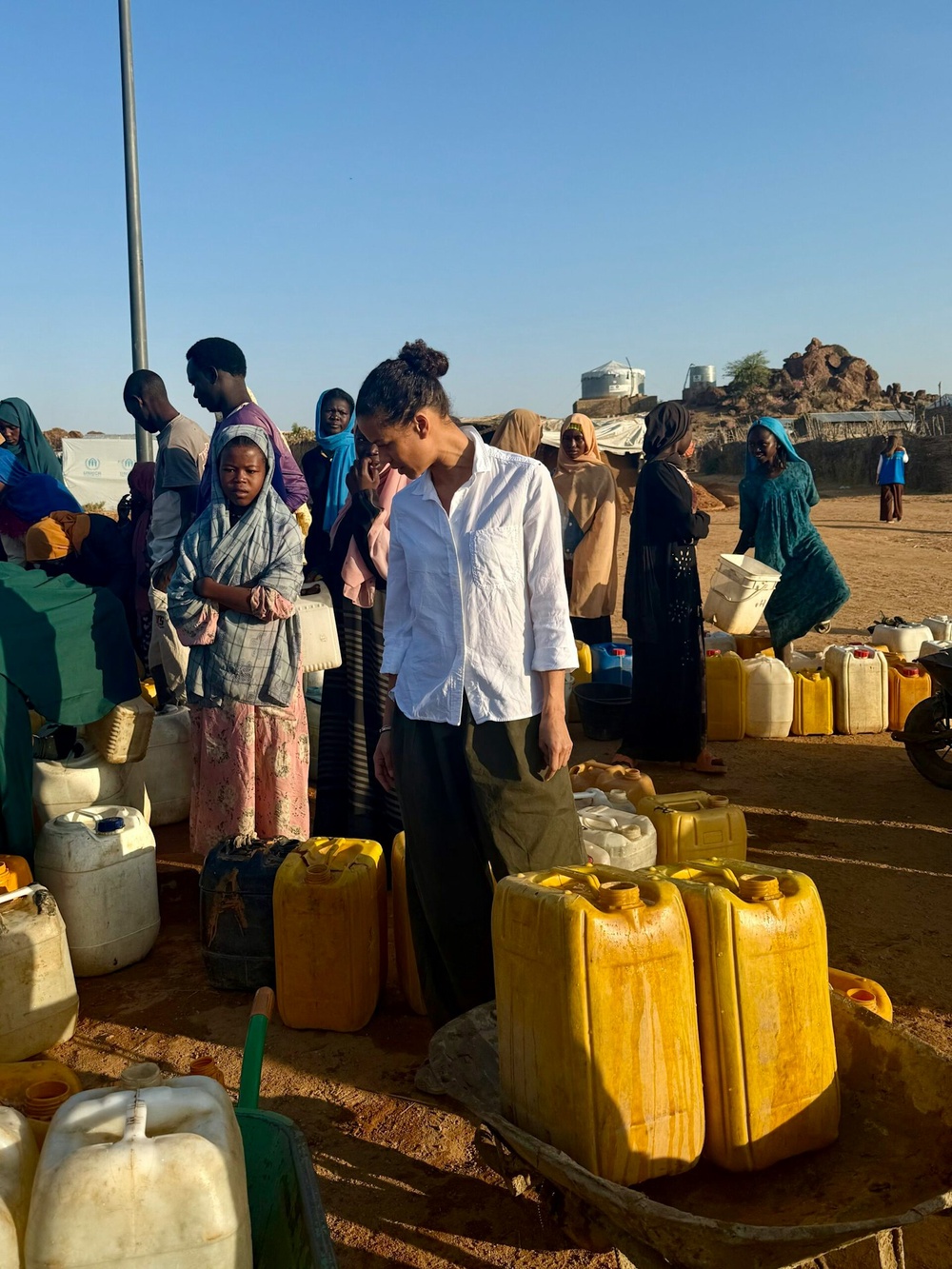
According to UNHCR, 65% of refugees have reported having been victims of human rights abuses during their journey to Chad, including physical assaults, extortion of property and sexual violence.
Mourina, a poised young woman dressed in soft pink, covered her face and wept when she told me, that after the unbearable loss of her husband and two young children in the conflict, ‘Many people were trying to flee, and along the way we were robbed. Even my wedding ring and the money I had saved for so long were stolen…But here in Chad, it feels safe.’
The trauma here is close to the surface. Saba, from Sudan’s Darfur region, was keen to join the conversation. Aged 34 and after studying Economics, she worked at a travel agency at Khartoum airport. When the war broke out, it took her and her 14 year-old daughter a month to make it out of Sudan, with nothing but her passport. Unbroken, she spoke passionately for Peace and for the war to end. Through hot tears, her sadness and frustration were palpable. ‘Everything in Sudan is finished. No home, no education for my baby, no life, no anything. My husband… all things for my life are dead. Me and my daughter, we come here without anything.’
The settlement of Adré, hosting some 230,000 Sudanese refugees, spans a vast maze of shacks made of sticks and makeshift plastic sheeting. Somewhat misleadingly named a Spontaneous Site, it has been home to many for years. Nadia, a young mother of three, proudly tells me she built her place herself, carrying the wood on her head. Up close I admire the woven door, sticks intricately bound together. But as the sun sets on this settlement of sand and straw, I wonder how any of this holds up in the rainy season.
In Farchana settlement, an arid and bumpy 3-hour drive away, UNHCR and partners does have a flood prevention project in place, a dam-like structure in the Wadi or river to help slow down the water flow, but such projects are rare and the on-going budget cuts and withdrawal of US funding are forcing tough decisions on essential life-saving priorities.
Farchana is home to 55,000 refugees and I feel the needs first hand while listening to Aisha, the leader of a women’s group. ‘We don’t hear the sounds of bullets but we still suffer a lot in the camp. There are many of us and many of us are also single mums, elderly people with special needs and we have very little help apart from shelter and food.’ An articulate spokeswoman, I listen with the circle of women seated on the floor of a tent as Aisha explains the horrors that women are living with. ‘I have been here since 2023 – I saw such terrible things and was also injured. I saw people with intestines hanging out and many gunshot wounds. Many people have lost their babies. 75% of the women have psychological trauma. Existing projects are limited and not sufficient to meet their needs.’
“We don’t hear the sounds of bullets but we still suffer a lot in the camp. There are many of us and many of us are also single mums, elderly people with special needs and we have very little help apart from shelter and food.”
It is painfully clear how deep and raw these experiences are and that the women are in desperate need of psychosocial care as another woman, Fatna shares: ‘A bomb dropped on my house. My children were in it – two of them were killed. Seven people killed altogether. I was stepping over bodies as if they were nothing. Death was everywhere.’
Emotion ripples around the circle like a wave. I only hope there is comfort in the sharing, but there are no therapists or mental health professionals on hand, Chad has very few psychologists, and UNHCR currently has only one Specialist in Farchana. Aisha continues: ‘Sometimes we have cases that I know, women who’ve lost the baby and the baby stayed inside them for a couple of weeks, without them knowing they’ve lost the baby… You see women walking around in the street talking to themselves like they’re crazy.’
She calls for action. ‘We women need support to stand on our own feet. We want more space to do more projects. Work in the market. We can do things, we can produce. We can take care of ourselves.’
The determination and spirit of these women is inspiring and heart-breaking. Marram, the deputy leader of the Women’s committee was made a target for supporting survivors of Gender Based Violence back in Sudan. ‘I used to work on rape cases with the GBV committee supporting GBV survivors in El Geneina in Darfur. In 2020, I was imprisoned because I was a women’s leader and human rights activist.’ Marram had to go into hiding and was smuggled over the border to Chad by a family friend. Despite her fear of being discovered by her captors in the camp, she continues to campaign for and support the other women there with courage and commitment.
Dara is one such woman. Even in the relative safety of Farchana settlement, she was attacked and raped by three men on its perimeters, while gathering firewood that she was selling to buy food for her children. It happened 8 months ago, but the trauma is present as I sit with her, clearly withdrawn, struggling with eye contact and fearful of showing her face. Too afraid to be alone, she now stays busy selling millet grain as her new livelihood. She hasn’t collected firewood since.
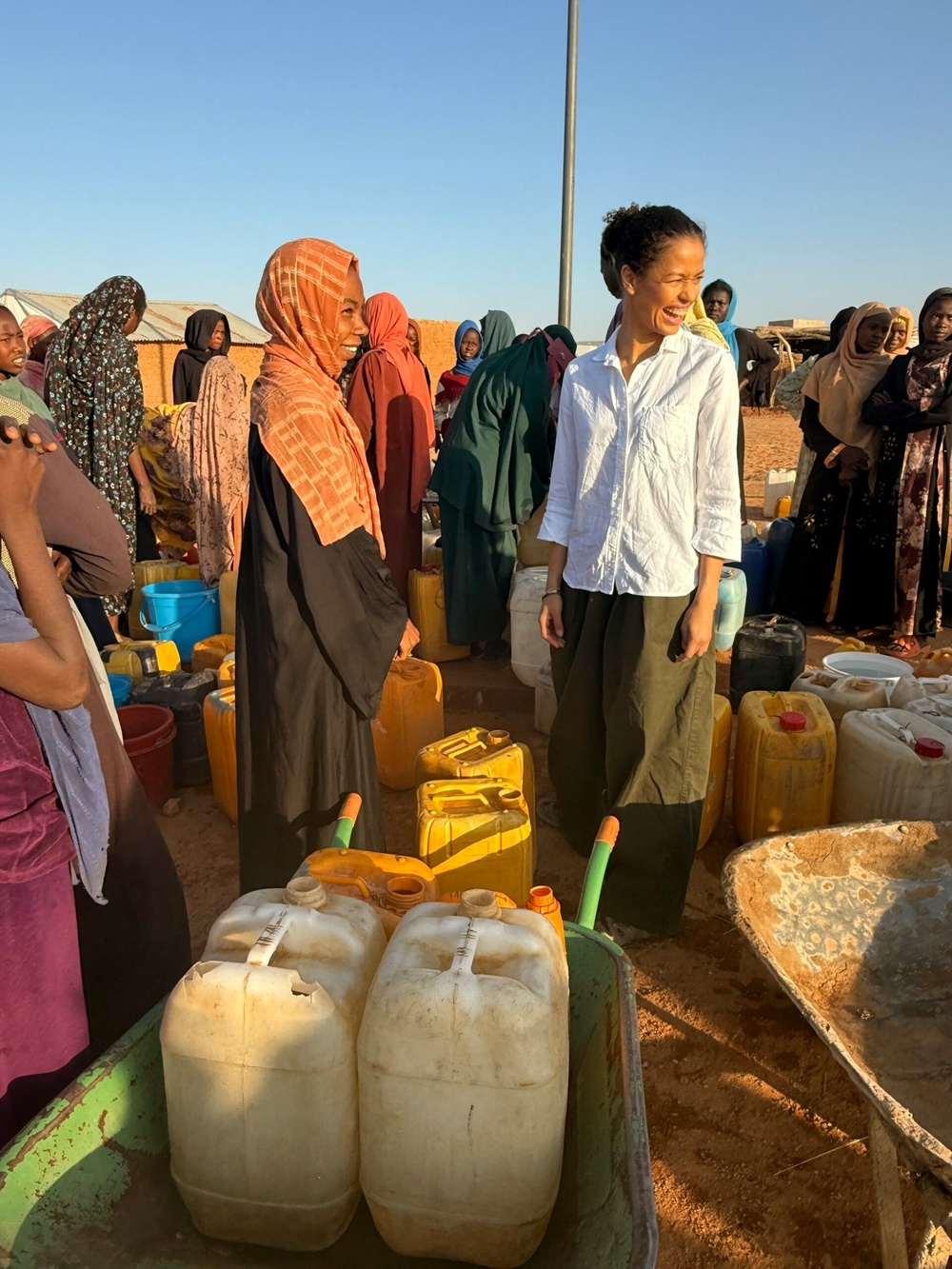
With no electricity, being out in the dark is still hazardous for women and for all. At dusk I saw a UNHCR solar street-light project illuminate, an attempt at making everyone feel safer, but still limited to the main thoroughfare. A lot more support is needed to make someone like Dara feel safe enough to leave home alone again.
The strain is everywhere, from a disillusioned female doctor I meet who was laid off from her mobile clinic in 2024 due to funding cuts, and no facilities to do the sorely needed work she trained for 8 years in Sudan for; to the overstretched UNHCR staff, emotionally drained from the deeply traumatized women they try to help every day and the diminishing resources and capacity to do their jobs with.
I see one hopeful spark in Mayaz, an 18 year-old student, who’s brought in to translate for Araffa, the doctor I’m talking to. As it happens, Araffa does not need translation and we all hang out talking fluently in English. I’m struck by just how many well-educated, skilled and articulate women I’ve met here. Since April 2023, most new arrivals have included farmers, traders, nurses, teachers, human rights defenders and legal practitioners. A travel agent like Saba, and an aspiring medical student like Mayaz. In August 2025, UNHCR and UNICEF, in collaboration with the Ministries of Education in Sudan and Chad, organized high school exams in Chad to ensure that Sudanese students who ended their academic year 2022/2023 without sitting for their national exam due to conflict, received that opportunity. In August, Mayaz took her high school exam, and out of the 59 students in Farchana, she earned the highest grades.
She shows me around the neighbourhood and tells me her dream is to study medicine in English or Arabic; but that is not possible in Chad. Clearly incredibly bright, yet frustrated, I’m heartbroken by her desperation when she tells me ‘I’d rather go back to Sudan, than stay here without continuing my education’. I implore that it’s not safe to return to the war, ‘But what am I going to do here?’ Aware of her potential, I struggle to find an answer worthy of her talent.
I ask myself Why. Why with the numbers displaced, the scale of this crisis, why Sudan does not have more attention and compassion from the world.
As we take a selfie in the sunset, and I thank Mayaz for the tour, it feels like she’s speaking for Sudan with her parting words; ‘Don’t forget about me.’
Image credits: UNHCR/Helena Christensen
To find out how to support aid in Sudan click here.
This story first appeared on GRAZIA UK.
READ MORE
- Things to See, Try and Experience in KL & PJ This Month
- Euphoria Season 3’s Most Shocking Moments Come At The Expense of Women
- Grazia Travel Guide: Hotel Gyms — The Best Hotel Gyms In The World Right Now
The post “Please Tell The World Our Story”: UNHCR Goodwill Ambassador Gugu Mbatha-Raw On The Crisis In Sudan appeared first on Grazia Malaysia.