
When we see the flashing red and blue lights of a police cruiser cutting through the balmy Malaysian night, what is the instinctive reaction? Is it a sense of profound security, or does a faint, involuntary knot of anxiety tighten in the chest? For too long, public perception has fluctuated between these two extremes. Globally, structural fractures in law enforcement have sparked widespread outrage, from the deeply rooted systemic reckonings seen in the United States to localized scandals closer to home. In Malaysia, the relationship between the public and the Royal Malaysia Police (PDRM) has historically been fiercely protective yet deeply complex.
Every nation relies on its thin blue line to stave off chaos. However, when the lines between law enforcement and law-breaking blur, the institutional fallout is catastrophic. For years, ordinary Malaysians whispered their grievances in coffee shops, reluctant to file formal reports out of a persistent, culturally reinforced fear: the belief that complaining about an officer was an exercise in futility. The prevailing sentiment was that the system inherently protected its own, a perception amplified by high-profile integrity crises over the past decade.
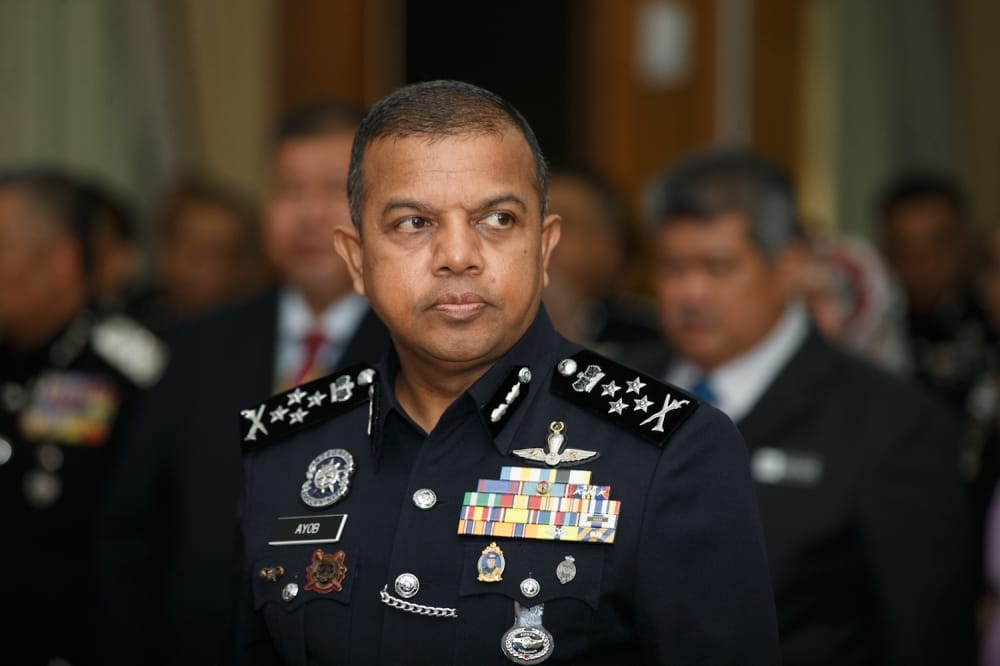
It is within this delicate socio-political climate that Deputy Inspector-General of Police Tan Sri Ayob Khan Mydin Pitchay chose to draw a line in the sand. Speaking at the launch of the book Integrity: Man of Integrity, Honour and Principle in Kuching, Ayob Khan made an announcement that sent ripples through the civil service: the Independent Police Conduct Commission (IPCC) has officially established a direct, alternative oversight pipeline for citizens to report police misconduct. By publicly championing an external watchdog, Malaysia's top brass is openly acknowledging a bitter institutional truth to heal public trust, the police can no longer be the sole arbiters of their own integrity.
Dismantling the Blueprint of "Self-Policing"
To understand why this shift matters, one must dissect how internal police accountability historically functioned in Malaysia. For decades, the primary avenue for handling internal corruption, brutality, or procedural failures was the Bukit Aman Integrity and Standards Compliance Department (JIPS). While JIPS has undoubtedly worked aggressively to weed out bad actors evidenced by the fact that 1,571 police personnel were subjected to disciplinary action in a single year the structural architecture of the system was flawed in the eyes of the public.
"Previously, most complaints involving police misconduct were handled by JIPS," Ayob Khan observed. "Previously, JIPS was the only avenue, and some people may have felt uncomfortable because they perceived it as the police investigating the police. However, the situation is now different."
Sociological analysis suggests that "self-policing" creates an unavoidable paradox of interest. Even when internal affairs departments act with absolute honesty, the optics of an institution investigating itself will always breed skepticism. In a collectivist society like Malaysia, where professional hierarchies are deeply respected, the public assumption has often been that a low-ranking complainant stands little chance against a well-entrenched bureaucratic machine.
This specific psychological barrier is what the IPCC aims to dismantle. Operating as a federal statutory body under the Independent Police Conduct Commission Act 2022 (Act 839), the commission functions completely outside the chain of command of Bukit Aman. It is housed under the Ministry of Home Affairs and utilizes its own dedicated, non-police investigators to handle grievances. This structural separation provides a vital buffer, offering citizens a neutral ground where their complaints are not filtered through the very agency they are accusing.
The Anatomy of Misconduct: What the Watchdog Actually Targets
The introduction of the IPCC’s online and in-person reporting systems is not merely a cosmetic upgrade; it represents a targeted response to the specific types of institutional malfeasance that erode a democracy from within. According to structural guidelines revealed by the commission, the IPCC is legally empowered to investigate actions that are unreasonable, unjust, oppressive, or improperly discriminatory, as well as outright criminal offenses.
Historically, the friction between the police and the public has manifested in three major areas, as outlined in the comparative breakdown below:
Over the past decade, JIPS statistics indicate the massive scale of the problem, with the department handling nearly 50,000 complaints and dismissing 1,671 personnel over a ten-year period. However, institutional analysis indicates that numbers alone do not capture the dark figure of unreported crime the instances where citizens chose silence over confrontation. By creating a mandate where the police must automatically refer severe incidents, such as sexual crimes, serious injuries, or deaths in custody, to the IPCC, the state is attempting to force a level of transparency that was previously left to internal discretion.
A Cultural Battlefront: Fighting the Myth of the "Cover-Up"
The true test of the IPCC will not be written in legal text, but in its ability to withstand the cultural gravity of the enforcement community. In Malaysia, rumors of online gambling syndicates buying protection or high-ranking officers shielding subordinates from prosecution have long been staple topics of online discourse. Ayob Khan addressed these concerns directly, tackling the pervasive public perception of internal "cover-ups."
Institutional change in Malaysia faces a unique hurdle: an administrative culture that traditionally prioritizes institutional harmony over public exposure. Analysts assume that for the IPCC to be truly effective, it must break through this entrenched culture of protective solidarity frequently referred to in global criminology as the "blue wall of silence." Ayob Khan's rhetoric suggests a sharp departure from this legacy, with the Deputy IGP insisting that there will be no compromise or double standards, regardless of an officer's rank or political connections.
Yet, an external commission is only as powerful as its legal teeth. Under Act 839, the IPCC has the authority to gather documents and summon individuals, but its final recourse is to recommend disciplinary action to the Police Force Commission (SPP). Skeptics within civil society have pointed out that because the power to punish ultimately remains tied to executive structures, the IPCC must maintain an uncompromising public presence to prevent its recommendations from being quietly archived.
Cultivating Integrity Beyond the Station Walls
Perhaps the most profound insight from the recent policy shifts is that police misconduct cannot be treated as an isolated pathology. It is a symptom of a broader societal health issue. In his address, Ayob Khan argued that systemic integrity cannot rely entirely on external watchdogs or advanced surveillance technology. Instead, it requires a profound, generational shift in how accountability is viewed across all strata of Malaysian life.
True reform is an interconnected ecosystem. If a society tolerates casual bribery in daily transactions, accepts minor nepotism in local governance, or turns a blind eye to corporate corner-cutting, it creates a cultural baseline where corruption becomes normalized. When individuals raised in this environment put on a police uniform, it is unrealistic to expect them to suddenly exhibit flawless ethical fortitude. Therefore, the independent channels provided by the IPCC are not just tools for punishment they serve as a societal mirror, forcing the public to actively participate in defining the ethical boundaries of their nation.
What do you think? I’d love to hear your opinion in the comments section.
Ultimately, the launch of this alternative channel shifts the burden of proof onto both the system and the citizenry. The state has built the platform; it is now up to ordinary Malaysians to utilize it without fear, and up to the IPCC to prove that these reports will not simply vanish into a void of bureaucratic indifference.
True justice is never a quiet process. It requires discomfort, absolute transparency, and an unwavering willingness to hold power to account. As the IPCC begins to process this new wave of independent complaints, the coming months will reveal whether Malaysia is truly entering a new era of democratic accountability, or if the shadow of doubt will continue to loom over the badge.
The uniform worn by our officers should be a symbol of safety, an unshakeable promise that the law exists to protect the vulnerable, not shield the perpetrator. Every single time an officer steps over that line, it compromises the thousands of honest, dedicated personnel who risk their lives daily on our streets. We stand at a critical crossroads where apathy is our greatest enemy. Real institutional evolution requires our collective vigilance, our courage to speak out, and our refusal to accept anything less than absolute honor from those sworn to protect us.
AM World (tameer.work88@gmail.com) is a content creator under the Newswav Creator programme, where you get to express yourself, be a citizen journalist, and at the same time monetize your content & reach millions of users on Newswav. Log in to creator.newswav.com and become a Newswav Creator now!
The User Content (as defined on Newswav Terms of Use) above including the views expressed and media (pictures, videos, citations etc) were submitted & posted by the author. Newswav is solely an aggregation platform that hosts the User Content. If you have any questions about the content, copyright or other issues of the work, please contact creator@newswav.com.