
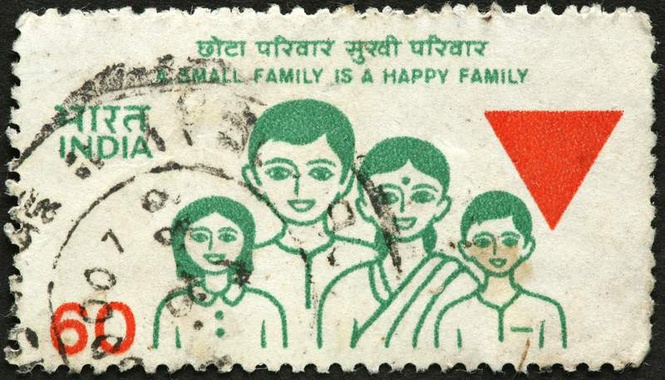
I was in Class X when I first heard the slogan, “Hum Do Hamare Do.” It was a regular on the radio, while hoardings advertising “small family” norms could be seen at prominent places and on the back of roadways buses. During the Emergency, the government pursued the birth control programme with vigour. Reports of forced sterilisation were received from parts of North India. This became a major poll plank of the Janata Party, which went on to win the 1977 elections. After forming the government, the ruling party introduced a population policy that laid emphasis on voluntary birth control and comprehensive community healthcare. However, as the population growth rate remained high even during the 1980s and 1990s, Central and state governments adopted policies focusing on incentives and disincentives to achieve sustainable levels. I worked in a public sector organisation that implemented a scheme to promote family planning. An incentive was paid monthly to married employees with two or fewer children. They were envied by their unmarried colleagues — for obvious reasons. There were a few unmarried staffers among us who were in their thirties or older. They made a plea: since they were aiding in limiting the population growth by remaining single, they also deserved the incentive. The management, in its wisdom, did not relent as the scheme was meant only for married employees. In the meantime, a peculiar case occurred. An employee was blessed with triplets. Since the eligibility criterion for the scheme was up to two children, he was denied the monetary benefit. The employee, who had to take care of his three newborn babies, was naturally unhappy about the treatment meted out to him. He took up his case with the management, which decided in his favour as a “special case”. Recently, N Chandrababu Naidu, Andhra Pradesh Chief Minister, announced incentives for people having a second, third, and fourth child in order to promote population growth, considering the low Total Fertility Rate (TFR) of 1.5 in the southern state. There are several other states whose TFR has gone below 2.1, the figure required for sustainable population growth. India was the first country to launch a programme (in the 1950s) to stabilise population at a level consistent with the requirements of the national economy. The turnaround in population growth is a tribute to our policymakers who framed policies that helped achieve the target in many states. In view of the current situation — India’s TFR has fallen below the replacement level — the “small family” incentive is set to make way for the “large family” bonus. The writer is a Chandigarh-based freelance contributor