_1652931074_9592.jpg)
Porsche has taken the wraps off the Porsche Mission S, a vision concept designed to preview the German sports car maker’s evolving design language and future performance lineup under its Sportwagenschmiede ’35 strategic realignment.
The Porsche Mission S will become the company’s next flagship sports car, positioned above the 911. Staged at a pier in Queens, New York—the historic location where the mid-engined Porsche 550 Spyder was photographed in 1953—the Mission S serves as more than an isolated hypercar concept.
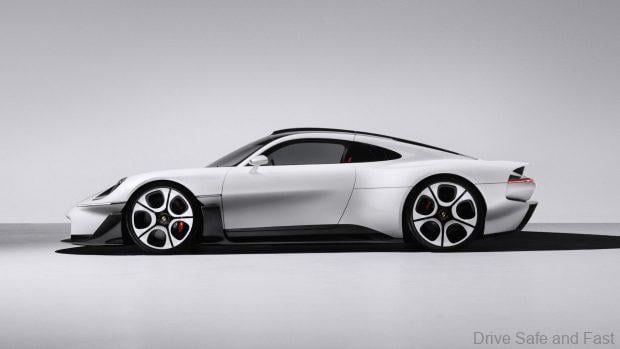
According to Dr. Michael Leiters, Chairman of the Executive Board of Porsche AG, the model introduces a new mid-engined super sports car architecture positioned permanently above the 911 within the brand’s regular portfolio. And yes, being a mid-engine sports car, it won’t be fitted with an electric motor, though it’s unclear what exactly will power the vehicle.
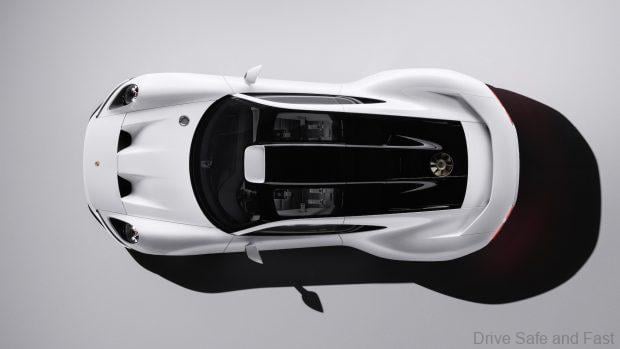
Sculpted Heritage: Floating Volumes and Historic Cues
Pushed forward by Vice President Style Porsche Tobias Sühlmann, the Mission S exterior builds upon a philosophy termed authentic, consequent, and timeless.
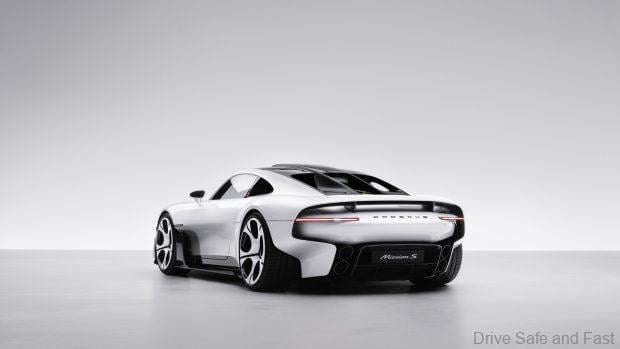
The bodywork is defined by athletic floating volumes and a continuous waistline wrapping the car to merge the front and rear lighting signatures:
- Classic References: Up front, prominent torpedo fenders and round headlamps pay homage to classic 911s, while the shut lines draw direct cues from the G-series. The low nose profile borrows from the iconic 911 GT1, and the roofline contours evoke the legendary 959.
- Aero and Cooling: Mid-engined proportions allow for a low, sculpted flyline. An integrated active rear wing delivers high-speed stability, complemented by specialized cooling elements reminiscent of the Porsche 917’s engine fan.
- Dial Wheels: Systematically optimized for lightweight performance, the alloy wheels reimagine the classic telephone-dial styling of the Porsche 928.
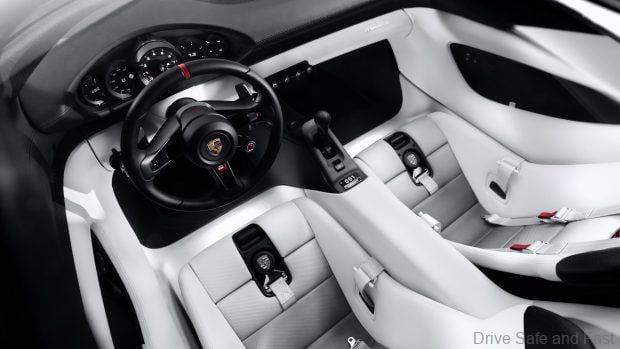
Analogue Meets Digital: A Purist Driver-Centric Cockpit
Inside, the cabin abandons the modern trend of dominating dashboards with large touchscreen panels, choosing instead to focus purely on the driver’s axis:
- Adaptive 5-Gauge Cluster: Ahead of the driver sit five circular instruments with an analogue needle rev counter at the center. Depending on the drive mode, the rev gauge physically moves forward, and the instrument cluster reconfigures its layout dynamically.
- No Permanent Center Touchscreen: Porsche has omitted traditional fixed infotainment and passenger screens. In their place sits a retractable, MagSafe-compatible smartphone mount. Drivers run navigation, vehicle telemetry, and customizable gauge graphics via the My Porsche App on their personal phone.
- Tactile Switchgear: Classic push-pull dashboard controls and a redesigned physical Sport Chrono dial deliver direct, haptic feedback. Traditional hallmarks remain intact, including the starter positioned to the left of the steering wheel.
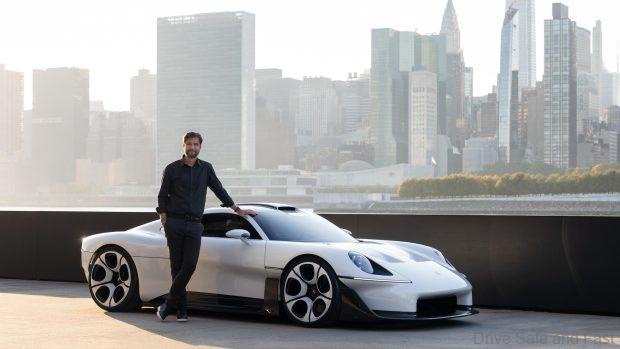
Finished in motorsport-inspired Firn White Metallic with Black Chrome and Light Red accents, the Mission S establishes the technical and aesthetic template for Porsche’s next-generation road cars.
The post Porsche Unveils Mission S Concept: A Mid-Engined Super Sports Car Platform Positioned Above the 911 first appeared on DSF.my.