
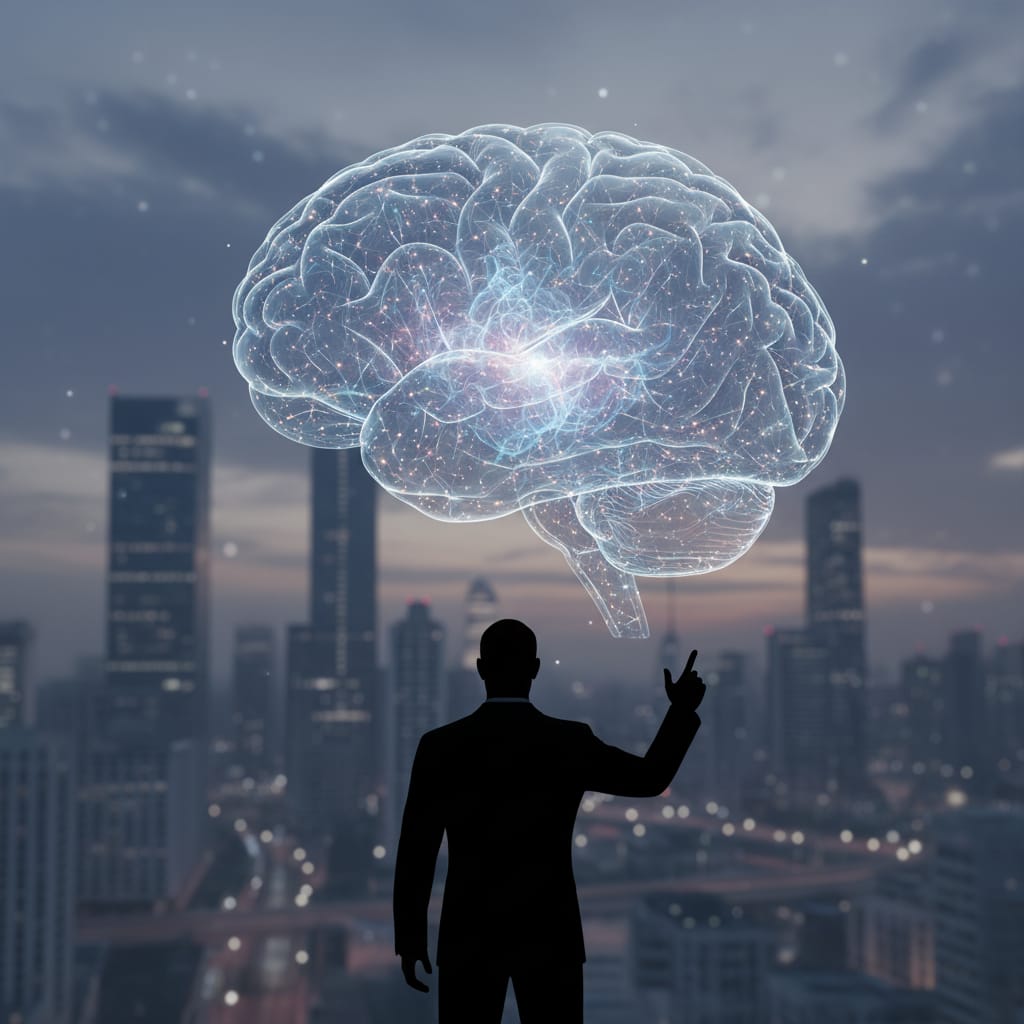
Throughout history, political power has often depended not only on policies or military strength, but on the ability to influence how people think, feel, and behave. This “political brain” refers to a leader’s capacity to understand human psychology and use it, sometimes ethically, but often manipulatively, to shape public opinion and consolidate power. (Stanford University-Political Psychology)
At the core of manipulation is a deep awareness of cognitive biases. Humans tend to seek certainty, fear loss more than they value gain, and gravitate toward simple narratives. Leaders who exploit these tendencies can steer large populations with surprisingly little resistance. Techniques such as repetition, emotional appeals, and the creation of an “us versus them” mentality are commonly used to simplify complex realities into digestible and controllable messages.
One of the most cited examples is Adolf Hitler, who mastered propaganda during the rise of Nazi Germany. Through the work of Joseph Goebbels, the regime controlled media, repeated key messages relentlessly, and used fear and national pride to unify people under a single ideology. The narrative was carefully crafted: Germany had been wronged, enemies were everywhere, and only strong leadership could restore greatness. This manipulation did not rely solely on lies, but on emotional resonance and selective truths making it far more powerful. (Propaganda Of Nazi)
Another modern example is the use of data-driven psychological targeting. The Cambridge Analytica scandal revealed how personal data could be harvested and used to tailor political messages to individuals’ psychological profiles. Instead of broadcasting one message to all, campaigns could deliver customized narratives designed to trigger fear, anger, or hope depending on what would most effectively influence each person. This marked a shift from mass persuasion to micro-manipulation.
A compelling story illustrating this dynamic comes from the novel Animal Farm by George Orwell. In the story, a group of animals overthrow their human farmer in pursuit of equality. However, the pigs who assume leadership gradually manipulate language and information to maintain control. Rules are subtly rewritten, history is distorted, and dissent is suppressed. The famous line, “All animals are equal, but some animals are more equal than others,” captures how manipulation can normalize inequality when people are conditioned not to question authority.
Psychologically, such manipulation works because it reduces cognitive dissonance. When people are repeatedly exposed to a narrative, especially one that aligns with their fears or identity, they are more likely to accept it as truth. Social proof also plays a role: if everyone around you appears to believe something, dissent becomes psychologically uncomfortable.
However, not all political influence is inherently negative. Leadership requires persuasion, and effective communication can unify societies and drive positive change. The ethical line is crossed when information is distorted, dissent is silenced, or emotions are exploited without regard for truth.
In today’s digital age, the challenge has intensified. Social media platforms amplify emotionally charged content, often rewarding sensationalism over accuracy. This creates fertile ground for manipulation, where narratives can spread rapidly without verification.
Understanding the “political brain” is therefore essential not just for leaders, but for citizens. Awareness of manipulation techniques empowers individuals to question narratives, seek diverse sources, and make informed decisions. In a world where influence is increasingly subtle and personalized, critical thinking remains the most effective defense against those who seek to control minds rather than serve them.
Laguvendran Sandran (laguvendran96@gmail.com) is a content creator under the Newswav Creator programme, where you get to express yourself, be a citizen journalist, and at the same time monetize your content & reach millions of users on Newswav. Log in to creator.newswav.com and become a Newswav Creator now!
The User Content (as defined on Newswav Terms of Use) above including the views expressed and media (pictures, videos, citations etc) were submitted & posted by the author. Newswav is solely an aggregation platform that hosts the User Content. If you have any questions about the content, copyright or other issues of the work, please contact creator@newswav.com.