At least 16 people have been killed and 65 injured after a magnitude-7 earthquake hit the Tibet region on Thursday evening, collapsing hundreds of homes in the northern regional city of Nagqu, official media said.
Search and rescue efforts continued following the collapse of at least 339 homes and 20 livestock sheds, the Nagqu media office said, citing city government officials.
The US Geological Survey said the quake occurred at 10.33pm local time, with its epicentre 191km (119 miles) east-northeast of Nagqu, in a sparsely populated, high-altitude area of northern Tibet. It put the earthquake’s depth at 18km (11 miles).
The US agency recorded at least seven aftershocks with magnitude between 4.3 and 5.2, all of them with a depth of 10km (6 miles) , according to its website.
The number of injured rose from 32 to 65, while the death toll remained at 16, the local government said in a social media post on Friday.
Earlier reports said at least 11 of the 32 injured were in serious condition.
At least 339 homes and 20 animal sheds collapsed, the Nagqu media office said, and houses in the villages closest to the epicentre showed cracks. Intermittent snow was also expected in the area over the next three days, making rescue efforts more challenging.
More than 1,600 people from the local county were deployed for rescue efforts. Supplies including 1,000 prefabricated housing units, around 3,000 tents and folding beds, as well as flashlights and winter clothing arrived in the region.

China’s official news agency Xinhua said on Friday that communication in part of the region has been down. Local railway authorities have taken emergency actions to halt trains passing through the region.
The earthquake also caused rockfalls that have forced local authorities to close a section of National Highway 317, allowing only emergency, rescue and official support vehicles through as crews worked to clear debris, according to Xinhua.

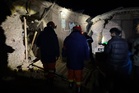
Videos released by local state media showed people leaving their homes and sheltering outside or in parked cars.
Penpa Tsering, president of the Central Tibetan Administration, the Tibetan government in exile, warned that the damage could be greater than first reported because information from the affected region was hard to obtain.
“We have no idea about the impact of that earthquake so far,” Mr Tsering said, Open Magazine reported.
He said Tibet is a seismic zone and that the reported magnitude could change as more information became available, and that the administration would seek confirmation of the impact through Friday. He said information had also been difficult to obtain from Tibet and Nepal during earlier flooding.

It was the biggest earthquake in the region in the last five years, China's national broadcaster CCTV said.
Chinese president Xi Jinping called for all-out efforts in rescue operations and medical relief work.
Nagqu is more than 300km (186 miles) north of Tibet’s capital, Lhasa. Tibet has been hit by deadly earthquakes before. At least 126 people died in January 2025 in Tingri county, on the north side of Mount Everest.
In 2010 a magnitude-7.1 quake in Yushu, in neighbouring Qinghai province, killed at least 2,698 people and left nearly 300 missing.