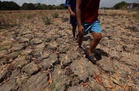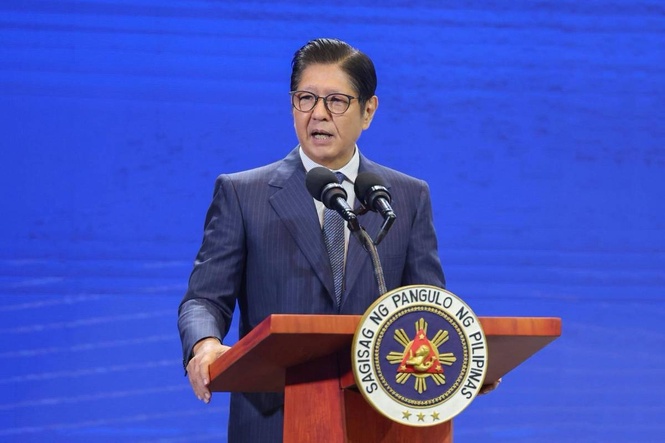
PRESIDENT Ferdinand Marcos Jr. urged Filipinos to prepare for a super El Niño, including collecting rainwater and planting their own vegetables at home, to minimize the impact from the weather pattern.
In a press briefing, Marcos stressed how impactful El Niño was likely to be, citing government forecasts that indicate severe dry conditions lasting through the first quarter of next year.
He stressed that along with government programs, everyday households play a critical role in mitigating the severe impacts of the expected dry conditions.
“Part of that public service — and those public service messages — will be to gather or buy buckets now so that when it rains, you can collect all the water,” Marcos said.
He added that the government would be providing guidance and water-treatment tools to ensure home-collected rainwater is safe for domestic use.
“We will teach you... We’ll give you the filter, we’ll teach you how to do everything so you won’t get sick, and the water is treated properly.”
He also stressed that practicing strict household water conservation — such as reusing dishwashing water to tend to home vegetable plots — would help cushion families against rising food prices and supply constraints.
Marcos also highlighted the importance of keeping the momentum of the “green revolution,” or the movement to increase food production.
“Get everybody to plant their own vegetables. That’s why if — that will help again. It won’t solve the entire problem, but it will help,” he said, encouraging a national revival of backyard farming and planting, similar to the time of the pandemic.
Beyond household-level measures, Marcos assured the public that Task Force El Niño, led by the Department of Science and Technology, had activated coordinated contingency plans.
The plans include ensuring medical facilities maintain standby generators, fuel reserves and water stores during potential heat waves and power outages.
The national government is also securing grain supplies through strategic imports while preparing cash-for-work and livelihood assistance.
Cloud-seeding operations will be done to boost reservoir levels before the onset of the peak summer months.
“It’s not just a regular El Niño. It’s going to be a Super El Niño... starting late October, beginning November, and continuing until March next year,” Marcos said.
“We should all prepare. We’re taking this very, very seriously.”
As this developed, the Department of Energy (DOE) on Monday also warned of rotating brownouts, particularly in the Visayas, where supply is already under pressure due to insufficient baseload capacity nationwide, with a super El Niño expected to put the power grid under severe strain.
Energy Undersecretary Mario Marasigan said the department was closely watching.
He said the agency is doing various simulations with increased demand due to El Niño and noted that Visayas could again be hit with plenty of red alerts because of various plants’ possibility of going offline unscheduled due to the heat.
“Based on our simulations, and assuming we are under normal condition or there are no unannounced power interruptions, we are seeing a little amount of red alerts for Luzon, but will not necessarily translate to manual load dropping, or rotating brownouts,” Marasigan said in an online media briefing.
Marasigan continued that the DOE was closely monitoring the Visayas and working on the completion of immediate and interim energy generation solutions by the first quarter of 2027.
“If there are ancillary services that are available from these intermediate and immediate facilities, then we will be able to greatly reduce the potential of having red and yellow alerts in the island group,” he said.
Mindanao, meanwhile, will likely see limited yellow alerts, while Luzon could see a few red alerts but not rotational brownouts.
“I would say that we are still preparing for El Niño and that related programs are in place and already activated via the Task Force on Energy Resiliency,” Energy Secretary Sharon Garin said.
Malacañang, the DOE said, has been calling for meetings under a whole-of-government approach that will include an extensive education and information campaign on how the country is supposed to handle the situation for the coming months.