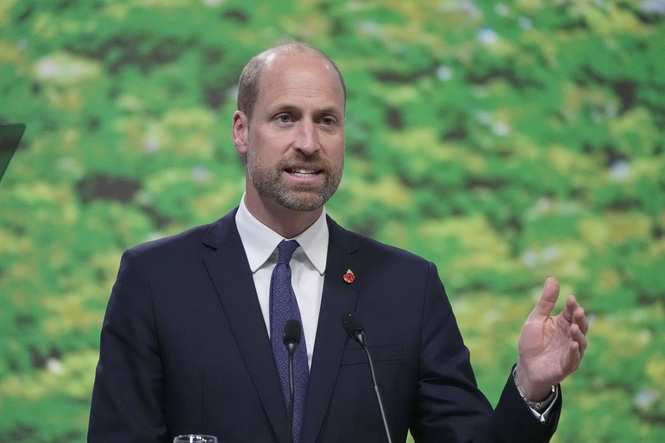
As a global public figure and one who can use his “soft power” to influence world leaders, Prince William is right to stress how the extreme weather events in the summer cannot be allowed to overwhelm people, and why a spirit of what he terms “urgent optimism” is needed to find practical solutions to the interlocking environmental crises facing humanity.
He is frustrated at slow “inch-by-inch” improvements, and he reflects and voices growing concerns about how the climate crisis is now directly hurting people in unprecedented ways.
This summer alone has seen record temperatures, heatwaves, droughts and wildfires; and the effects of global warming will exacerbate the El Niño climate pattern to unprecedented levels, guaranteeing more freakish rain and storms well into next spring.
For many, the struggle to restrain greenhouse gas emissions and climate change feels almost lost. But the message the prince delivers is that there is still the time, the technology and the opportunity to make a difference, and that this generation can still “turn the tide” on the climate crisis by 2030.
Indeed, such an existential crisis cannot be simply abandoned.
Writing exclusively in The Independent, and looking forward to the sixth Earthshot Prize event, which will be held in Mumbai in November, the Prince of Wales highlights numerous disparate examples of how innovation in the deployment of existing technologies can make a real difference to people’s lives and their quality of life.
Cleaner air in Bogotá; 200 million people given access to affordable solar power across Africa; bringing endangered species back from the brink in Kazakhstan; and the High Seas Treaty signed this year by 83 nations to protect marine life in international waters all provide cause for hope at a time when the sheer scale of the problems can feel overwhelming to the public and policymakers alike.
It is all too easy, in other words, to grow dispirited and for defeatism to prevail. This especially so at a time when other issues, from wars to the dangers of AI to the continuing cost of living crisis, can all too easily distract from environmental concerns.
Yet it is not inevitable. Hence the case the prince makes for “urgent optimism” and “seeing the danger clearly while believing in our ability to respond”.
“For the first time in history, our greatest challenge is not inventing the answers,” he says. “It is deploying and scaling the solutions we already know work. It is not naivety or blind hope. It is optimism grounded in evidence. I believe that our ability to respond can be the biggest story of this decade.”
It is about practical, scalable solutions.
Some fine examples of this spirit are also highlighted by The Independent’s Climate 100 List of individuals who’ve just got on with the job and found solutions. One such internationally honoured case is that of Joseph Nguthiru, who has found a way to harvest an invasive weed destroying marine life in a lake in Kenya into commercially valuable biodegradable packaging, thus controlling its spread.
The Climate 100 List will be backed by a keynote speech from former British foreign secretary David Miliband at an event during the annual Climate Week NYC in New York.
Most crucially, and encouragingly, for the environmental cause is that public opinion remains overwhelmingly behind it, and increasingly so as the malign effects of climate change and environmental degradation impinge on people’s lives.
Feelings about the climate crisis in Britain are more solid than some of fractious political arguments about Net Zero might suggest.
According to Ipsos Mori, three-quarters of people say they are concerned about climate change today, more than before the heatwaves; and over half report that the extreme summer weather has disrupted their ability to carry out normal daily activities such as working, exercising, or sleeping.
It is only natural, and healthy, that there should be a democratic debate about how to bear the cost of the transition to a cleaner, greener way of life, and how rapidly that can achieved.
Yet the science of climate change is clear, and while the party-political consensus that the climate crisis has to be tackled has somewhat eroded in recent years, it has not been broken.
As Prince William says, we can, and must, make the remainder of this decade count.
The climate crisis is upon us – why are deniers still getting airtime?
Our food supply is in a desperate state - El Niño is going to make it much worse
Listen to George Osborne: we need a closer bond with the rest of Europe
Humans have what it takes to regulate AI
The MI5 chief is right: we must all take threats to our security more seriously
Britain’s crumbling vital infrastructure cannot be allowed to fail