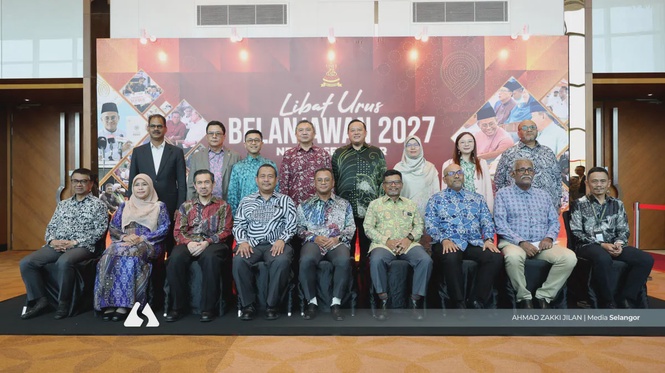
PUTRAJAYA, Sept 10 - Developers and businesses should be required to include flood mitigation measures as part of their projects instead of expecting the Selangor Government to bear the entire cost, said the Prime Minister’s Office economic adviser.
Nurhisham Hussein said the private sector should be involved in climate adaptation efforts as businesses themselves would be affected by issues such as flooding and rising water levels.
“One thing is to get the private sector involved. Because they are also affected,” he said responding to a question from state executive councillor for public health and environment Jamaliah Jamaluddin at the Selangor 2027 State Budget engagement session at Le Meridien Hotel Putrajaya here, today.
Jamaliah inquired what the state could do to address climate change despite limited allocations, and what pilot projects could be undertaken to attract greater Federal funding.
Nurhisham suggested greater cooperation with major companies operating in affected areas, including logistics firms MMC and Westports as well as plantation interests, as they had economic assets to protect.
“They should also be proactive, working together with the state government to create some mitigation,” he said, referring to the need to address the impact of rising water levels.
University Malaya’s Institute of Asian-Europe Studies executive director Prof Datuk Dr Rajah Rasiah said climate and environmental protection should be viewed as a public good because its benefits and negative effects extend beyond individual communities or businesses.
He said Federal and state governments must work together on climate policies, with the former providing overall direction while states implement measures according to local needs.
“Climate is a public good,” he said, stressing that coordinated action was needed to maximise the benefits of public investment in environmental protection.
Responding to a separate question from state executive councillor for social welfare, Anfaal Saari on education, STEM and talent development, Rajah said Malaysia needed to strengthen its education system and build a stronger ecosystem connecting government, industry, academia, civil society and the environment.
"Malaysia’s performance in international assessments such as PISA and TIMSS remained behind countries including Vietnam, while greater emphasis should be placed on developing high-skilled talent and retaining Malaysians working overseas.
“We need to find a solution for all this,” he said, adding that better salaries, career opportunities and innovation ecosystems were needed to encourage skilled Malaysians to remain in the country.
Nurhisham on the other hand said greater parental involvement in education could also help improve student performance, while industries should play a bigger role in education and TVET, including curriculum development and training materials.
"Closer industry involvement would ensure graduates were equipped with skills that matched actual workforce requirements," he said.