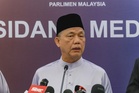
KUCHING: Parti Rakyat Sarawak (PRS) president Datuk Seri John Sikie Tayai has cautioned his party and the ruling Gabungan Parti Sarawak (GPS) coalition against assuming that the outcome of the 13th Sarawak state election is already settled.
John, a caretaker state minister in the Premier’s Department, said it would be a mistake for GPS or any of its component parties to believe a win was guaranteed.
PRS is one of four GPS component parties, alongside Parti Pesaka Bumiputera Bersatu (PBB), the Sarawak United Peoples’ Party (SUPP) and the Progressive Democratic Party (PDP). John became PRS president in October 2025, succeeding Datuk Seri Joseph Salang Gandum.
Speaking to party leaders at a gathering in Pengkalan Tuna, Selangau, John said there was no room for complacency in the election because a wave of new and untested voters had emerged, particularly those aged between 18 and 40.
He added that GPS should not underestimate any of its opponents in the polls or assume the contest would be smooth sailing, even in areas regarded as safe.
He also said the new challengers were difficult to predict and voter behaviour could be uncertain because of the sheer number of younger voters entering the electorate.
John said GPS strategies during this critical period must be geared towards reaching these new voters.
He added that all component parties must coordinate their efforts in each of the 82 state seats, and that PRS machinery on the ground was now fully preparing to start campaigning.
He also said the main message of PRS would be that Sarawak needed continued political stability.
John said development plans already in place should continue without interruption, as should the fight for Sarawak’s rights under the Malaysia Agreement.
He emphasised that these Sarawakian agendas could not be allowed to be disrupted.
In the 2021 election, GPS won 76 of the 82 seats, with PRS taking 11 of them. PRS is reported to be aiming to contest at least 11 of the 82 state seats this time. John is the incumbent assemblyman for Kakus in central Sarawak.
Meanwhile, Universiti Kebangsaan Malaysia political analyst Prof Dr Novel Lyndon recently said the election could produce surprises in constituencies once regarded as GPS strongholds. He added that seats long viewed as safe for GPS incumbents could turn out to be unpredictable.
He also said eight constituencies with large native Bidayuh populations could see exciting contests, as the community’s voting behaviour was evolving, particularly with the emergence of far younger voters than in the past.
Novel listed the eight Bidayuh-majority seats to watch as Tasik Biru, Opar, Serembu, Tarat, Mambong, Tebedu, Bukit Semuja and Kedup. All are in southern Sarawak, and Bidayuh make up more than 60% of the electorate in each of them. GPS won all eight in 2021.
He added that GPS, and Barisan Nasional before it, had comfortably won the areas in the past, but previous results might not indicate what would happen this time.
He also said Bidayuh voters had traditionally voted out of loyalty to a party and personal ties with party leaders and elected representatives, but that pattern might be weakening.
Novel said voters were increasingly aware of current issues as they felt the pinch of rising living costs and social concerns such as land rights, water supply and road conditions.
He added that younger voters were focused on job opportunities, income and the future prospects available in their home areas.