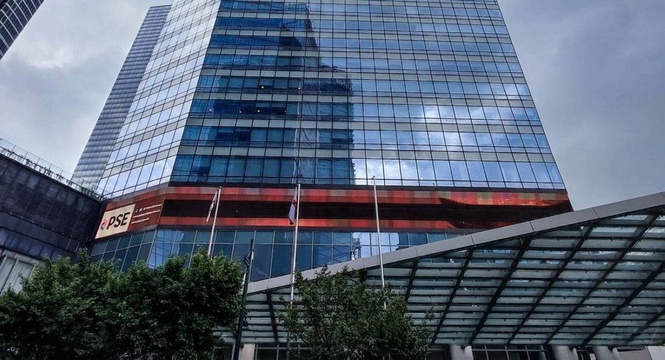
THE Philippine Stock Exchange index (PSEi) rebounded on Tuesday as investors hunted for bargains following three consecutive sessions of losses.
The benchmark index jumped 120.01 points, or 2.13 percent, to close at 5,761.19.
However, the peso’s breach of the P64-per-dollar level continued to raise concerns over imported inflation, higher corporate costs and potential pressure on company earnings.
“The local market rose as investors hunted for bargains following a three-day decline,” Japhet Tantiangco, research manager at Philstocks Financial Inc., said, adding that positive cues from Wall Street also supported the rally.
Hopes of de-escalation in the Middle East following talks among Saudi Arabia, Turkey, Pakistan and Iran further boosted market sentiment, Tantiangco said.
Luis Limlingan, head of sales at Regina Capital Development Corp., also attributed the advance to bargain hunting, noting that the market likely staged a technical rebound after its recent selloff.
Trading activity may also have been influenced by portfolio rebalancing by WisdomTree, a global asset management firm, which likely drove stock-specific movements, Limlingan said.
Foreign investors were net buyers, recording inflows of P509.91 million, while net value turnover reached P9.09 billion.
All sectors ended higher, led by banks, which gained 3.28 percent. SM Investments Corp. was the index’s top gainer, surging 6.86 percent.
Despite the rebound, Limlingan cautioned that sentiment could remain guarded in the coming sessions as the peso’s depreciation raises concerns over imported inflation, corporate costs and earnings.
The peso breached P64 against the US dollar despite the Bangko Sentral ng Pilipinas’ surprise 50-basis-point interest rate hike last week, adding to concerns over inflation and the domestic economic outlook.
Globalinks Securities and Stocks Inc. said the recovery also coincided with stronger regional markets, improved sentiment toward artificial intelligence investments and a modest easing in oil prices. However, it characterized the advance as a relief rally rather than evidence of a sustained improvement in domestic economic conditions.
Across the broader market, advancers outnumbered decliners, with 104 stocks rising, 66 falling and 76 unchanged.