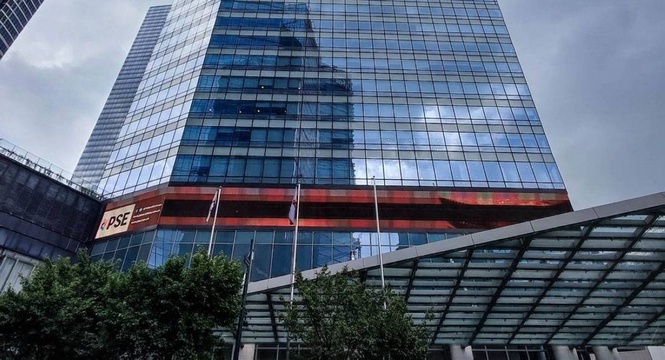
THE country’s main stock market benchmark is expected to remain under pressure this week, with further selling possible as investors brace for month-end portfolio adjustments, a likely US Federal Reserve rate increase and the Bangko Sentral ng Pilipinas’ (BSP) next policy action.
F. Yap Securities Inc., in its weekly outlook published through 2TradeAsia, said the Philippine Stock Exchange index (PSEi) could test the 5,400 level ahead of the BSP’s Dec. 17 meeting.
5,250 level is also possible if both the US and Philippine central banks deliver larger-than-expected rate increases, the report showed.
The brokerage expects more passive selling toward the Nov. 27 month-end portfolio close, particularly in stocks affected by changes in the MSCI indices. The Nov. 30 holiday means the last trading day of the month will fall on Friday.
The outlook follows Friday’s sharp selloff, which pulled the PSEi down 170.93 points, or 3.12 percent, to 5,306.98. The index lost 5.12 percent for the week, falling to its weakest closing level in more than six years.
Foreign investors recorded P853 million in net selling on Friday, adding to the pressure on local shares, 2TradeAsia.com said.
The brokerage identified weakness in artificial intelligence-related stocks, ICTSI’s earnings and operational concerns, and expected MSCI-related selling in Manila Electric Co. and PLDT Inc. as factors weighing on the market.
ICTSI fell 7.22 percent to P668 on Friday after South Africa’s transport minister gave the company three months to improve operations at its Durban Gateway Terminal or risk losing its operating license. Meralco also declined 4.98 percent to P378, ahead of its removal from the MSCI Philippines Standard Index.
2TradeAsia said the expected December rate increase by the US Federal Reserve would add pressure on the BSP as it weighs its own policy decision on Dec. 17. Its base case is for a 25-basis-point increase, although it acknowledged that the risks were tilted toward a larger move if the Fed tightens more aggressively.
The brokerage also flagged oil prices and tensions involving Iran as risks to the peso, which could affect domestic monetary policy expectations.
Despite the market’s weakness, 2TradeAsia said liquidity remained available in the financial system, pointing to a recent Treasury bond offering that attracted about $840 million in tenders against a minimum offer of $200 million.
It said the funds were being directed toward government securities offering attractive yields rather than equities, but could eventually support the stock market once investors gain greater clarity on the direction of interest rates and inflation.
The brokerage identified the first quarter of 2027 as a potential source of support for local equities, when Philippine government bonds are scheduled to join JPMorgan’s Government Bond Index-Emerging Markets on Jan. 29. The inclusion is expected to support the peso and potentially improve foreign investors’ appetite for Philippine shares.