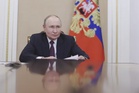
Russian President Vladimir Putin signed a decree on November 5, 2026 handing four Russian subsidiaries of Japan Tobacco Inc. (JT) to a Russian company, Industrial Assets, leaving the Japanese group in limbo: it still owns the shares, but it no longer runs the businesses.
Moscow is hardly the only government to take control of a foreign-owned company. Germany seized the local arm of Russian oil giant Rosneft in 2022, and Britain nationalized Chinese-owned British Steel in July 2026. What separates Russia from those cases is not the takeover itself. It is the legal conditions a government must meet, whether a court can review the decision, and what recourse shareholders still have afterward.
Russia's Decree Leaves The Exit Date To Putin
Russia's mechanism dates back to Presidential Decree No. 302, signed on April 25, 2023, as a countermeasure against what Moscow calls "unfriendly countries" that restrict Russian assets abroad. Japan is on that list.
Under the decree, a temporary manager can exercise the rights of an owner over shares and other assets, although it cannot sell or otherwise dispose of them. The decree also states that the Russian president decides when temporary management ends.
The JT order follows the same template. It names JTI Donskoy Tabak, Petro, JTI Yelets, and Kres Neva, all held through JT's overseas arm, JT International (JTI), and places them under Industrial Assets. The decree gives no specific reason for targeting JT and does not provide for a sale or any compensation.
Germany's Rosneft Takeover Had To Survive A Court Challenge
On September 16, 2022, Germany placed Rosneft Deutschland and RN Refining & Marketing under the trusteeship of the Federal Network Agency, using Section 17 of the Energy Security Act. Rosneft Deutschland accounted for about 12% of Germany's crude oil processing capacity at the time.
After Russia's full-scale invasion of Ukraine, banks, suppliers, and other business partners began cutting ties with the two companies amid sanctions and concerns over their Russian ownership. Some services needed to keep the refineries running were at risk. Berlin stepped in, citing a threat to the security of the country's energy supply.
Rosneft kept its shares, but it lost its voting rights and its power to manage or dispose of the companies, while the agency took control. That structure, ownership on paper and control in someone else's hands, closely mirrors JT's position in Russia today.
Rosneft fought the order. On March 14, 2023, Germany's Federal Administrative Court ruled against the company, upholding the trusteeship provision as constitutional and finding that a concrete risk to energy supply had existed. The court held that the measure was necessary and proportionate. Rosneft lost, but the government still had to set out its legal basis and the facts behind its decision, and judges tested them.
The original order ran for only six months and was extended several times. On February 27, 2026, Germany's economy ministry reissued it under Section 6a of the Foreign Trade and Payments Act, publishing it the next day. The new trusteeship has no fixed end date, but it lasts only as long as statutory conditions are met: the company must be affected by transaction bans under the EU's Russia sanctions, and that must threaten essential domestic needs such as critical energy supply.
In other words, the gap between Germany and Russia is not about time limits, since Berlin can now hold Rosneft indefinitely too. The difference is that Germany's trusteeship must keep meeting specific legal tests and remains open to judicial review.
Britain Took British Steel Outright, Possibly For Nothing
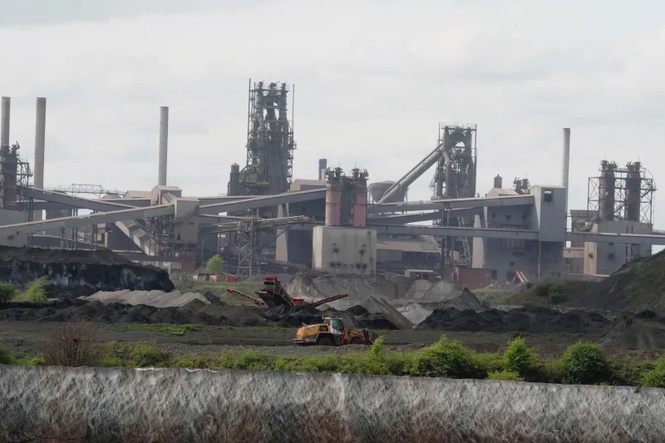
Britain went further and transferred ownership. On July 16, 2026, the government formally nationalized British Steel, which had been owned by China's Jingye Group, saying the move would protect domestic steel production, supply chains, major infrastructure projects, and national security.
The Steel Industry (Nationalisation) Act 2026 requires the government to set up a separate compensation scheme and assigns valuation to an independent valuer, who will decide whether the former owner is owed anything and, if so, how much.
An independent process does not guarantee a payout. When Parliament passed emergency legislation in April 2025, then Business and Trade Secretary Jonathan Reynolds told the House of Commons that British Steel's market value was effectively zero. The valuer could therefore award nothing. The government has said the compensation rules will include a right of appeal to the Upper Tribunal.
A US Supreme Court Ruling Blocked Truman's Steel Seizure
National security claims do not automatically give a leader the power to seize private companies. In 1952, during the Korean War, steelworkers in the United States prepared for a nationwide strike. President Harry Truman, worried that a halt in steel output would hurt the war effort, ordered the government to take over and operate the country's major steel mills.
The steel companies sued. The US Supreme Court ruled 6-3 that Truman's order was invalid because Congress had not authorized it and his powers as commander in chief did not extend to seizing private mills. The case, Youngstown Sheet & Tube Co. v. Sawyer, remains a landmark ruling on the limits of executive power: governments facing a crisis can wield sweeping authority, but courts can still examine where that authority comes from and where it stops.
Investment Treaties Give JT A Possible Path To Arbitration
A Russian decree can impose temporary management overnight, but foreign investors also have rights under international investment agreements. Such treaties typically allow expropriation, or measures with an equivalent effect, only for a public purpose, on a non-discriminatory basis, with due process, and with compensation. The investment treaty texts published by the Japanese government follow this basic framework.
Other companies caught up in Russia's takeovers have already gone this route. Finnish energy company Fortum launched international investment arbitration against Russia in 2024 after its Russian assets were seized, seeking several billion euros for its lost holdings and investments. Fortum argues the seizure amounts to unlawful expropriation, though that remains its legal position until a tribunal rules.
JT has not announced any similar step. Which investment treaties it could invoke would depend on the corporate structure through which it holds the Russian companies, a question that has yet to be clarified.
Legal Limits, Not Takeovers, Set Russia Apart
Germany took control of Rosneft's local business, Britain nationalized British Steel, and an American president once tried to commandeer private steel mills. State intervention in companies is not unique to Russia.
What differs is the guardrails. Germany's trusteeship ran in fixed terms until 2026 and, even now that it is open-ended, must meet clear statutory conditions and answer to the courts. Britain passed a law before taking British Steel and built in an independent valuation and appeal process, even if compensation may end up being zero. Truman lacked legal authority, and the Supreme Court stopped him.
Russia's Decree No. 302, by contrast, leaves the decision to end temporary management with the president alone. For Asian companies weighing exposure to markets where executive orders carry the force of law, the JT case is a reminder that holding shares and holding control are not the same thing. JT still owns its four Russian companies, but it no longer runs them, and the decree sets no date for when it might get them back.
You've read it. Now join the conversation — follow us on X, Facebook and IG. Editor: Penny Wang