Warning: potential spoilers ahead for Love Algorithm
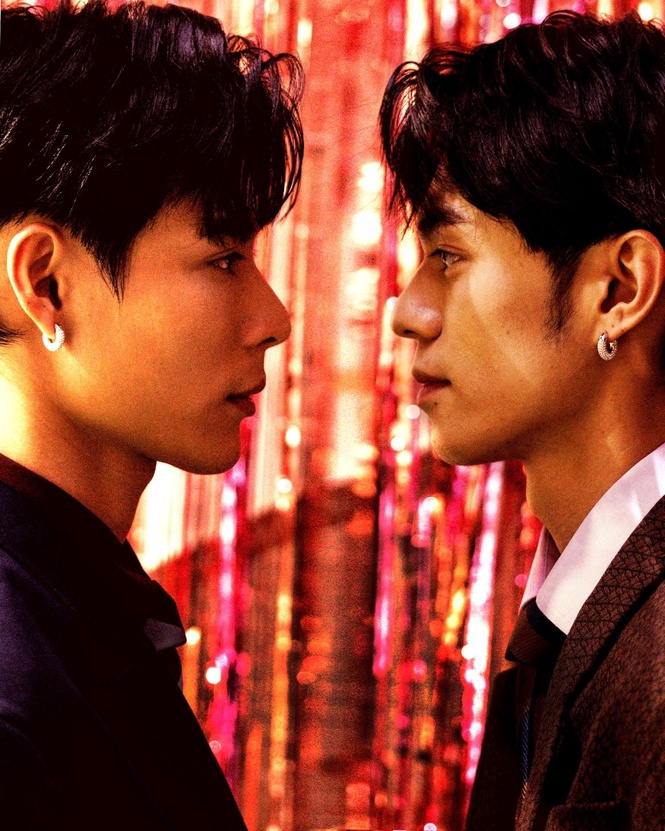
The opening scene of Love Algorithm grabs you right by the throat. We first hear Cole, played by Jack Gohr, deliver a profound monologue as he and Phil (portrayed by Zhen Ning) cross paths on parallel staircases. At once, the visual language of yearning is captured in that single scene: lush colours, lingering camera angles, quiet restraint. Memories shared between them, packed into words that will never be spoken aloud. It is the thing that defines much of Wong Kar-wai’s cinematic repertoire. Once the camera angles shifted and I was confronted with the tension between the characters not five minutes into Love Algorithm, I knew we were getting something truly special.
Love Algorithm is the first large-scale production of ByCOLIN Series, and is airing weekly on WeTV. The web series is directed by filmmakers Mickey Lai and Tan Seng Kiat. (Mickey is best known for her short films; her most recent one, WAShhh won the Golden Leopard for Best International Short Film at the 2024 Locarno Film Festival.) Love Algorithm also features Lynn Lim, Jansen Lau, Shu Sen, May Ho and Veny Liew in supporting roles. The series’ titular setting is a reality dating show for which Cole is a producer; when Phil is recruited to star on the show, the two characters—who were best friends in high school and estranged since then—are reunited, and old feelings begin to resurface.
“We enjoyed working on the story because it’s quite contemporary and modern in a way that I think anyone can resonate with it,” Mickey tells me. “All of us have childhood playmates. We all have that friend in high school. It might not be love, but we’re attracted to them for their personality or attitude that we don’t have, or we admire and want to have, you know, that kind of charisma. And maybe at that age, we didn’t know how to deal with it, but as time goes by it blossoms into something else. It’s about that, about our memories with someone. I think all of us have that. Do you have that?”
We’re seated in the middle of a café in Bangsar—appropriately named ‘Since Then’—and I feel all eyes turn to me, waiting. It’s sunny and the café gets just enough light so everything on the table is illuminated. Mickey’s tea tray arrives, and so does Zhen Ning’s coffee. Amidst the clinking of cups and background chatter a strange, wistful feeling rushes in and I mutter, “Ah, so this is a bit like Past Lives, right?”
“Oh, yes, exactly,” Mickey says. “The feeling of ‘unsaid’, what was left off there. Exactly. Past Lives, I love that.”
Whether we’re drawing from Wong Kar-wai or from the likes of Past Lives, a narrative like this relies a lot on the chemistry between the actors. If you’ve traversed the social circles, you may have noticed that Jack and Zhen Ning often come in a pair—so much so that they have earned the portmanteau ‘JackNing’ from their beloved fans. But being friends, modelling as a fashionable pair, and portraying a convincing, heartfelt romance are different things altogether.
Below, Mickey, Jack and Zhen Ning discuss the collaborative process of working on Love Algorithm together, understanding the core of their characters and channelling their emotions into them, and some of their most memorable scenes to film.
What was the overall vision you had for Love Algorithm? What inspired your process, and what specific themes or emotions were you trying to convey?
Mickey Lai (ML): I think the theme we’re trying to explore, or the question we’re trying to ask through the series, is how love can transform in different phases of life. How these people, when we meet them in different phases of life, we have different expectations and ideas of who they are as a person. And also who we are as a person, because we have different identities. Let’s say you bump into someone five or ten years later. The feeling is still there but the person has changed, so how are we going to deal with that? That’s the main idea of [Love Algorithm]. But we’re not only exploring it through one particular relationship. We are trying to explore it in different ways, so you can see there are a few relationships [throughout]. But you’ll need to watch the whole series to understand how they are interrelated and how they influence one another.
You managed to establish a cohesive narrative so early on in the series. As I was watching the first episode itself, I thought I was already seeing so much of the story, but then I realised I was only five minutes in. Since you mostly worked on short films before this, I was wondering, what went into creating that first episode?
ML: Format-wise, when it comes to creating or crafting, each time I create, I just want to try a different approach. I’ve never worked on anything related to romance. My co-director is more experienced, so I learned a lot from Seng Kiat when it came to that. When you think about it, romance is a genre. But when we are working on storytelling, we’re not thinking about that. Yes, there’s a certain format, or traits of the genre, but when we are treating the story as a whole, we’re very close to the characters. Every time we worked with [the actors], it was always about what their emotion was at that point. What are they feeling right now? What is the emotional route that they would choose when it comes to dealing with this kind of situation? We don’t think about ‘romance’ as a concept that much. It’s more like, “Okay, who is this character? How did they met each other? What are their hobbies? And what are their personalities?” These were the things that we thought about.
What were some of your inspirations that you drew from when you were working on Love Algorithm?
ML: We remember a particular reference that we drew from is Aftersun. But you’ll need to watch until Episode 10, only then you can see it. It’s about how memories can navigate us when we are making choices. For Aftersun, it was more of a visual reference, and also the theme of how the character deals with the past memories. Like, ‘Yes, we have changed, we have grown up. So, how do we deal with something that is left unsaid?’
Talking about the characters, what was the process for both of you, coming to understand your characters?
Zhen Ning (ZN): I think we both did our part in creating the backgrounds of the characters. Where we came from, what our hobbies are, what we like to do with each other. And from there, we kind of constructed a solid character for each of us, and we also went through some acting classes with a very, very good teacher. And from those classes, especially for me, I think I went through hell, kind of. It was quite tough for me because based on my past acting experience, I actually had [my own] theory on how to act. But when I met the directors and the team of people, they taught me how to think out of the box and use my feelings instead, instead of using theories. So, we really took quite a lot of time to construct the characters and also understand how they feel when they do certain things. I think it was very interesting.

Jack Gohr (JG): We spend a lot of time to understand the characters and to understand ourselves as well. Like, never have I done a project that spent so much time on script reading. I think we took two weeks, maybe three weeks to just go through the script. And it’s a short series. It’s not, like, a drama or a full-length movie. We spent so much time on it, and at that point in time, I felt like, ‘What the f**k? Why are we wasting so much time on this?’ Every day we would go to the class and we would do the same thing again and again. But then, the moment when we started shooting, I realised, ‘Oh, this shit is working.’ We didn’t need the script anymore because it was all inside. The way we said our lines, it was literally what we were feeling at that point. I feel that helped a lot in terms of expressing myself and expressing the characters as well.
It’s quite interesting that you mentioned a lot of scripts, because I thought the first episode of Love Algorithm didn’t very feel dialogue-heavy. Did you have a lot of input when it came to how you delivered the lines, or was it more of a collaborative thing?
JG: For me, I worked closely with the directors. The two of them would say, “If you were Cole right now, what would you do? Forget about the lines, what would you do? What would you say? Don’t be tied to the lines because you are Cole, and you’re feeling his feelings.” I think, in that sense, trust is very important. And I really felt that with this production team.
What were some of the challenges you faced in making Love Algorithm, and how did you overcome them?
ZN: I think my biggest challenge was not using the ‘theory’ way of acting. So, it was more of getting myself out of that box and using that freedom of creativity to perform my acting. That was my challenge.
Did it feel particularly more personal for you then, working on this project?
ZN: Definitely. I saw a new world of performance acting and yeah, I just need to thank the team and the directors for giving me that space to use my creativity to act.
JG: There were a lot of things that I felt were difficult. A vivid memory that I have during this whole journey was… it was the part that I had to cry. Because I have teared up before on-screen, but not like a ‘breakdown’ kind of cry. I remember before I started shooting that scene, I was worried and then I was talking to them, the directors. I said, “What if I cannot cry? Is there a way to make me cry?” And then I remember, they said to me, “If you cannot cry, or if you feel that that character at that moment doesn’t want to cry, then that’s okay. Because that’s your feeling. We should not force it, because the audience can see and they can feel it.” But luckily, as fate would have it, I really cried. And I cried to a point where I couldn’t really stop. It was like a full breakdown. And it was funny because it was not a one-take kind of thing. Because we had to take different shots from different angles. And then once we cut there, the directors would say, “Okay, hold it, don’t cry. Hold it, change the angle. Nobody talk to Jack.” Then I’d be, like, in emo mode. And when they were ready, I would cry again. Which I think was fun and challenging. I would do it again if I had a chance to. It was fun.
ML: For me, I wouldn’t frame it as a ‘challenge’. When we are working in a production, it’s always challenging, so I would frame it as something ‘exciting’. And to me, ‘exciting’ is something that makes you feel fear, which is great because it means we are trying to improve. With this production, the most exciting part was working with aesthetics. If you look at our previous works, they were more ‘raw’ in the sense of the social class that we were trying to capture. The themes we were trying to explore were very unlike something like this. They were more ordinary people that were close to our everyday lives. So, working with fashion models and influencers on this… we definitely learned a lot. When we want to do something that emphasised so much on emotions, how can we have a balance when it came to aesthetics? The colours that we portrayed on the screen, did it make sense emotionally? It’s not about beauty itself. Yes, we can have all this branded clothing in the frame, but how can we give input regarding the emotions that we are trying to portray in the scene? Directing is not only about the actors, it’s also about how we work with the set, the cinematography… So, we learned it all along the way.
JG: So, was it ‘exciting’ for you to work with influencers? This is the first time I’m hearing about this, by the way. (laughs) I think when we first met, [Mickey] was like, “I’m not sure how this is going to be.”
ZN: She didn’t have a good impression. (laughs)
ML: (laughs) The reason why they’re called influencers is because they have a certain portrayal in the social media world. That’s how we know about them, right? We like their charisma and we enjoy watching their content. We, the directors, didn’t get a chance to choose who we wanted to work with on this. (laughs) In our usual working approach, we choose the actors we want to work with. If he or she embodied the kind of characters we were working with, we chose them. This was different. We have an idea who these people are from their online platforms. But when we meet them in person, they’re more interesting, I would say, more than what we see online. They have more perspectives, more thoughts about who they are. They have more depth. It’s our role to collaborate and play with that, with the depth of their characters, and try to bring them out to portray on-screen. Working on this also changed my perspective of what an ‘influencer’ is and what they can do. They’re more capable than we think they are.
JG: Thank you. (laughs)
Speaking of that whole collaborative process, what helped the team work together to bring the story to life?
ML: I think trust is very important.
JG: Trust is really important, yeah.
ML: If we keep on thinking, ‘Okay, there are influencers, and we directors didn’t work on something like this before…’ It’s a war, it’s a barrier. There’s a gap. But it’s very fun how we broke all these walls along the way and tried to create something that we never did before.
How would you say these roles differ from your previous work? I know you two are good friends outside the show, but what was it like stepping into this particular dynamic?
ZN: I think for me, getting into this role was like getting into a new world, that’s for sure. Because I really had a new perspective towards performance acting, like I said, after meeting the team and after constructing so many things, so many backgrounds just for this one character. So, definitely my feelings were… it was all real. It was all from within. Before that, when I was doing acting, I think I faked my feelings for some of the scenes. But as for this character, I felt every single tear, every happiness, sadness, whatever it is. I think I really believed in my role. We also spent a lot of time with each other, trusting each other in this project. I think everything just made it happen naturally for me.
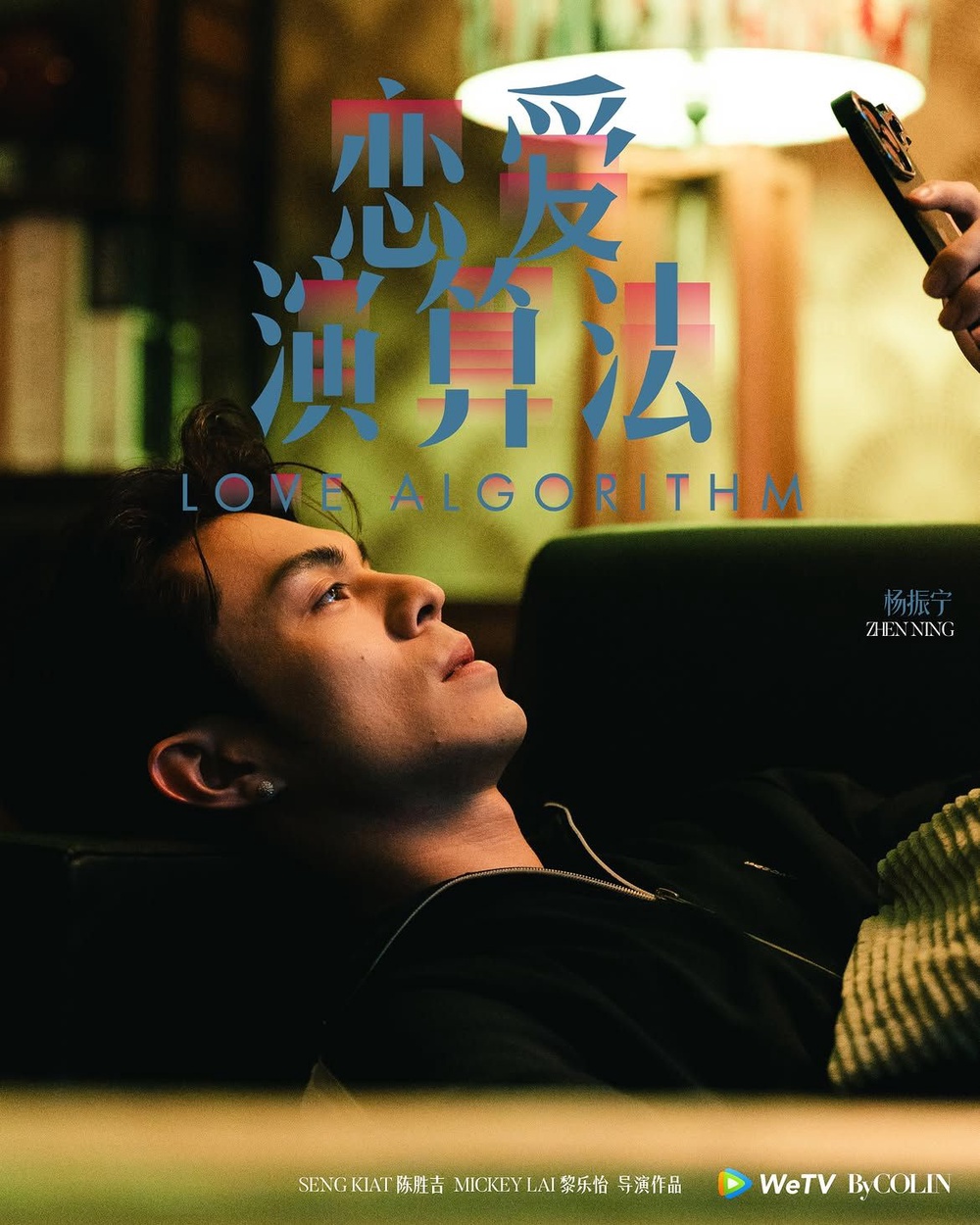
JG: I had a lot of pressure prior to accepting this role. But I had no choice anyway. (laughs) This is the company’s project. It was meant to be an experimental project. And initially, this whole thing was just supposed to be on YouTube. And then it was like a snowball effect, it kept rolling and it became bigger and bigger, to the point where we are today. So, I wanted to perform. I wanted to show my boss that I can act. And I wanted to show the audience that Jack is more than just an influencer. He’s more than just a social media personality. He can act. So that pressured me a lot, and I even asked myself, ‘Do I really want to do this?’ But it was a ‘take it or leave it’ kind of [situation]. I knew this was my chance, and I should take it. I must take it. We mentioned a lot about trust. I feel that trust really took a big part in this project and made me trust not just the team, not just my role, but myself and my partner as well. We spent a lot of time talking about ourselves and our characters. So it was a fun, fun time working on this project. It’s unlike any other projects I’ve worked on. I felt connected. Like, really connected with the character. And it was the first time that I cried so hard after we wrapped.
ZN: Same for me. I cried so hard after we wrapped.
JG: The past projects I’ve worked on, I looked forward to wrapping every time. It was like work mode. But this one, I felt like this is meant for me, for us, and I didn’t want it to end. But at the same time, I wanted it to end because I wanted it to air. It was like a conflict that I had within myself, but it was all fun. And exciting. Very, very exciting.
What was your favourite scene to shoot or film in the series, and why does it hold a special meaning to you?
JG: There’s one particular scene, because… okay, I’m a non-smoker, and then there’s this scene that I have. I’m just gonna say one thing about it. So, prior to shooting this, a month before, I started learning how to smoke—from getting it out of the packet, to lighting it up, to holding it in my fingers, and to puffing it, how I inhale and exhale. And my grandma… she doesn’t like me to be the ‘bad boy’. I remember when I went back home, I smoked in front of her and she almost teared up. She said, “Oh my god, why did you smoke? What happened to you?” (laughs) But it was fun. During that time, I think I smoked like 10 or 15 cigarettes. One shot. And then when the last shot was taken, I was like, “I need to go to the washroom and puke.” And I threw up.
ZN: But before he threw up, I was there, looking at him. He was sitting there, staring into the blank space, you know, just head spinning, that kind of expression.
JG: I asked them, “How many more shots do you need?” Then they were like, “Okay, can you take one more? Just one more, just one more.” Because it was a long scene. They had to break it up, and pause, and pause, and take different angles.
ML: And now he’s a professional smoker. (laughs)
ZN: For me… actually, I thought about this last night. I think it was the last scene for me. What happened was that I was supposed to shoot on the set first, but then my leg had a very, very, very bad cramp. So, I was forced to be pulled to the side and then just get the cramp out of the way for the time being. And then they had to shoot [Jack] first. And after that, when he was on set, while I was experiencing this pain, he was shouting my name, “Phil, where are you?” So, in that moment of me suffering from that cramp pain, I was also suffering a kind of heartache in myself. I was feeling like, ‘Oh, shit. I really want to reply to him but I can’t, because I’m out of the set and I’m having a bad cramp.’
JG: And I was in the dark, crying, tearing up.
ZN: I almost teared up, too. So, when it was my turn, when the cramp was slightly better, I went into the set and I just released all those bubbles of emotion. And in my mind, I think it was very, very beautiful. That was just a very, very memorable scene for me.
JG: I’m excited for that scene too. Because we both just burst into tears. Tears of release, tears of happiness. It was all us. It was beautiful.
ML: I would say the last scene as well. But for me, there’s a different reason. Because that was the hardest scene to write. When we were writing it, we were thinking, ‘Okay, how should we end this series, and have an ending for both of these characters?’ This was way before the shoot. I told my co-director, “Let me try something.” That was where Aftersun came in. I just wrote a bunch of scenes about how I see both of them reconciling in the final part. And then when we passed it over to our director of photography (DP) he said, “What is this? How are we going to shoot this? And what was your intention of writing this?” We showed him the Aftersun reference, and then he understood. That’s why I say it’s very hard to portray memories on screen, because when you’re working on it, you’re just executing a scene. Yes, it’s a scene of them crying. It’s a scene where they meet. But it’s more than that when it comes to the final version. It only makes sense after that. When we were shooting it, I think all of us were insecure, but we knew it was working. When we got to the editing, that’s when it was like, ‘Okay, everything makes sense right now.’ This was just so memorable to me, from writing to executing it, and seeing it during the editing, to the final series that it is today. I think it’s very beautiful to see how it took shape.
Jack, you also released your first single, “Unsaid” with this series! Tell us a bit about the process. Is this the first time you worked on a song?
JG: It’s my first song, yeah. And I was nervous. To be able to perform a song has always been a dream, but it’s hard to say it. I don’t know if it’s because of my upbringing or because of the people around me, or it’s just that I’m scared of expressing myself on this matter. So, when the opportunity came, I was like, “Really? Me? I can do it?” (laughs) So, I went through a lot of classes. We tried out different [types of] songs. And when we locked in with this song, I was like, ‘Shit, this is really happening.’ I was really excited, but at the same time I felt pressured as well because this is my first song. And it was the first for the company as well. The money that Colin has wasted… (laughs) Not wasted, invested. On us, on me, on this project… it’s a lot. I just wanted to perform the best that I could. And seeing this ‘baby’ now, I just feel very grateful. It was my first and it will definitely not be the last. There will be more projects coming out, and maybe in the future I’ll even be writing my own song. (laughs) Who knows?
View this post on Instagram
What would you say is the intended impact on the audience? What do you hope the viewers would take away from the series?
ZN: If you haven’t met a friend that you haven’t met in a long time, maybe it’s time to say hi and start something, you know? (laughs) A friendship, a relationship, or even something more.
JG: To me, I feel that love is a spectrum of feelings. There’s no right or wrong. Just express yourself, and have no regrets.
ML: I think by watching this, it would remind [the audience] of someone that used to be so meaningful or impactful in their life. And I think it’s good to try to see them by using a different lens because time has passed. They have changed, we have changed. Give them a second chance to reconcile, because I think this is what we are trying to do in life. The world is a mess, so when we watch something like this, if it reminds you of someone, try to approach them actively and try to say something nice and be kind. I believe in kindness, so I hope to see that.
Love Algorithm is currently streaming on WeTV. New episodes are released every Wednesday at 5PM.
Note : The information in this article is accurate as of the date of publication.