
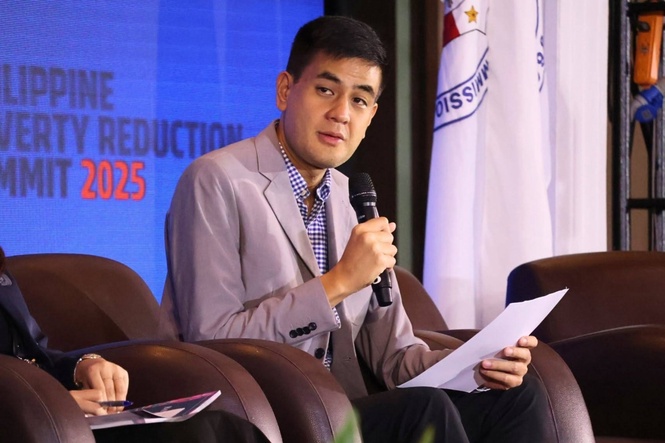
QUIRINO — The flags in the Sierra Madre foothills fly at half-mast today as the province mourned the passing of Gov. Dakila Carlo "Dax" Enriquez Cua.
Cua, 48, died on Tuesday, September 15, 2026. His family has not disclosed the cause of death.
For more than two decades, people knew Dax not only as the governor in the capitol in Cabarroguis, but as the young vice governor who started at 23, then the youngest vice governor in the country.
As governor from 2007 to 2010, and again from 2019 until his death, he launched I LOVE QUIRINO, a tourism and moral recovery campaign, and Q LIFE or Quirino Livelihood for Everyone, a comprehensive assistance program that later grew into the Q-LIFE Processing Center.
The center, funded with Korean aid through the Korea International Cooperation Agency or KOICA under the Quirino Integrated Agricultural Development Project, was Cua's answer to a simple question farmers asked him: "Where will we sell?" It integrated production, processing, and marketing for corn, banana, coffee and upland vegetables. Under his watch, provincial poverty incidence fell from 15 percent to 6 percent.
As the lone district representative from 2010 to 2019, Cua chaired the House Committees on Ecology and Ways and Means and served as Senior Vice Chair of Appropriations, Economic Affairs and Constitutional Amendments.
He was the principal author of the Tax Reform for Acceleration and Inclusion (TRAIN) Law, the principal author of Republic Act 10230 creating Quirino State University, and co-author of the Rice Tariffication Law, Ease of Doing Business Act and Philippine Competition Law.
But in Quirino, people remember the quieter reforms.
During the pandemic, he launched the Quirino Province Online Action Center or QPOAC, a 24/7 Facebook and Messenger hotline where residents could report concerns even on weekends and holidays — "public service that never stops," he called it.
He pushed for 400 Wi-Fi towers to bring universal internet to mountain villages so a farmer in Maddela town could secure a permit or consult a doctor online, and a micro, small and medium enterprise in Aglipay town could sell online. He championed digital governance long before it was fashionable.
Labor and livelihood were constant. Just last year, his administration partnered with the Department of Labor and Employment for P13.2 million in TUPAD emergency employment wages for 3,152 displaced workers and P10 million in livelihood starter kits.
He was the eldest son of former Gov. Junie Cua and former Rep. Maria Angela Enriquez-Cua. He is survived by his wife Quirino Rep. Midy Cua and their three children.