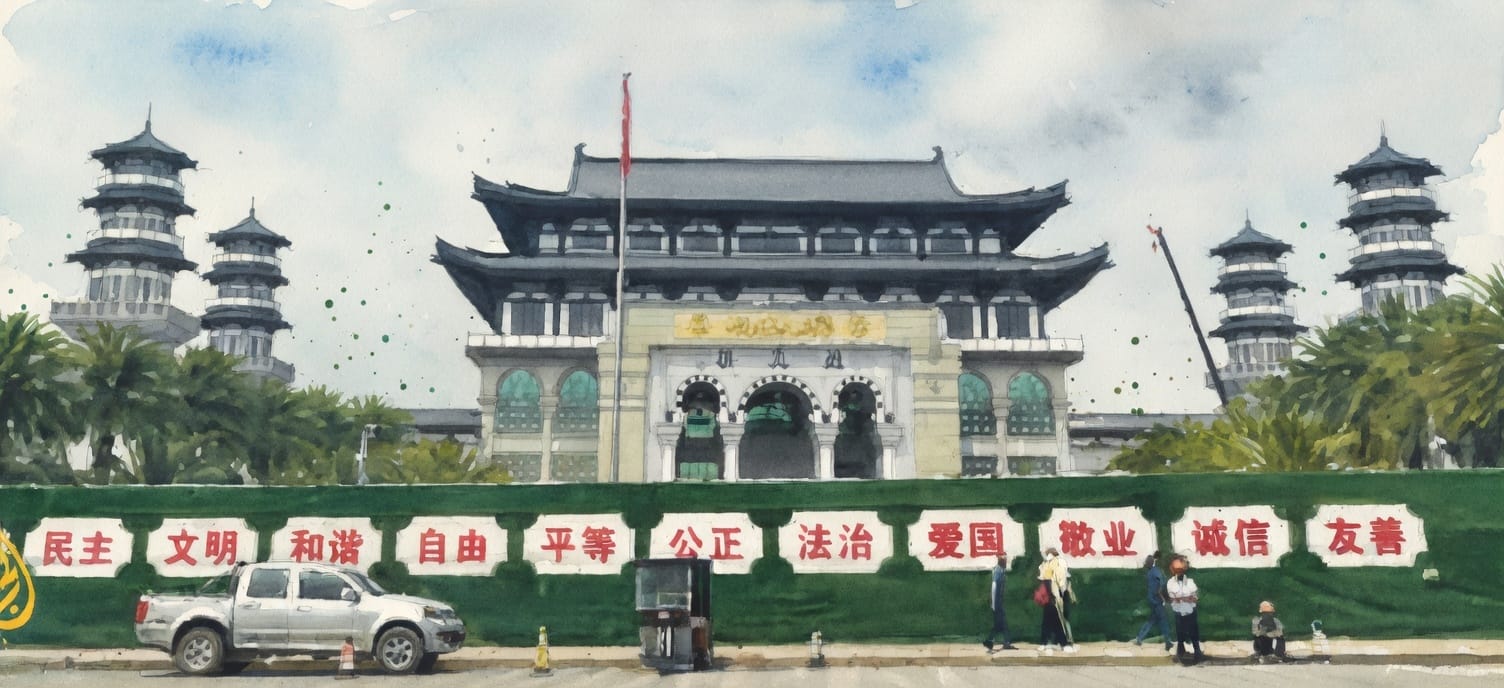
In the quiet valley town of Shadian in Yunnan China, the celebration of Hari Raya Aidilfitri unfolds like a silken tapestry woven with threads of faith, culture, and memory. Often called the “Mecca of China,” Shadian is not merely a place on the map, but a spiritual lighthouse, guiding generations of Hui Muslims through the tides of time.
As the crescent moon rises like a silver smile in the night sky, marking the end of Ramadan, the town awakens as if a long-held breath has finally been released. The grand mosque stands like a white swan resting upon the earth, serene and dignified. Worshippers flow toward it like rivers returning to the sea, their hearts light yet full. Each prayer offered that morning is like a seed of gratitude planted in the soil of the soul.
Hari Raya Aidilfitri here is not just a celebration—it is a bridge made of invisible threads, stretching between heaven and earth, between the past and the present. The Hui Muslims of Shadian share much of their daily culture with their Han neighbors. Their lives resemble a double-helix, two strands—Islamic faith and Chinese tradition—spiraling together without breaking apart. Their language is the same melody sung in different tones; their customs are like shared roots beneath different trees.
During the festivities, homes open like blooming flowers. Guests are welcomed like long-lost spring breezes, carrying warmth and joy into every corner. Tables are laid out like edible landscapes—steamed buns like soft clouds, beef dishes like rich earth, and sweet pastries like drops of honeyed sunlight. Every bite tells a story, as if history itself has been folded into the dough.
Laughter dances through the streets like wind chimes stirred by a gentle breeze. Children dart about like sparrows, their bright clothes fluttering like petals in motion. Elders, seated calmly, are like ancient mountains—steady, wise, and quietly watching the rivers of youth flow past them.
One of the most remarkable features of Shadian is how its people embrace both Islam and the teachings of Confucianism. To them, Confucian values are not foreign, but familiar echoes—like an old song that harmonizes perfectly with a new tune. Respect for elders is the golden thread that stitches both traditions together; filial piety is the root that anchors their moral tree. Islam may be the compass pointing toward Mecca, but Confucianism is the map that guides daily steps.
Thus, a Hui Muslim in Shadian lives like a tree nourished by two streams. One stream carries the clear waters of faith, while the other brings the rich sediments of culture. Together, they allow the tree to grow tall, its branches reaching both toward the heavens and across the land.
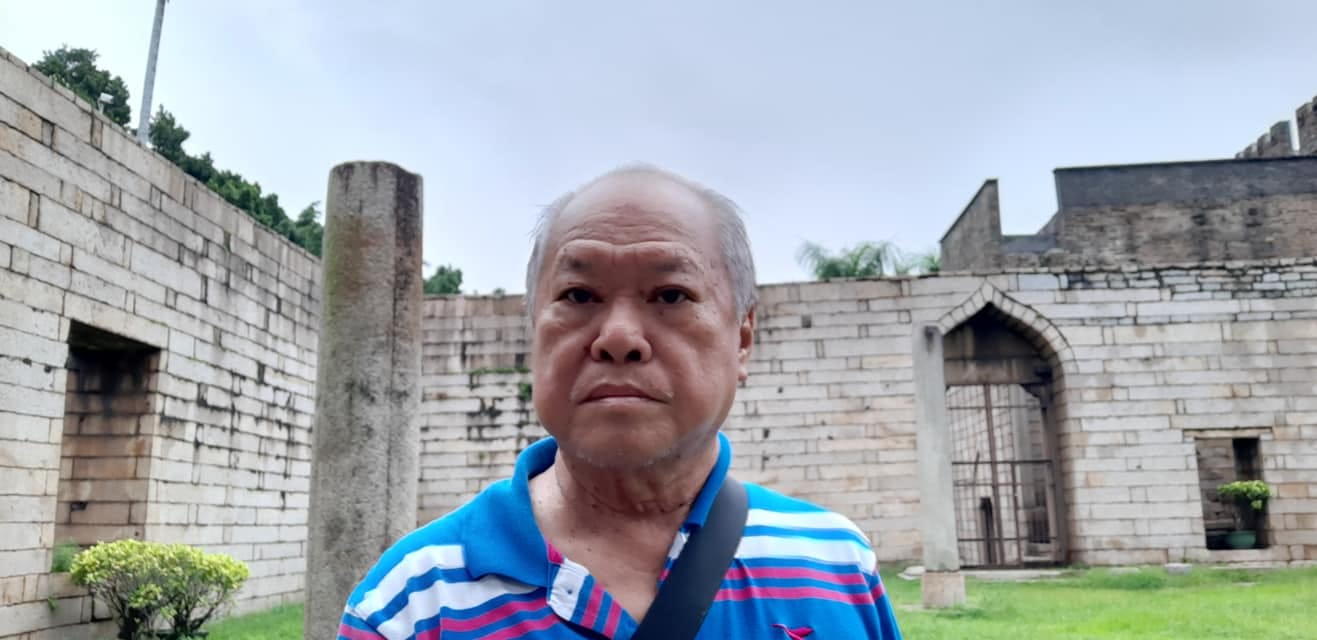
As the day deepens, the town becomes a living painting. The streets shimmer like ribbons of color, and the air itself seems perfumed with joy. Visitors are embraced not as outsiders, but as threads woven into the same communal fabric. Hospitality here is like a hearth fire—steady, warm, and always ready to welcome another soul.
When evening falls, the sky drapes itself in shades of amber and violet, like a curtain gently closing on a beautiful performance. Lanterns glow like scattered stars brought down to earth. Families gather again, their conversations flowing like quiet streams under moonlight—soft, reflective, and endless.
Hari Raya Aidilfitri in Shadian is not merely a day marked on a calendar; it is a heartbeat, steady and enduring. It is a mirror reflecting how differences can coexist like colors in a rainbow—distinct, yet forming a single arc of beauty. It is also a reminder that identity need not be a battlefield; it can be a garden, where different flowers grow side by side, each adding its fragrance to the air.
In a world that often builds walls, Shadian builds bridges. It stands like a poem written in two languages, yet understood as one. And in its celebration of Hari Raya Aidilfitri, it whispers a quiet truth: that faith and culture, when held with wisdom, can become not opposing forces, but wings—lifting humanity toward a more harmonious sky.
moykokming@gmail.com

Share your #RAYA2026 stories and stand a chance to win prizes worth up to RM3,000!
Find out how to join here. Don’t miss out! T&Cs apply.
Moy Kok Ming (moykokming@gmail.com) is a content creator under the Newswav Creator programme, where you get to express yourself, be a citizen journalist, and at the same time monetize your content & reach millions of users on Newswav. Log in to creator.newswav.com and become a Newswav Creator now!
The User Content (as defined on Newswav Terms of Use) above including the views expressed and media (pictures, videos, citations etc) were submitted & posted by the author. Newswav is solely an aggregation platform that hosts the User Content. If you have any questions about the content, copyright or other issues of the work, please contact creator@newswav.com.