How Car Prices in Malaysia Were Forced Up After Proton’s Launch in 1985
Ask any Malaysian motorist/car buyer from the early 1980s what buying a car was like, and they will likely recall a vastly different market.
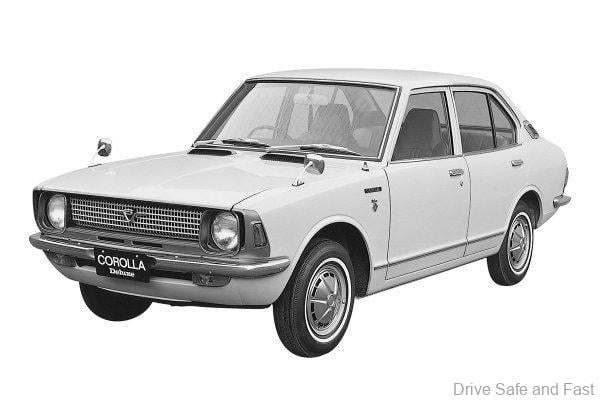
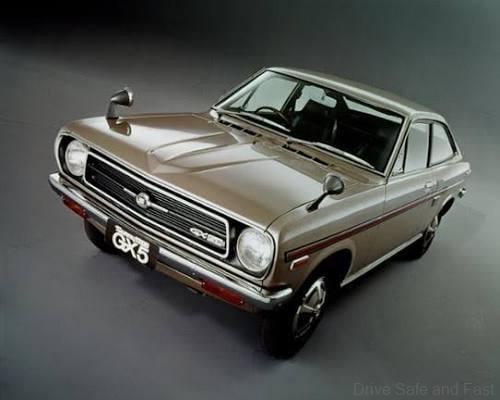
In 1980, a brand-new Datsun 120Y sold for RM13,579, a Toyota Corolla DX cost RM14,152, and a Honda Civic was priced at RM12,950. Even European sedans like the Volvo 244/240, the vehicle of choice for senior civil servants and doctors was on sale at below RM40,000. The Mercedes-Benz was for the super rich and its prices were still below RM80,000!
However, everything changed in the mid-1980s. When Perusahaan Otomobil Nasional (Proton) was incorporated in May 1983 and launched its maiden model, the Proton Saga (a rebadged Mitsubishi Lancer), in July 1985, Malaysia embarked on an ambitious state-led industrialization strategy.
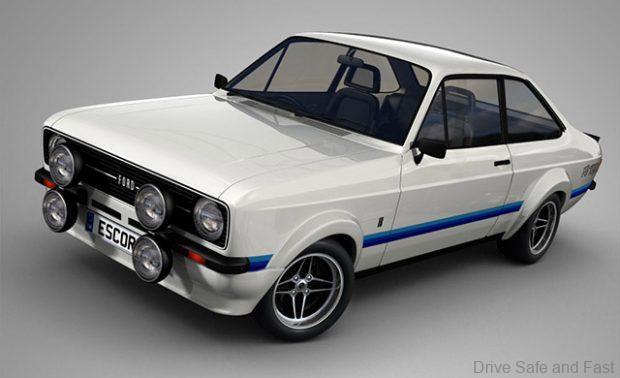
While the Saga (a rebadged Mitsubishi pictured below) debuted at a very accessible RM17,575 (1.3S), the fiscal and trade policies erected to ensure its survival fundamentally altered the cost structure of the entire Malaysian automotive market, forcing ALL rival car prices sharply upward and cementing a high-tariff regime that still shapes vehicle pricing decades later (until today).
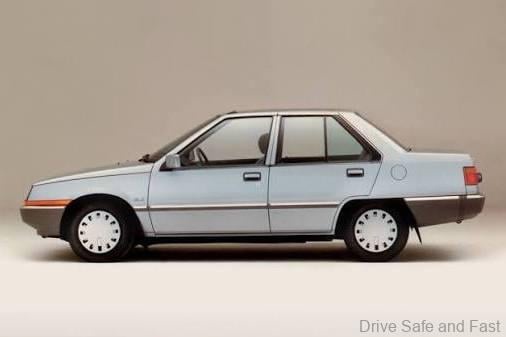
Now you know why we Malaysians pay a very high price for new cars …… even after discounts and rebates.
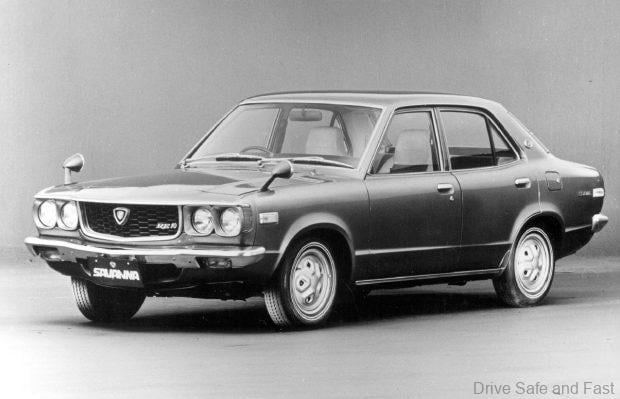
Pre-1985, A Competitive CKD Assembly Market
Before Proton’s arrival, Malaysia’s automotive industry operated as a relatively open, multi-brand Completely Knocked-Down (CKD) assembly sector. Beginning in the late 1960s, the government encouraged foreign automakers which was led by Japanese marques like Datsun (Nissan), Toyota, Honda and Mazda, alongside European assemblers to set up local assembly plants.
Under that pre-Proton framework:
Modest Tariff Gaps were put into place. Prior to the National Car Project, import duties on fully imported Completely Built-Up (CBU) cars ranged between 30% and 80% depending on engine capacity, while CKD assembly kits carried relatively moderate duties of 20% to 30%.
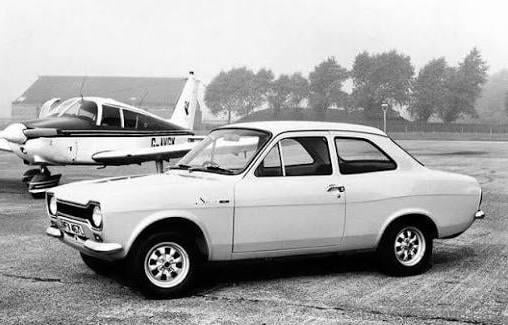
Because no single state-backed manufacturer existed, all local assemblers competed on equal tax footing. Prices were kept competitive by fierce rivalry among Japanese and European distributors and Malaysians paid a relatively fair price for a good quality car like a Ford Escort, Mitsubishi Colt, Mazda 808, VW Beetle, Datsun 120Y or Toyota Corolla.
The National Car Policy: Tariff Walls & Tax Exemptions
When Tun Dr. Mahathir Mohamad championed the National Car Project under the Heavy Industries Corporation of Malaysia (HICOM), economists immediately flagged a structural hurdle, which was ‘economies of scale’.
Malaysia’s total domestic passenger car market in the mid-1980s stood at roughly 90,000 units per year which was far below the minimum efficient scale of 200,000+ units needed for a standalone automaker to be globally cost-competitive.
To guarantee that Proton could capture domestic volume quickly, the government deployed aggressive import-substitution protectionism.
Steep Tariff Hikes on Rivals were put into place. Ahead of the Mitsubishi/Proton Saga’s rollout, import tariffs were dramatically escalated. CBU import duties jumped to between 80% and 150% (and later reached up to 300% for larger engine capacities).
Crucially, tariffs on CKD kits and imported components for non-national assemblers were raised to 40%–60%, with the heaviest penalties targeting the 1,200cc to 1,600cc segment which is the exact bracket occupied by the 1.3L and 1.5L Proton Saga.
While rival vehicle assemblers absorbed the new 40% CKD import duty alongside full excise duties and sales taxes, Proton was exempted from the CKD kit import duty as well as major internal excise and sales taxes.
As Australian National University economist Prema-chandra Athukorala documented in his landmark studies on Malaysia’s automotive industrialization, this asymmetric tax structure created an artificial price buffer of roughly 10% to 20% in Proton’s favor. Rivals could no longer price their 1.3L and 1.5L sedans competitively without losing money, pushing mainstream Japanese models upmarket into higher price brackets.
Meanwhile, policy and tariffs alone was not the only force driving prices higher in 1985. Just two months after the Proton Saga launched in July 1985, the G5 nations signed the ‘Plaza Accord’ in September 1985.
The agreement triggered a rapid, massive appreciation of the Japanese Yen against the US Dollar and the Malaysian Ringgit.
Because Malaysia was simultaneously suffering a commodity-driven recession in 1985 to 1986 (caused by collapsing global tin and palm oil prices), the Ringgit weakened sharply. For non-national Japanese assemblers and even for Proton, which relied on Mitsubishi Motors Japan for engines, transmissions, stamped body panels and almost every part of the car, the Ringgit cost of importing Japanese CKD kits skyrocketed.
While Proton was shielded by tax exemptions and state capital support, foreign-brand distributors had to pass both the higher CKD tariffs and the Yen currency shock directly onto Malaysian consumers.
The market was forced to reshape and while it was faced with shrinking margins and collapsing volumes, several foreign assemblers scaled back operations, while segment staples like the Toyota Corolla and Honda Civic were gradually repositioned into higher-priced C-segment offerings, leaving the budget and entry-level vehicle segment exclusively to Proton (and later Perodua after its arrival in 1993).
In conclusion, the tariff wall that was put in place on all car manufacturers which were erected in 1985 to nurture Proton never truly disappeared until today (with Geely providing the vehicles after the partnership with Mitsubishi ended) it simply evolved from an import tariff into an excise duty structure.
That policy decision remains the primary reason why non-national vehicles in Malaysia continue to retail at some of the highest price-to-income ratios in Southeast Asia and the average Malaysian has being paying the price for decades and will continue to do so for generations to come …….. unless a brand new government with all new ministers step in and create a ‘level playing field’ in our Malaysian automotive market!
So ….. the REAL reason why car prices are SO HIGH in Malaysia is because of ONE former Prime Minister and his Tariffs!