
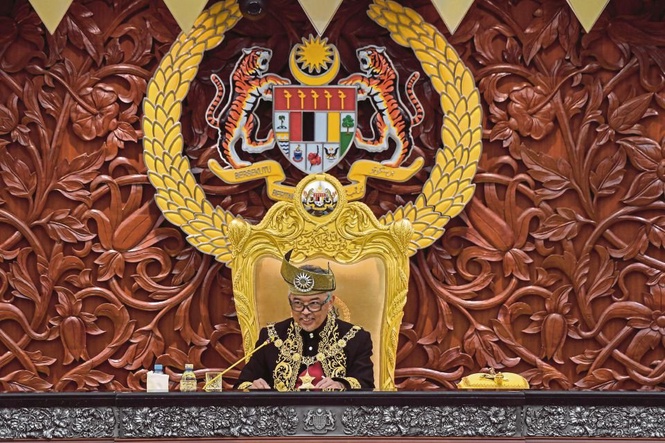
Rumours that the PM would advise the YDPA to dissolve Parliament are gathering traction. The PM's request for dissolution appears to be firmly pushed by Umno. It's probable that the PM will also act in accordance with the wishes of his party, even though the Cabinet allegedly disagrees with him. Does YDPA have to dissolve Parliament if that occurs?
If you interpret the Constitution's provisions literally and in accordance with its convention, the answer is yes! According to Article 40 of the Federal Constitution, the YDPA acts on the advice of the Prime Minister in matters pertaining to the dissolution of Parliament under Article 55(2). Dissolution owing to lack of majority support under Articles 43(4) and 40(2)(b) can only be done at the YDPA's discretion.
However, if the PM asks the YDPA to dissolve Parliament under the current circumstance, it's possible that the customary procedure won't be followed. To comprehend this circumstance, it is important to consider a few things:
First, unlike in the past, the prime minister no longer firmly represents a party or party alliance. In the past, the PM's personal counsel was taken for granted to represent that of the Cabinet. However, it does not yet speak for the complete cabinet of ministers who represent the government if the PM advises YDPA for the dissolution of Parliament. Since the constitution emphasizes the idea of "collective duty" or "collective responsibility," the PM's advice may be disregarded on the grounds that it was not developed collaboratively (Article 43(3)).
Second: It's probable that the PM's advice to dissolve Parliament will be rejected on the same grounds as the YDPA's decision to reject the recommendation to declare an emergency. Public interest can relate to a variety of things, such as the waste if general elections at the parliamentary level do not coincide with the general elections of the State Assembly in some states, the inappropriateness of holding general elections during the monsoon season, and other things.
Third: No court may challenge the YDPA's decision to delay dissolving Parliament even after being advised to do so by the Prime Minister (Article 32).
Sources:
https://www.sabahgazette.com/4-faktor-agong-mungkin-tolak-nasihat-pm-bubar-parlimen-dalam-masa-terdekat/
https://www.bharian.com.my/berita/nasional/2022/10/1006791/4-faktor-agong-mungkin-tolak-nasihat-pm-bubar-parlimen-dalam-masa
https://www.youtube.com/watch?v=WVQVSjJgbeg
Asyiqin Razak is a content creator under the Newswav Creator programme, where you get to express yourself, be a citizen journalist, and at the same time monetize your content & reach millions of users on Newswav.
Log in to creator.newswav.com and become a Newswav Creator now!
Newswav is solely an aggregation platform and hosts the content. The views expressed and content above including media (pictures, videos, etc) were provided by the author. If you have any questions about the content, copyright or other issues of the work, please contact Newswav.
